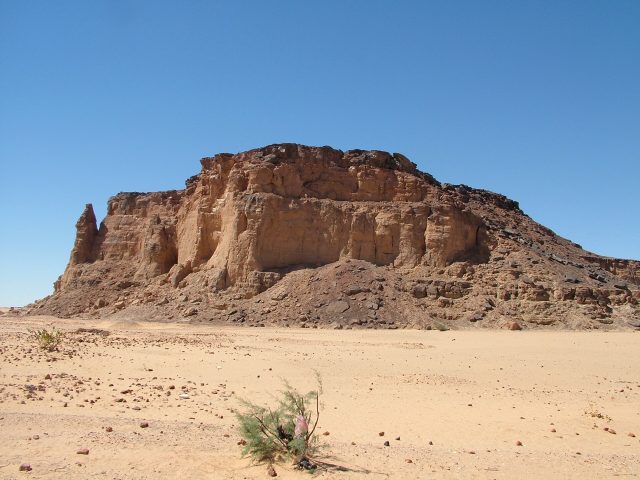
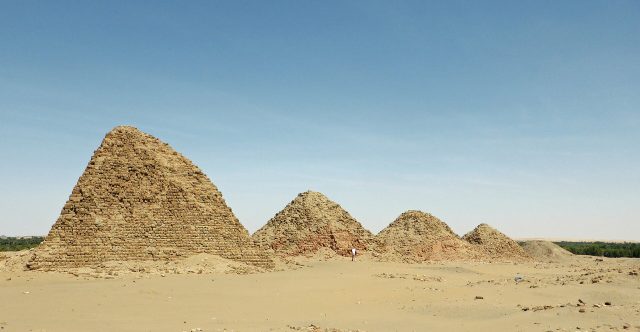
Perched on the banks of the Nile, where the river bends gently through the desert, the ruins of the Napatan Palace stand as a quiet witness to an empire that once rivaled Egypt. This was the heart of the Kingdom of Kush, a civilization that flourished here long before the sands claimed its grandeur. The stones, worn by time, still hold the echoes of a dynasty that ruled not just over these lands but over Egypt itself, leaving behind a legacy carved in reliefs and scattered across the dust.
The architecture of the palace reveals a fascinating blend of influences. The columns, though reminiscent of Egyptian design, carry a distinct Kushite character—broader, more robust, with proportions that feel almost defiant of the delicate elegance found in the temples of Luxor or Karnak. Once, these walls were alive with color, adorned with scenes of gods and kings, their stories now reduced to fragments. The remnants of the throne room, in particular, hint at the power that once radiated from this place. It was here that decisions were made, alliances forged, and the fate of kingdoms weighed. The carvings, though faded, still depict the gods Amun and Isis, their presence a reminder of the spiritual and political authority that once converged within these walls.
Napata rose to prominence in the 8th century BCE, when the Kushite kings, seizing the opportunity presented by a weakened Egypt, marched north and established their rule over the Nile Valley. For a time, this palace was the center of their world, a place where pharaohs of the so-called Black Dynasty wore the double crown of Upper and Lower Egypt, where ambassadors from distant lands came to pay homage, and where the rituals of power were performed with all the grandeur of an empire at its height. The city thrived as a religious hub, its temples and palaces humming with activity, its priests and nobles shaping the destiny of a civilization that stretched from the cataracts of the Nile to the shores of the Mediterranean.
Yet empires, no matter how mighty, are not eternal. By the 6th century BCE, the political center of Kush had shifted south to Meroë, and Napata’s influence waned. The palace, once a symbol of unshakable authority, gradually fell into disuse, its halls emptied of the voices that had once filled them. The city remained a sacred site, a place of pilgrimage, but its days as a capital were over. The sands of time, relentless as ever, began their slow work of reclamation.
Today, the ruins of the Napatan Palace offer a rare glimpse into a chapter of history that often fades into the background. Unlike the more famous sites of Egypt, this place is untouched by the crowds that flock to the pyramids or the temples of Thebes. Here, you can wander among the stones in solitude, tracing the outlines of what was once a grand hall or a private chamber. The fragments of pottery, the broken statues, the inscriptions in Meroitic script—still only partially deciphered—are like pieces of a puzzle, each one offering a clue to a civilization that has long since vanished. The silence is profound, broken only by the whisper of the wind and the distant murmur of the Nile, a river that has witnessed the rise and fall of countless kingdoms.
The best time to visit is in the early morning or late afternoon, when the sun casts long shadows across the ruins, softening the harsh lines of the desert. The light seems to slow time itself, allowing you to imagine the palace as it once was: alive with color, filled with the murmur of voices, the scent of incense, the rustle of linen robes. It’s a place where history feels tangible, where the past is not just something to be read about but something to be felt.
For those drawn to the stories of ancient civilizations, the Napatan Palace is more than just a collection of ruins. It’s a chance to step into the world of the Kushites, to see them not as a footnote in a history book but as a people who built an empire, who worshipped their gods, who lived, loved, and dreamed under the same sun that still rises over the Nile today. The Meroitic language, though still a mystery in many ways, was once spoken here, its rhythms and cadences lost to time but not to memory. The rituals performed in these halls, the decisions made in the throne room, the daily lives of the people who walked these corridors—all of it is part of a tapestry that is still being unraveled.
Napata is not just a relic of the past; it’s a living part of Sudan, a country that is slowly opening its doors to the world. The palace, along with the nearby Temple of Amun at Jebel Barkal, offers a deeper understanding of how religion, politics, and everyday life intertwined in this ancient city. Together, they paint a picture of a civilization that was as sophisticated as it was enigmatic, a kingdom that left its mark on history and then faded into the sands, waiting to be rediscovered.
There’s a certain magic in places like this, where the weight of history is almost palpable. The stones may be silent, but they speak in their own way, telling stories of power and decline, of faith and ambition, of a people who once stood at the center of the world. To walk among them is to step back in time, to feel the pulse of an empire that shaped the course of history and then slipped quietly into the shadows. It’s a reminder that even the mightiest civilizations are fleeting, but the traces they leave behind endure, waiting for those who are willing to listen.