Gyeongbokgung Palace stands as the most expansive and historically significant of Seoul’s five grand Joseon-era palaces. Built in 1394 under the guidance of the scholar-official Jeong Do-jeon, its name translates to "Palace of Shining Happiness," a reflection of the optimism that accompanied its founding. The site was chosen with care, nestled against the slopes of Bugaksan Mountain to the north, a location believed to align with the principles of geomancy, ensuring harmony between the palace and its natural surroundings.
The palace’s history is marked by resilience and rebirth. Devastated during the Japanese invasions of the late 16th century, it lay in ruins for centuries before being painstakingly reconstructed in the 19th century. Yet its trials were not over. During Japan’s colonial rule in the early 20th century, much of the complex was demolished to make way for the colonial government’s headquarters, a stark symbol of occupation that stood in front of the palace until the 1990s. Since then, efforts to restore Gyeongbokgung to its former glory have been ongoing, guided by historical records and architectural plans. The work is far from finished, and visitors today can witness both the grandeur of the restored structures and the quiet persistence of those still being brought back to life.
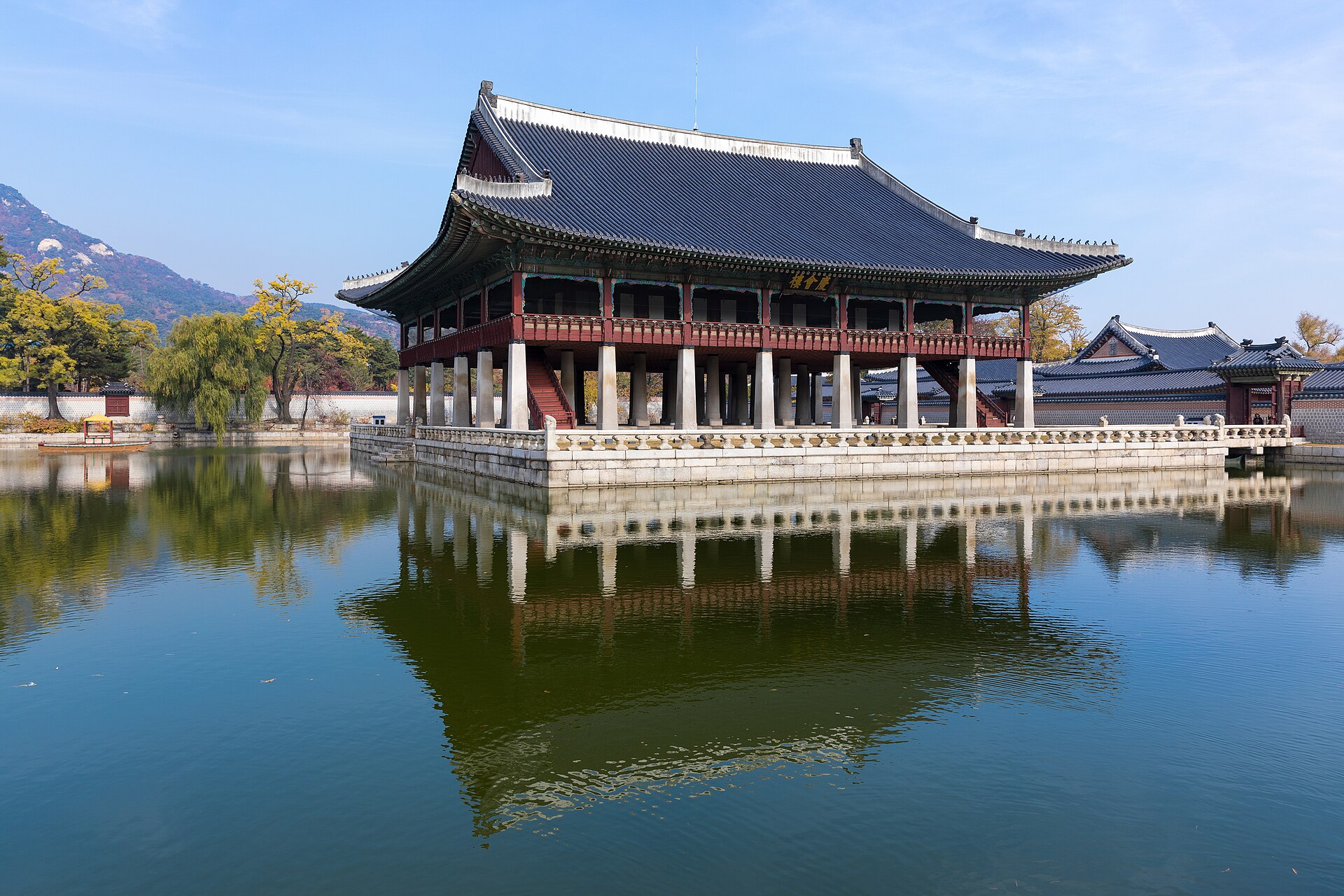
At the heart of the palace grounds is Geunjeongjeon, the throne hall, an imposing wooden structure elevated on a two-tiered stone platform. This was where kings held court, received foreign envoys, and made decisions that shaped the nation. Nearby, Gyeonghoeru Pavilion offers a striking contrast—a graceful, open-air hall perched on 48 granite pillars in the middle of an artificial pond. Once the setting for royal banquets and diplomatic receptions, it remains one of the most photographed spots in the palace, its reflection shimmering in the water below.
The daily changing of the guard at Gwanghwamun Gate is a nod to tradition, a ceremony revived from historical records. Dressed in vibrant, meticulously recreated uniforms, the guards perform with precision, their movements accompanied by the rhythmic beat of drums and the flutter of banners. The ritual lasts about fifteen minutes, a fleeting but vivid glimpse into the pageantry of the Joseon court. For those who arrive wearing a hanbok, the traditional Korean dress, entry to the palace is free. The sight of visitors strolling through the grounds in flowing silk skirts and embroidered jackets has become so common that it no longer feels like a special occasion—just another day at Gyeongbokgung.
Beyond the palace walls, the surrounding area offers its own layers of history. To the east lies Bukchon Hanok Village, a neighborhood of preserved traditional houses where narrow alleys wind between tile-roofed homes, some of which have stood for centuries. To the south, Sejong-daero stretches out, a broad avenue lined with monuments to two of Korea’s most revered figures: King Sejong, the scholar-king who created the Korean alphabet, and Admiral Yi Sun-sin, the naval commander whose victories turned the tide against Japanese invaders. The palace itself is closed on Tuesdays, a quiet day when the usual crowds thin out, and the grounds take on a more contemplative air.
Inside the palace complex, two museums offer deeper context. The National Palace Museum of Korea houses artifacts from the Joseon era, from royal seals to ceremonial robes, while the National Folk Museum provides insight into the daily lives of ordinary Koreans through the centuries. Both require separate admission, but they complement the experience of the palace itself, bridging the gap between the grandeur of the monarchy and the rhythms of everyday life.
Gyeongbokgung is more than a relic of the past; it’s a place where history feels alive. The restored buildings, the ongoing reconstruction, the visitors in hanbok, and the echoes of the changing of the guard all contribute to a sense of continuity. It’s a reminder that while empires rise and fall, and cities modernize around them, some places endure, carrying the weight of memory into the present. Whether you come for the architecture, the history, or simply the chance to wander through a space that has witnessed centuries of change, the palace offers a quiet kind of magic—one that lingers long after you’ve left its gates.