- Home
- South Korea
- Seoul

Seoul
South Korea · 16 places
Photo: 한국관광공사, KOGL Type 1
Seoul moves at its own pace, a city where the weight of centuries and the rush of tomorrow exist side by side without apology. Walk through Gyeongbokgung Palace at dawn, when the morning mist still clings to the curved eaves of its wooden halls, and you might hear the distant hum of construction cranes beyond the palace walls. The past isn’t preserved here—it’s lived in. Locals in hanbok, rented for the day, pose for photos in the same courtyards where scholars once debated Confucian texts. A few blocks away, a glass-and-steel skyscraper looms over the scene, its reflection shimmering in the palace moat like a mirage of the future.
The city doesn’t bother with neat divisions between old and new, local and foreign. In Bukchon, the narrow alleys wind past hanok houses with paper-thin walls, where the scent of barley tea drifts from open windows. Turn a corner, and you’re suddenly facing a minimalist café with exposed concrete and a queue of students tapping away on laptops. At Namdaemun Market, grandmothers haggle over bolts of silk while tourists snap photos of the same stalls. The food stalls here don’t cater to anyone in particular—they just serve what’s been served for decades, whether it’s spicy tteokbokki or grilled squid skewers, eaten standing up between bites of conversation. No one rushes you. No one slows down for you either.
History isn’t something you visit in Seoul; it’s something you brush against as you go about your day. The stone guardians at Deoksugung Palace’s gates have watched over the city since the 15th century, their expressions unchanged as delivery scooters zip past. In Insadong, calligraphy brushes and celadon pottery share shelf space with K-pop merch, and the air smells of ink and fried dough. Even the modern spaces feel rooted in something deeper. Dongdaemun Design Plaza, with its futuristic curves, sits on the site of a former fortress, and its night market pulses with the same energy that once drew merchants from across the peninsula. The city doesn’t erase its layers—it builds on top of them.
Food is where Seoul’s contradictions feel most alive. A meal here can be a street-side bowl of budae-jjigae, its spicy broth thick with sausages and instant noodles, eaten under a flickering neon sign. Or it can be a multi-course hanjeongsik in a restaurant where the waitstaff moves in silence, refilling your rice bowl before you’ve even set it down. At Gwangjang Market, ajummas ladle out bindae-tteok from cast-iron pans, their hands moving with the precision of decades. Nearby, a young chef plates a deconstructed version of the same dish in a Michelin-starred kitchen. Neither is better than the other—they just exist, side by side, as much a part of the city as the Han River or the mountains that cradle it. After eating, you might join the crowds at a jjimjilbang, where families soak in hot tubs or nap on heated floors, the steam blurring the lines between generations.
Seoul doesn’t try to be easy. The subway signs are in Korean first, English second, and the sidewalks are a minefield of sudden staircases and construction barriers. But that’s part of its charm. There’s no curated experience here, no script for how to feel or what to see. You might spend an afternoon in a tea house in Ikseon-dong, where the only sound is the clink of porcelain, then find yourself in a basement club in Hongdae, where the bass shakes the floor and the crowd spills into the street at 3 a.m. The city doesn’t care if you’re a tourist or a local, a night owl or an early riser. It just keeps moving, a place where the only constant is change—and the quiet certainty that, no matter how much it evolves, it will always feel like Seoul.
See & Do
All of them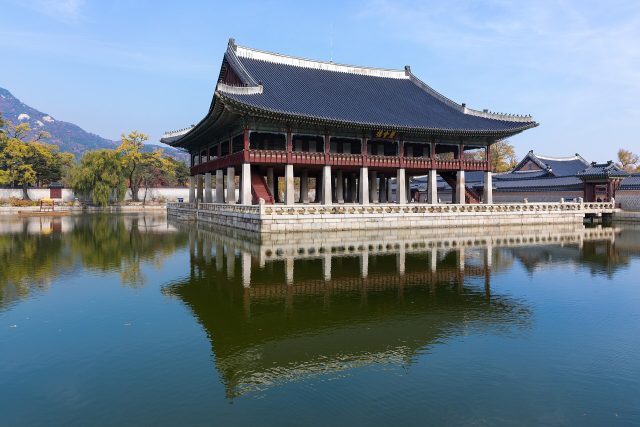


Places on the map
Marker colour follows the categoryClimate and weather
Detailed weather: Seoul- Average temperature
- 14 °C
- Precipitation per year
- 1496 mm
- Sunshine hours per day
- 6.4 h
Average air temperature
°C
-2
1
8
14
19
24
27
27
23
15
8
-0
Jan
Feb
Mar
Apr
May
Jun
Jul
Aug
Sep
Oct
Nov
Dec