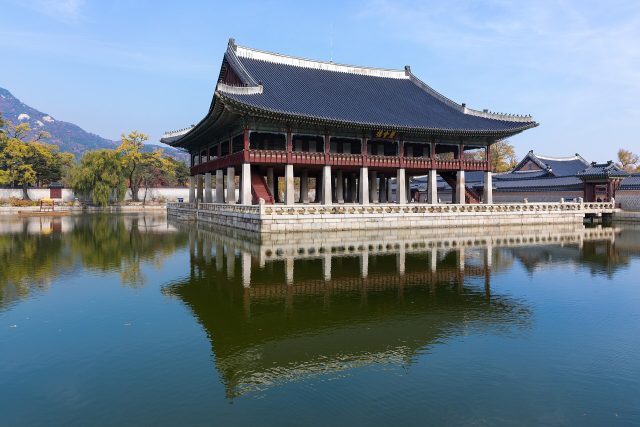
Bukchon Hanok Village is one of those rare places in Seoul where the rush of the modern city seems to fade into the background. Tucked between Gyeongbokgung and Changdeokgung palaces, it feels like a quiet echo of the past, a neighborhood where the present moves at a gentler pace. The narrow, stone-paved alleys wind between two-story hanok houses, their tiled roofs and wooden shutters preserving the look of early 20th-century Korea. Unlike a museum, Bukchon is still very much alive—people live here, work here, and carry on traditions that have shaped this place for centuries.
The village dates back to the Joseon Dynasty, when it was home to aristocrats and government officials. Back then, Bukchon was one of Seoul’s most prestigious areas, carefully planned according to principles of geomancy. The hanok houses that remain today were built with deliberate attention to the land, the wind, and the flow of water. Their clay walls, wooden beams, and heated ondol floors weren’t just practical features—they reflected a way of life where harmony with nature was essential. Even the layout of the homes, with their inner courtyards and sliding paper doors, was designed to create balance between the indoors and the world outside.
Today, Bukchon is a place where old and new coexist in subtle ways. Many of the hanok have been repurposed into cafes, guesthouses, small museums, and artisan workshops. You can still find craftsmen making traditional ceramics, handmade paper, or delicate fans. Some alleys lead to teahouses where visitors can experience a quiet moment over a cup of tea, or to calligraphy studios where the art of beautiful writing is taught. Yet despite these changes, the village hasn’t become a static display. Locals go about their daily routines, and tourists who wander the streets become part of the scene rather than mere observers.
Walking through Bukchon feels like exploring a maze of hidden corners. There are no wide boulevards or towering buildings here—just quiet courtyards where laundry hangs under eaves, elderly women in hanbok tend to their plants, and the occasional stone plaque bears the name of a long-ago resident. Some houses still have intricately carved gates, a reminder of the craftsmanship that once defined this neighborhood. The atmosphere is especially peaceful in the early morning or late evening, when the crowds thin out and the glow of lanterns reflects off the damp stone paths.
What makes Bukchon special is how it manages to feel both timeless and lived-in. Even at the height of tourist season, it’s easy to find a quiet spot to sit on a wooden bench and watch the rhythm of village life. In summer, the shade of trees and thick stone walls keep the air cool, while winter transforms the rooftops into a scene from a painting, dusted with snow. Spring brings cherry blossoms and azaleas, and in autumn, the maple leaves turn the streets into a sea of red and gold.
Beyond its architecture, Bukchon offers a chance to experience the spirit of old Korea. Many traditions are still observed here—some homes still require visitors to remove their shoes before entering, and staying overnight in a hanok guesthouse means waking up to the sound of rain tapping against the roof. Workshops teach visitors how to make traditional crafts or prepare kimchi, while small shops sell handmade pottery, embroidered silk, and other artisanal goods. It’s a place where the past isn’t just remembered; it’s still part of everyday life.
In recent years, Bukchon has also become a hub for younger creatives. Boutique shops, art spaces, and small galleries have opened alongside the traditional hanok, hosting everything from indie concerts to poetry readings. This blend of old and new gives the village a dynamic energy, making it more than just a historical site. It’s a place where history and contemporary culture intersect in unexpected ways.
For anyone trying to understand Korea beyond the usual tourist spots, Bukchon is essential. There’s no rush here, no overwhelming noise—just a quiet invitation to step into a slower, more deliberate way of life. It’s a place where you can wander without a plan, stumble upon a hidden courtyard, or simply sit and watch the world go by. More than just a pretty backdrop for photos, Bukchon is a living piece of history, shaped by the people who have called it home for generations.