The Governor’s Palace in Addi Keyh is one of those places that feels suspended in time, carrying not just the weight of Eritrea’s colonial past but also the echoes of older stories. Built in the early 20th century under Italian rule, it served as the residence for administrators overseeing this corner of East Africa. Unlike the grand palaces of Europe, it doesn’t overwhelm with size or opulence. Instead, its quiet solidity speaks to a different kind of power—one rooted not in extravagance, but in presence, in the quiet assertion of control over a distant land.
The architecture reflects the practical elegance of Italian colonial design. Thick walls of local stone rise to meet high ceilings, while broad verandas and large windows were built to temper the heat, allowing light to filter softly into the rooms. The façade is marked by restrained details—arches, cornices, and balustrades—that lend it a dignified simplicity. Inside, if the descriptions that remain are any indication, the interiors followed the same understated logic: wooden paneling, plasterwork, and marble fireplaces created an atmosphere of respectability rather than luxury, fitting for a high-ranking official.
Addi Keyh was never Eritrea’s capital, but at certain points in history, it played a pivotal role. Perched in the highlands, surrounded by rugged yet striking landscapes, the city offered a milder climate than the coastal regions. The Italians recognized this advantage, establishing administrative offices here, with the Governor’s Palace becoming a symbol of their authority. Even after colonial rule ended, the building retained its significance, housing various government functions over the years. Today, it remains part of Eritrea’s administrative infrastructure, a quiet testament to the layers of history that have shaped the country.
A small park surrounds the palace, once part of the original estate. Now, it’s a peaceful spot where the city’s hustle fades into the background, though it lacks the meticulous upkeep of its earlier days. Some of the trees were planted during the Italian era, their towering canopies casting long shadows over the paths. Locals occasionally come here to escape the sun, while visitors might pause to imagine what life in this part of Africa looked like a century ago.
The palace’s history is intertwined with Eritrea’s own. Over the decades, it witnessed decisions that shaped the lives of countless people—officials arriving and departing, conversations that may have sown the seeds of independence. When Eritrea gained sovereignty in 1993, the building ceased to be a symbol of foreign rule, but its historical value endured. It stands as a reminder of the country’s complex journey through colonialism, conflict, and the struggle for self-determination.
Unlike museums or tourist attractions, the Governor’s Palace isn’t a place you can simply walk into. It doesn’t advertise itself or invite casual exploration. Yet its presence in the heart of Addi Keyh is telling. Passing by, you notice how it contrasts with the more modern buildings around it—its weathered walls and distinct architecture a quiet counterpoint to the present, a visible layer of the past.
For those curious about Eritrea’s history, the palace offers more than just a glimpse into colonial architecture. It’s a window into the lives of the people who governed this land, the ambitions that drove them, and the ways their decisions rippled through the lives of ordinary Eritreans. In that sense, it’s not just a building but a piece of collective memory, helping to explain where the country has been and how it came to be where it is today.
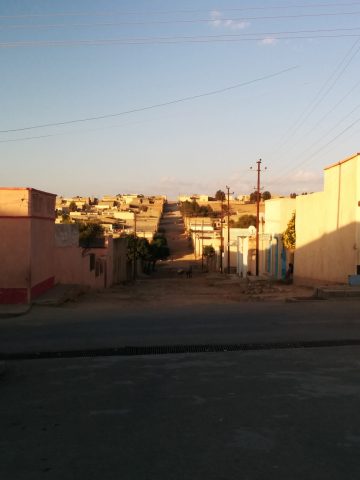
Addi Keyh itself doesn’t feel like a tourist hub. There are no crowded streets or souvenir stalls, just a quiet town where time moves at its own pace. The palace fits naturally into this rhythm—unassuming, yet impossible to ignore. It doesn’t demand attention, but neither does it hide. It simply exists, a silent witness to the past, a part of the present, and perhaps a reminder that even in the most unassuming places, there are stories worth uncovering.