Ajuria Enea is one of those rare places in Vitoria-Gasteiz where history isn’t just preserved in stone but still feels alive, shaping the city in subtle ways. Built in the early 20th century, the palace emerged during a time when the Basque bourgeoisie sought to express their status not just through wealth, but through refined taste. The architecture reflects this ambition, blending Gothic revival, Art Nouveau, and even Moorish influences into a style that feels both grand and intimate. It’s a building that doesn’t fit neatly into any single movement, which is perhaps why it stands out so distinctly in the region.
Originally constructed as a private residence for the Ajuria family, whose fortune came from the textile industry, the palace was designed to impress without being ostentatious. The interiors were crafted with meticulous care—stained glass windows, intricately carved wood panels, wrought-iron grilles, and mosaic floors all contributed to an atmosphere of understated luxury. The family intended it as a home, not a showpiece, and that warmth is still palpable in the details: the cozy sitting rooms, the winter garden where they once gathered for tea on long Basque evenings.
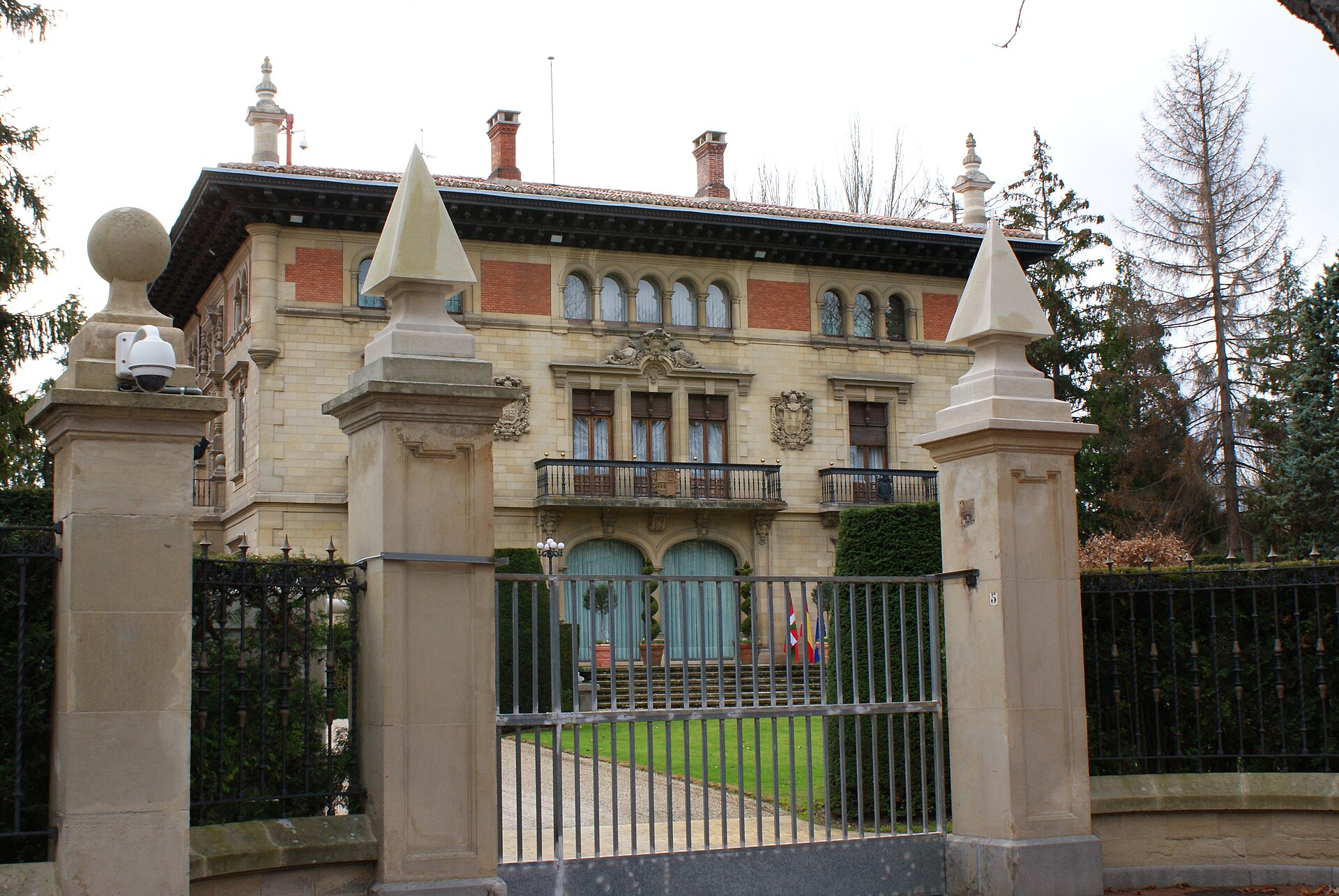
After the last of the Ajuria heirs passed away, the palace was transferred to the city and eventually became the official residence of the Lehendakari, the president of the Basque Government. The choice wasn’t arbitrary. The building’s blend of elegance and domesticity made it ideal for official functions while retaining its character. Though the interiors have been adapted for administrative use, traces of the past remain—handcrafted furniture, antique chandeliers, and even some original furnishings still evoke the lives of those who once lived here.
The exterior is just as striking. The façade is adorned with turrets, bay windows, and ornate balconies, while the main entrance is framed by a portal of elaborate stonework. The surrounding garden, though small, is carefully designed, with fountains, sculptures, and mosaic pathways that invite quiet contemplation. In summer, the garden hosts official receptions, but for most of the year, it’s accessible to visitors—though with restrictions, since the palace remains a working residence.
For Vitoria-Gasteiz, Ajuria Enea is more than just an architectural landmark; it’s a part of the city’s identity. Unlike many historic buildings that become museums, this one continues to serve a purpose, even if its role has evolved. It’s a rare example of the past and present coexisting seamlessly. The palace hasn’t been frozen in time; it lives alongside the city, adapting without losing its essence.
Visiting Ajuria Enea isn’t straightforward. Access to the interior is limited due to its status as a government residence, but even a stroll through the garden or around the building offers a sense of its grandeur. Locals often come here simply to sit on a bench, enjoying the quiet and the beauty of the surroundings. For visitors, the palace becomes a reminder of how history and modernity can coexist without clashing.
There’s a particular atmosphere around Ajuria Enea—one of calm, removed from the usual tourist bustle. Vitoria-Gasteiz is already known for its peaceful ambiance, but the palace adds a touch of aristocratic grace, a nod to an era when life moved at a slower pace and attention to detail was the norm.
Today, the palace isn’t just a workplace for politicians; it’s a symbol of continuity. It serves as a reminder that even in a rapidly changing world, some values endure: respect for history, appreciation for beauty, and the desire to preserve heritage for future generations. That, perhaps, is the real magic of Ajuria Enea—it doesn’t just stand there; it continues to tell its story to anyone willing to listen.