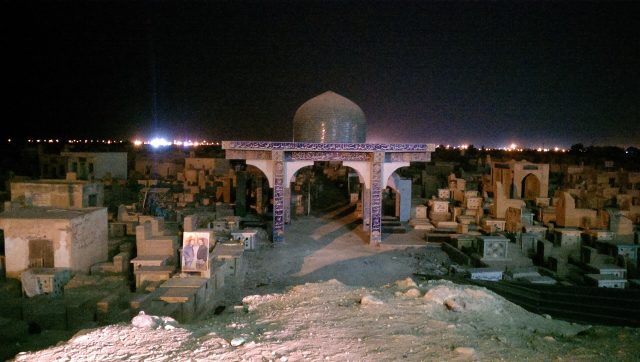
Al-Khidr Palace in Najaf is one of those places that doesn’t reveal itself at first glance. It isn’t the kind of attraction that draws crowds with flashy signs or tourist hype. There’s no bustle here, no sense of being hurried along—just the quiet weight of history in the old walls, the stillness of the inner courtyards, and the way sunlight falls across carved patterns. The palace sits on the edge of the city, where urban life gradually gives way to the vastness of the desert, as if time moves differently here.
Built in the mid-20th century, Al-Khidr was originally intended as a residence for local rulers, though its purpose shifted over the decades. The architecture blends traditional Iraqi motifs with elements of broader Middle Eastern palace design. Heavy gates adorned with geometric patterns lead into an inner courtyard, where guests once gathered for official receptions. The building is low but expansive, its thick walls offering respite from the heat and a sense of seclusion.
Inside, the palace still holds traces of its former grandeur. The main hall features faded frescoes of floral designs and Arabic calligraphy, their colors softened by time. Wooden ceilings are intricately carved, and the floors are laid with local stone mosaics. Some rooms still contain antique chandeliers and furniture, though they bear the marks of age. There’s no museum-like sterility here—just the feeling that the palace still breathes, even if its days of activity are long past.
Al-Khidr is deeply tied to Najaf’s history, a city that has been a center of Shia Islam for centuries. Over the years, the palace hosted religious leaders, politicians, and diplomats, its walls witnessing events whose details remain known only to a few. Though it no longer serves its original function, its significance to the city hasn’t faded. Locals regard it with quiet respect, as part of their heritage.
Visiting isn’t always possible—the palace has restricted access, and it’s best to check ahead. If you’re lucky enough to enter, you’ll walk through its halls and courtyards, sensing the layers of the past. There’s no tourist infrastructure here—no cafes, no souvenir stalls—just silence, the occasional passerby, and the feeling of stepping into a place where history hasn’t been smoothed away by modernity.
Najaf itself is a city apart. Unlike the bustle of Baghdad or the resort towns of northern Iraq, it moves to the rhythm of religious life—madrasas, mosques, and cemeteries where pilgrims from around the world are buried. Al-Khidr Palace is part of this world, yet it stands slightly apart, as if guarding its own secrets. That’s perhaps why it feels so compelling: it doesn’t demand attention, but simply exists, a quiet reminder that even in places far from tourist trails, there’s depth to be found.
If you find yourself in Najaf, take your time. Wander through the old city, visit the courtyard of the Imam Ali Mosque, and then make your way to Al-Khidr. The palace won’t dazzle you with opulence like European castles or awe you with scale like ancient ruins. Instead, it offers something subtler—the sense of time’s continuity, the quiet strength of tradition, and the way history lingers in stone and wood, even as the world around it changes.