Mauthausen’s Danube Park is where the river and the town merge so seamlessly it feels as if they’ve always belonged together. There’s no grand design here, no tourist crowds or manicured displays—just open space, quiet, and that particular light that lingers only along the Danube’s banks. The park stretches along the right shore, where gentle slopes descend to the water and old trees cast shifting shadows over paths worn smooth by locals and the occasional visitor. It wasn’t planned in any formal sense; it simply grew, absorbing the town’s rhythms and the weight of its past.
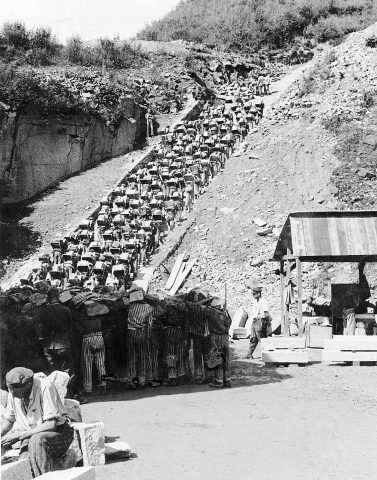
Mauthausen isn’t like other Austrian towns, where history is polished into something picturesque. Its story is heavier, less comfortable. During the Second World War, one of the most notorious concentration camps stood on its outskirts, and the memory of that time still lingers. But the Danube Park feels like a reprieve from that history. The river flows as it always has, indifferent to the weight of what happened nearby, and the trees rustle without knowing the stories they’ve witnessed. For many here, the park is a refuge—a place to sit without thinking, to let the water’s current carry away everything else.
There’s little in the way of traditional park architecture. No grand fountains, no ornate sculptures, no pavilions designed to impress. Instead, there are worn stone steps leading down to the water, wooden bridges arching over small streams, and benches positioned just right for watching the river. Some of them have been here for decades, their wood darkened by rain and time. Along the shore, granite embankments built in the 19th century still stand, remnants of a time when Mauthausen was a bustling trade hub. Back then, the Danube carried timber, salt, and wine, and the town moved at the unhurried pace of river life.
Summer is when the park feels most alive. The air stays cooler here than in the town center, carried by the breeze off the water. Locals bring books, thermoses of coffee, or just spread out on the grass to watch the barges drift by. Sometimes kayaks or small sailboats appear on the water—Mauthausen is quietly known as one of the calmer spots for river tourism along this stretch of the Danube. In autumn, the park transforms. The leaves turn gold, and the air fills with the scent of damp earth and decaying foliage. Winter is quieter, but the views are striking: the river widens, gray and still, with low clouds pressing down until they almost touch the surface.
For visitors passing through, the Danube Park offers a different side of Mauthausen—one without guided tours or souvenir stands. There’s no chatter, no crowds, just the sound of water lapping against the shore and the occasional cry of a gull. Fishermen sometimes sit along the bank, patient and unhurried, barely glancing up as people pass. A bike path runs alongside the river, winding toward neighboring villages. Locals use it often, and those who venture out on two wheels discover the countryside in a way that feels far removed from the town’s heavier history.
The park is woven into the fabric of daily life here. In summer, open-air concerts draw small crowds, with local musicians playing on a modest stage while people sit on the grass with bottles of wine. Occasionally, craft fairs pop up, selling wooden carvings, pottery, or traditional Austrian food. But even when nothing’s happening, the park doesn’t feel empty. It has its own rhythm, slow and steady, like the river itself.
As dusk falls, the park takes on a different mood. The lights don’t come on all at once, and for a while, everything exists in half-light—the trees as silhouettes, the river as a dark ribbon stretching into the distance. When the lamps do flicker to life, their glow is soft, not intrusive. In those moments, Mauthausen feels like a town suspended in time, where the past isn’t erased but somehow softened by the quiet persistence of the landscape.
This isn’t just a patch of green in the middle of town. The Danube Park is where the river, history, and everyday life intersect without pretense. There’s nothing forced about it, nothing staged. What remains is something rare in bigger cities: the sense that time moves differently here, and the world feels a little more real.