The Processional Way in Babylon is one of those rare fragments of the past that seems frozen in time, carrying echoes of the city’s former power and grandeur. Built during the reign of King Nebuchadnezzar II in the 6th century BCE, it was more than just a thoroughfare—it was a sacred path where religious processions honored Marduk, Babylon’s patron deity. Today, walking along its remnants, it’s difficult to imagine the scene that once unfolded here: priests in solemn procession, statues of gods carried aloft, hymns and prayers filling the air. Yet among the sun-baked bricks and faded reliefs, history feels almost tangible, as if the past lingers just beneath the surface.
The road itself was paved with massive stone slabs, many of which were adorned with images of lions—symbols of the goddess Ishtar, whose temple stood nearby. These lions, crafted from colorful glazed bricks, weren’t merely decorative; they were believed to protect the city from evil spirits and enemies. Some of these reliefs now reside in museums, but those that remain in place still impress with their craftsmanship. Each lion is a work of art, with meticulous details—manes resembling flames, expressive eyes that seem to hold ancient wisdom. They were more than symbols; they were guardians, watching over the city and its people.
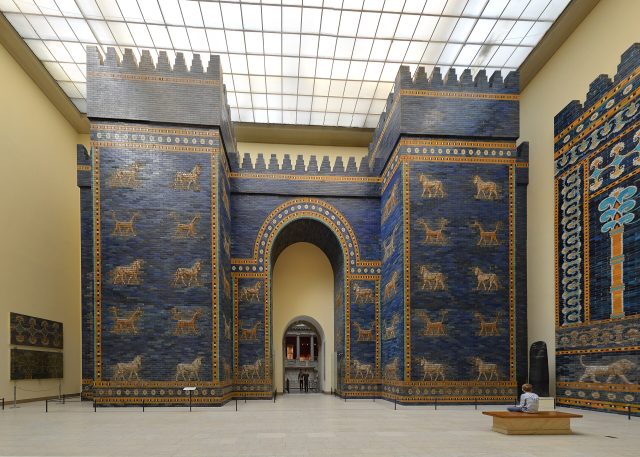
The Processional Way began at the Ishtar Gate, one of Babylon’s most famous structures, through which all major processions passed. The gate, covered in deep blue glazed bricks and decorated with dragons and bulls, was both a defensive fortification and a symbol of the city’s might. From there, the road led to the Esagila temple complex, home to Marduk’s main sanctuary. The route wasn’t arbitrary—it mirrored the mythical path Marduk took to battle chaos and establish order in the world. For the Babylonians, this wasn’t just a street; it was a sacred connection between the earthly and the divine.
The road’s design reflects remarkable foresight. Wider than most streets of its time, it accommodated large crowds and chariots with ease. High walls flanked its sides, shielding processions from wind and dust while creating an atmosphere of solemnity, separating the sacred from the mundane. Beneath the paving stones, drainage channels ensured the road remained dry, a testament to Babylonian engineering. This wasn’t just monumental construction; it was a commitment to durability, using techniques that were advanced for the era.
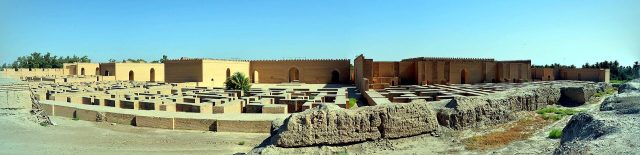
Today, the Processional Way is more archaeological site than active thoroughfare, but its impact remains powerful. Walking its length, you can’t help but wonder how many people have traversed these stones over the centuries—captive kings led to pay homage to Nebuchadnezzar, victorious soldiers returning from battle, or priests chanting hymns during festivals. This road witnessed not only religious ceremonies but also political speeches, alliances forged, and the fates of nations decided. It stood as a silent observer to the rise and fall of one of history’s greatest civilizations.
The preservation of the Processional Way owes much to the archaeologists who have worked here for decades. The German expedition led by Robert Koldewey in the early 20th century made particularly significant contributions, restoring parts of the Ishtar Gate and reconstructing sections of the road. Yet the work continues; each year, new discoveries refine our understanding of the past. The site is more than an open-air museum—it’s a living project, where history is still being uncovered and reinterpreted.
Visiting the Processional Way offers more than just a glimpse into Babylon’s past; it’s a chance to connect with the broader landscape of Mesopotamia, the cradle of civilization. This region, nestled between the Tigris and Euphrates rivers, gave birth to the world’s first cities, legal codes, and literary works. Even now, with Babylon reduced to ruins, the land retains a sense of timelessness. The heat, the dust, the vast plains—all serve as a backdrop to a place where history feels alive in every stone. Walking the Processional Way, you sense that fleeting moment when past and present briefly merge.
Modern Babylon is far from the dazzling metropolis described by ancient historians. Wars, time, and human activity have left their marks. Yet even in its diminished state, it remains one of the world’s most important archaeological sites. The Processional Way isn’t just a remnant of an ancient street; it’s a symbol of how fragile and enduring human civilization can be. It reminds us that empires may fade, but their legacy endures in stone, myth, and memory. Standing here, you feel a mix of awe and melancholy, pride and humility—a quiet acknowledgment of history’s vast and unyielding presence.