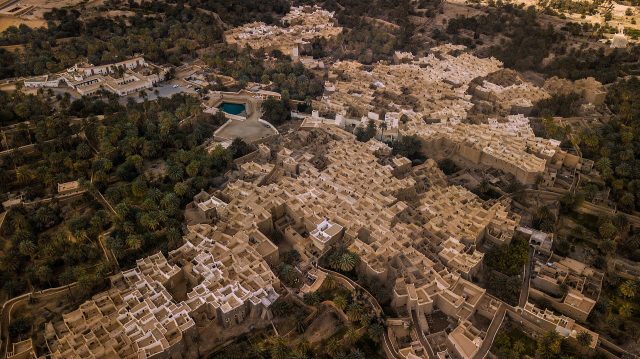
Ghadames is often called the pearl of the desert, and nowhere is this more evident than in the old city, a place where time seems to move at its own unhurried pace. The House of Traditions, or Dar al-Turat, stands as a quiet testament to the ingenuity of those who made their lives here, long before modern comforts reached the edge of the Sahara. This isn’t just a museum—it’s a living record of how people adapted to one of the harshest environments on earth, where every architectural choice and household object tells a story of survival and resilience.
The old city of Ghadames, a UNESCO World Heritage site, is a maze of narrow, shaded alleyways where the buildings themselves seem to breathe. The houses are built close together, their thick mud-brick walls and small, high windows designed to keep out the relentless desert heat. Palm fronds stretch overhead, casting dappled shadows that soften the glare of the sun. Inside, the air is cooler, almost hushed, as if the walls themselves are holding their breath. The House of Traditions is no different from its neighbors at first glance—just another unassuming structure in a city where modesty was always a virtue. But step inside, and the past comes alive in a way that feels almost intimate.
The layout of the house follows a pattern that has remained unchanged for centuries. The ground floor was traditionally used for storage and work, while the upper level served as the family’s living space. Flat roofs, where dates were laid out to dry and where families gathered in the cooler evenings, complete the design. In Dar al-Turat, this structure has been preserved nearly intact, offering a glimpse into daily life as it was lived generations ago. The rooms are arranged not for spectacle, but for function—each space serving a purpose, whether it was weaving, cooking, or simply resting in the shade.
What makes the house remarkable are the objects it holds. The museum’s collection is a carefully curated selection of items that once filled the homes of Ghadames: wooden looms where women wove intricate carpets and clothing, clay pots used to store water and cook meals, tools for tending the date palms that were the lifeblood of the oasis. There are also the personal touches—silver bracelets, amber and coral necklaces, leather bags adorned with geometric patterns—that speak to the city’s role as a crossroads of trade. Ghadames was never just a remote desert outpost; it was a hub where goods and cultures met, where caravans from the Mediterranean and sub-Saharan Africa paused to rest and exchange stories.
The house itself dates back to the 18th or 19th century, a time when Ghadames thrived as a trading center. Its original owners were likely a prosperous family, perhaps merchants or artisans, who built their home to last. The construction methods were practical, even ingenious: mud bricks reinforced with palm fibers created walls that were both sturdy and insulating, while the flat roofs were designed to catch every drop of rainwater—a precious resource in a land where water was more valuable than gold. The house has seen generations come and go, its walls absorbing the sounds of daily life, the laughter of children, the quiet conversations of elders.
Visiting Dar al-Turat is best done in the early morning or late afternoon, when the desert sun is less oppressive. There are no crowds here, no rush to move from one exhibit to the next. Instead, you can take your time, running your fingers over the worn wooden doors, peering into the small niches where families once kept their most treasured possessions. The narrow staircases leading to the roof are steep, but the view from the top is worth the climb—a panorama of the old city, its earthen tones blending seamlessly with the surrounding dunes. Sometimes, local residents stop by, either to show the house to visitors or to reminisce about their own past. Their presence adds another layer to the experience, turning the museum from a static display into something more personal, more alive.
Ghadames is a place where the modern world feels distant, almost irrelevant. There are no neon signs, no traffic jams, no hurried footsteps. Instead, there’s a sense of stillness, a connection to something older and deeper. The House of Traditions embodies this feeling. It doesn’t try to impress with grandeur or spectacle; its power lies in its simplicity. Every object, every architectural detail, carries the weight of history—of the people who built these walls, who tended the palm groves, who welcomed travelers from distant lands. To walk through its rooms is to step into their world, if only for a moment.
The city hasn’t always been accessible to outsiders. For years, political instability kept Ghadames off the tourist map, preserving it in a way that few other places have been. Today, visitors are slowly returning, but the old city remains largely untouched by mass tourism. There are no souvenir stalls lining the streets, no tour groups rushing from one attraction to the next. Instead, there’s the chance to experience Ghadames as it has always been—a place where time moves differently, where the past is never far from the present.
If you find yourself in Ghadames, don’t rush. Take the time to wander through the old city, to lose yourself in its labyrinth of alleys. Visit the House of Traditions, not just to see its exhibits, but to feel the rhythm of life as it was lived here for centuries. Climb to the roof of one of the houses as the sun sets, watching the light play across the dunes. In that quiet moment, you might begin to understand what the desert truly is—not a barren wasteland, but a place of quiet beauty, of enduring wisdom, of lives shaped by the land itself. The House of Traditions is just one small part of that story, but it’s a part that lingers long after you’ve left.