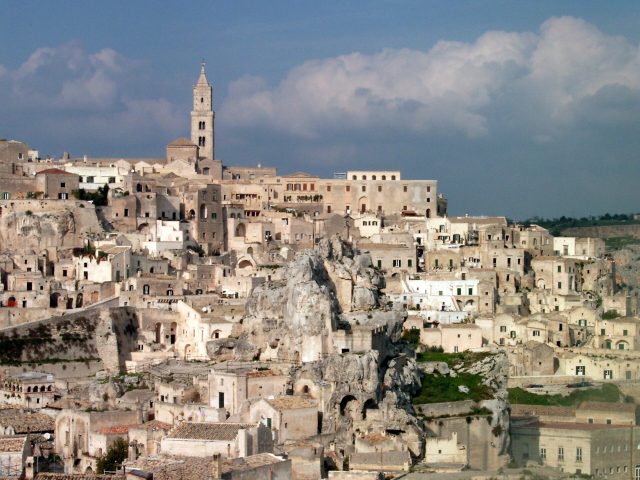
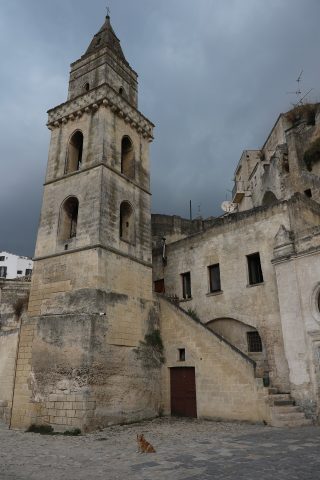
Matera is a city carved from time itself, its ancient districts hollowed out of rock as if nature and human hands conspired to preserve a way of life unchanged for centuries. Among these cave dwellings, the Grotto House of Pasquale stands as one of the most vivid examples of Sassi architecture—a place where the past isn’t just remembered but felt. Stepping inside is like entering a world where the earth itself provided shelter, where families lived, worked, and endured without the comforts we now take for granted.
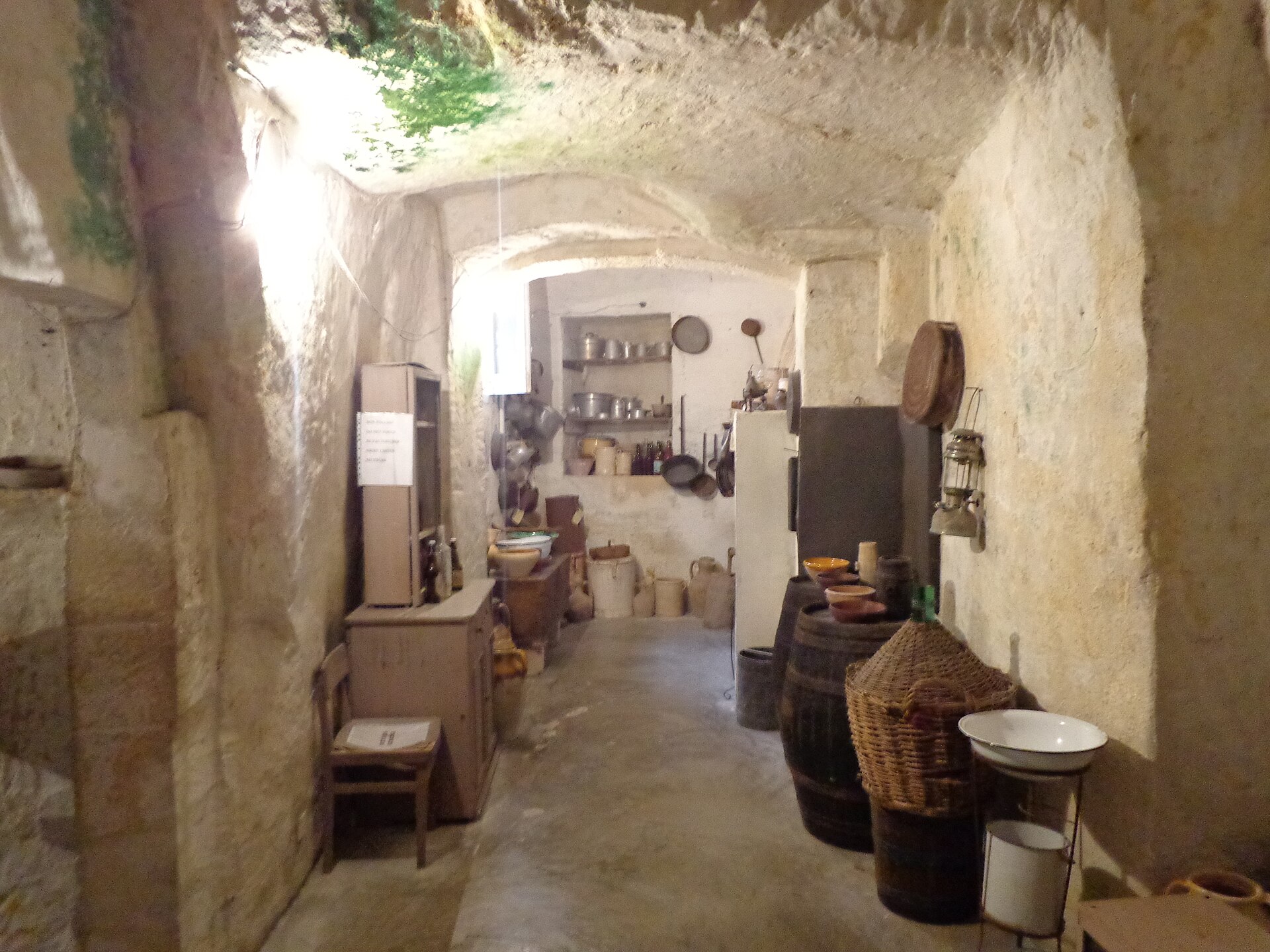
The Grotto House of Pasquale isn’t a museum in the traditional sense. It’s a living record of how people once inhabited these stone chambers, adapting to the land rather than reshaping it. The walls, worn smooth by generations, still hold the traces of daily life: clay pots for storing grain, wooden tools for weaving and farming, the blackened hearth where meals were cooked over open flames. There’s no electricity here, no running water, just the quiet persistence of a home that has outlasted its original inhabitants. The air carries the faint scent of damp stone and old wood, a reminder that this place was never meant to be empty.
The layout of the house follows the logic of necessity. Low ceilings force you to duck as you move between rooms, small windows let in just enough light to see by, and narrow passages connect spaces that served distinct purposes—a kitchen with its soot-stained fireplace, a sleeping area with straw-filled mattresses, a storage room for tools and food. In winter, the thick stone walls retained heat from the fire, while in summer, the cave’s natural coolness offered relief from the sun. Life here was hard, but it was also resourceful, shaped by the rhythms of the land and the seasons.
What makes this house different from many other abandoned grottoes in Matera is that it wasn’t left to decay. Instead, it was carefully restored to show visitors what life in the Sassi was like before the mid-20th century, when the Italian government relocated families from the caves to modern housing. The exodus left many of these dwellings empty, but places like the Grotto House of Pasquale ensure that the past isn’t forgotten. Walking through its rooms, you can almost hear the voices of the people who once lived here—the murmur of conversation, the crackle of the fire, the sound of children playing in the narrow alleys outside.
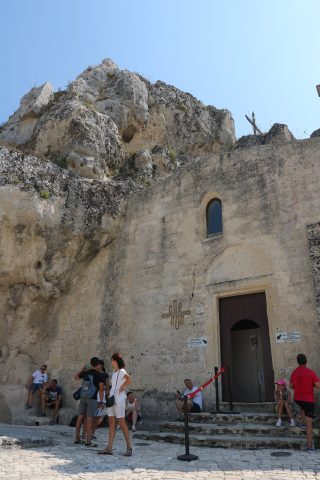
Matera’s cave districts are more than a tourist attraction; they’re a testament to human ingenuity. In 1993, UNESCO recognized the Sassi as a World Heritage site, praising them as an extraordinary example of how people adapted to their environment. The Grotto House of Pasquale is a small but essential part of that story. It doesn’t romanticize the past—life here was difficult, often harsh—but it does show how people created warmth and dignity in even the most modest of homes. The simplicity of the space forces you to slow down, to notice the details that modern life usually obscures.
Visiting this house isn’t like touring a typical museum. There are no glass cases or explanatory plaques, just the raw authenticity of a home that has stood for centuries. The absence of modern distractions makes it easier to imagine what life was like here—how families gathered around the fire, how they stored food in clay jars to keep it cool, how they slept under rough wool blankets. The experience lingers because it’s not just about seeing; it’s about feeling the weight of history in the stone beneath your fingers.
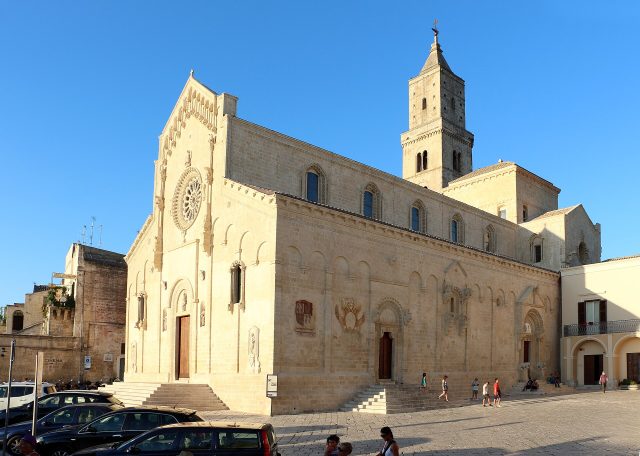
Matera is changing, as all cities do. New hotels, restaurants, and galleries have sprung up, bringing a different kind of energy to the streets. But the Sassi remain the heart of the city, a reminder that Matera’s identity is rooted in its past. The Grotto House of Pasquale bridges that past and present, offering a glimpse into a way of life that, while vanished, still shapes the city today. Without these caves, Matera would lose more than just its history—it would lose its soul.
For those who come here, the house is more than a stop on a tour. It’s a quiet invitation to step outside of time, to sit in the dim light of a cave and listen to the echoes of a life that was both ordinary and extraordinary. There’s no grand narrative here, no dramatic retelling of events—just the quiet persistence of a home that has witnessed centuries of human existence. And in that simplicity lies its power.