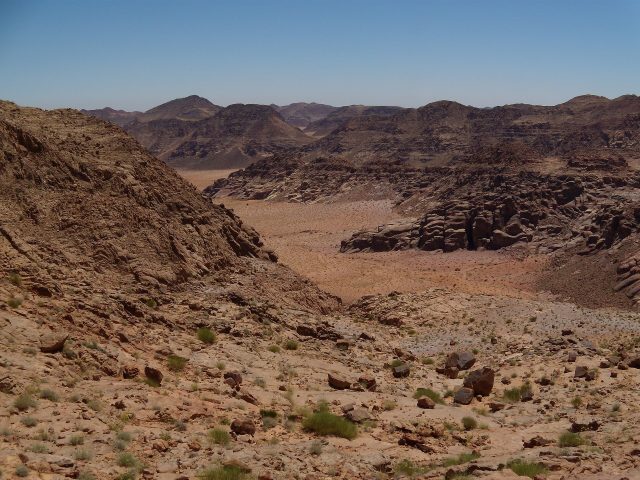
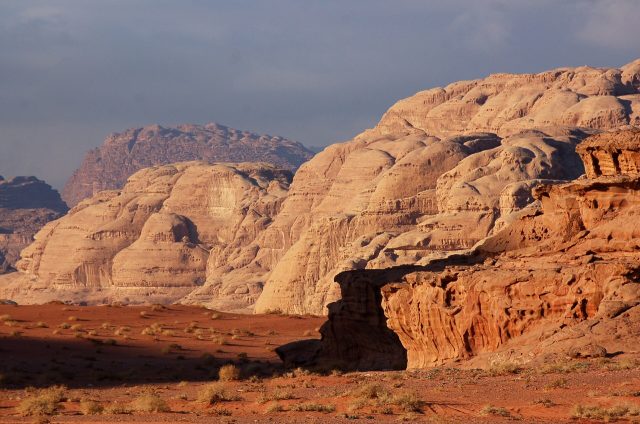
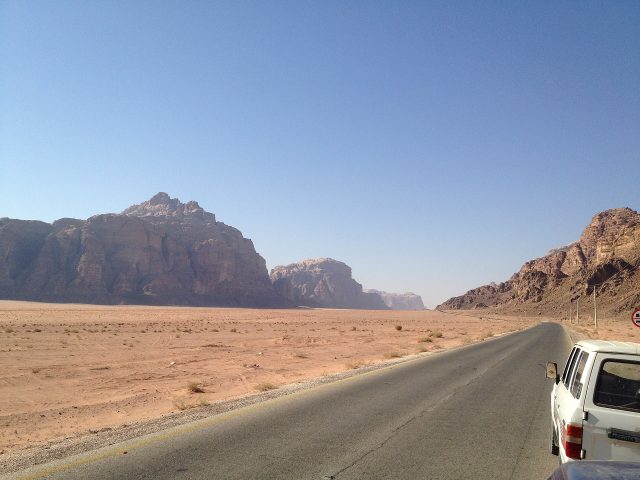
Wadi Rum is often called the Valley of the Moon, and the name fits in a way that goes beyond mere poetry. Stepping into this vast desert feels like crossing into another world, where the familiar contours of earth dissolve into something alien and awe-inspiring. Towering sandstone and granite formations rise from the sands like the ruins of a forgotten civilization or the petrified waves of some ancient sea. The colors here are never just one shade—the sand shifts between ochre, rose, and terracotta, deepening into fiery hues at sunrise and sunset. It’s easy to see why filmmakers have chosen this landscape as a stand-in for Mars; the illusion of another planet is almost too convincing.
The history of Wadi Rum stretches back thousands of years, etched into the rocks themselves. Petroglyphs carved into the cliffs tell stories of nomadic tribes who once roamed these lands, hunting and leaving behind traces of their lives in symbols and figures. Later, the valley became a crucial stop along the trade routes that connected the Arabian Peninsula to the Levant. Caravans laden with spices, silk, and incense passed through, relying on Wadi Rum’s rare water sources and shelter from the relentless sun. Today, the Bedouin people still call this place home, preserving traditions that have endured for generations. Their hospitality is as much a part of the landscape as the rocks and sand, offering travelers a glimpse into a way of life that has remained largely unchanged.
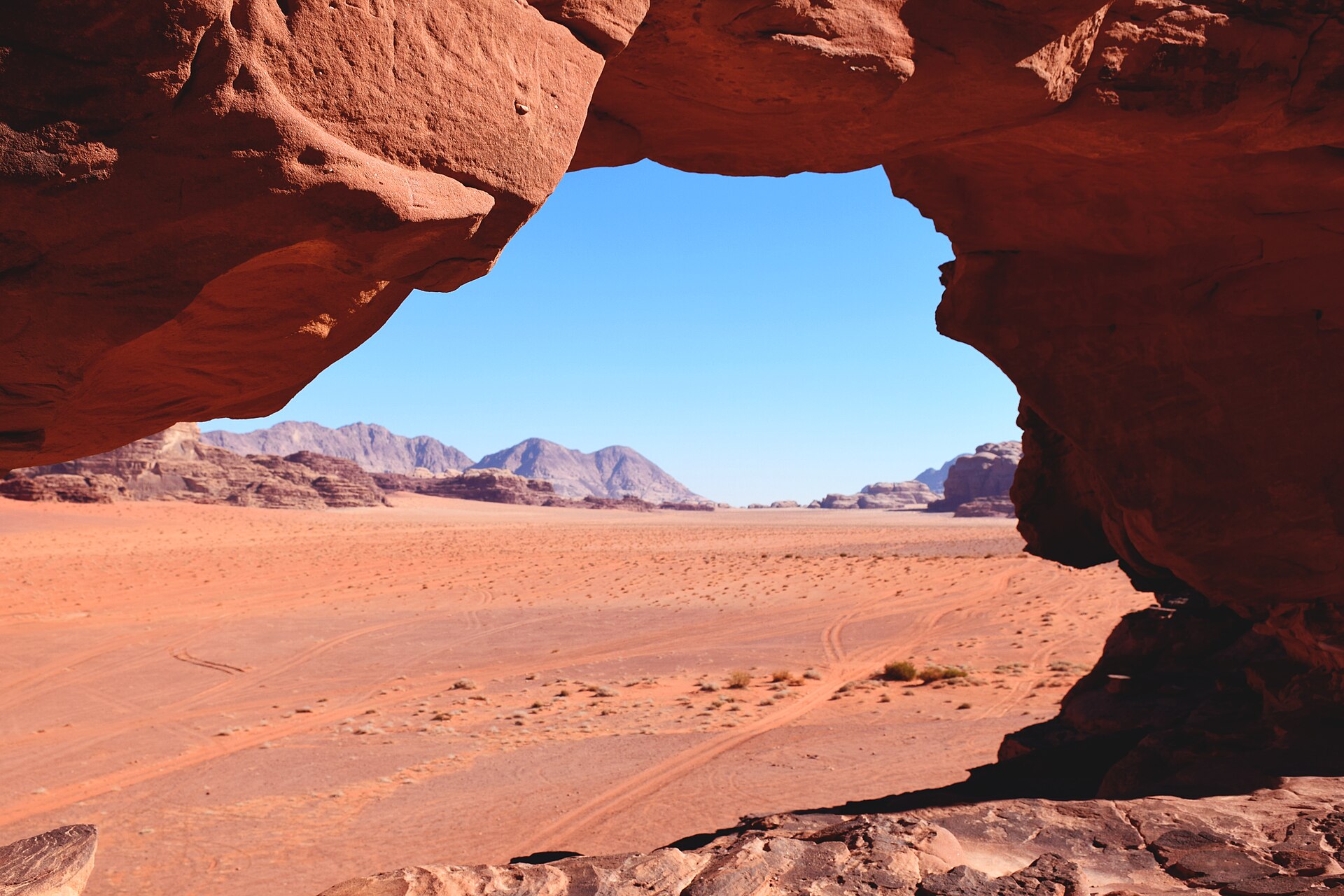
What makes Wadi Rum’s architecture so striking isn’t man-made structures, but the natural formations that dominate the horizon. The valley’s rock formations are as unique in shape as they are in color. Among the most famous is the Seven Pillars of Wisdom, a massive sandstone monolith named after T.E. Lawrence’s memoir. Its seven distinct peaks do resemble towering columns, standing sentinel over the desert. Elsewhere, natural arches frame the sky like portals to another dimension, while narrow canyons wind between cliffs, offering passage only to those on foot. Each of these formations has its own name and legend, passed down through generations of Bedouin storytellers.
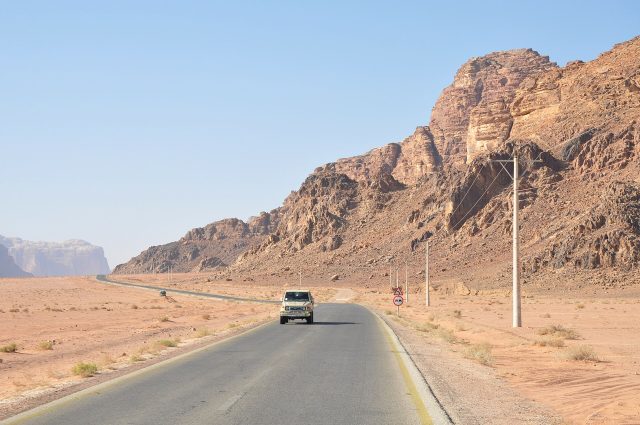
This is a place that invites exploration, not just observation. The desert offers countless ways to experience its vastness—whether on foot, climbing the dunes, scaling the rocks, or racing across the sands in a jeep. Camel rides are a slower, more meditative way to traverse the landscape, allowing time to absorb the silence and scale of the surroundings. If you’re lucky, you might witness a traditional Bedouin meal being prepared in the sand, where meat and vegetables are slow-cooked beneath hot stones, their flavors deepened by the earth itself.
When night falls, Wadi Rum becomes one of the best places on Earth to gaze at the stars. With no light pollution and air so clear it feels almost weightless, the Milky Way stretches across the sky in vivid detail. The Bedouin often gather around fires, sharing stories about the constellations and their significance in Arab culture. Lying on the sand, watching the heavens turn, it’s impossible not to feel the weight of time slow down. The desert has always been a place for contemplation, and here, beneath that endless sky, it’s easy to understand why.
Wadi Rum isn’t just a destination; it’s an experience that lingers long after you’ve left. There are no crowds, no noise, no distractions—just wind, sand, rock, and sky. It’s a place that makes you feel small in the best possible way, a reminder of nature’s power and beauty. Many come for a day and end up staying longer, drawn in by the desert’s quiet magic. It doesn’t just calm or inspire; it changes something inside you, even if only for a little while.
For those who want to go deeper, staying in a Bedouin camp offers a chance to connect with the land in a more intimate way. These aren’t luxury resorts, but simple tents where guests are welcomed like family. There are no modern comforts—no air conditioning, no running hot water—but there’s something far more valuable: genuine hospitality and a glimpse into a life where the desert isn’t an exotic backdrop, but home. The Bedouin are happy to share their traditions, from brewing Arabic coffee to playing the rebab, a traditional stringed instrument. Time moves differently in these camps, measured not by clocks, but by the rhythm of the desert.
Wadi Rum is a place that demands to be felt, not just seen. Some come for the otherworldly landscapes, others for solitude or adventure. But no one leaves unchanged. The desert has a way of stripping things down to their essence, making you question what really matters. Maybe that’s why people keep coming back—to remind themselves that the world is bigger, stranger, and more beautiful than it seems at first glance.