Kong is one of those quiet Irish villages that feels like it hasn’t changed in decades, though its roots stretch back much further. Tucked between the rolling hills of County Mayo and the shores of Lough Corrib, it sits in a landscape where the past lingers in the stone walls, the slow pace of life, and the way the mist clings to the low mountains in the morning. There’s no grand monument here, no bustling square—just a handful of houses, a pub or two, and the kind of stillness that makes you slow down without realizing it.
The village’s name is often met with a chuckle from visitors, especially those who recognize it from a certain cinematic classic. Kong gained a touch of fame when it stood in for the fictional village of Castlebridge in *The Quiet Man*, John Ford’s 1952 film starring John Wayne and Maureen O’Hara. The movie, with its Technicolor landscapes and romanticized portrayal of rural Ireland, turned Kong into a minor pilgrimage site for fans. Today, you might still find a few people wandering the lanes with a copy of the film’s poster, trying to match the scenes to the real place. But beyond the Hollywood connection, Kong’s appeal lies in its unassuming authenticity.
The surrounding countryside is what truly defines this part of Mayo. Lough Corrib, one of Ireland’s largest lakes, lies just to the east, its dark waters dotted with islands and framed by reeds that sway in the wind. The lake has been a source of life here for centuries, providing fish, transport, and a sense of isolation that must have felt both comforting and daunting to those who lived along its shores. Nearby, the Partry Mountains rise gently, their slopes covered in heather and bogland, a landscape that shifts with the seasons—vibrant purple in late summer, muted brown in winter, and lush green in the brief but intense Irish spring.
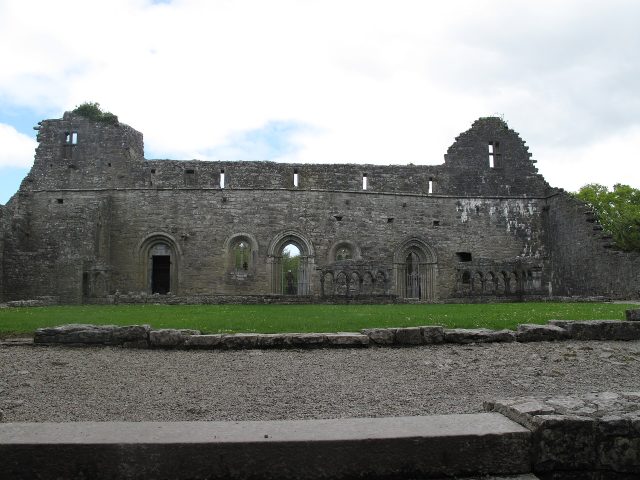
Kong’s history is tied to the land in the way that so many rural Irish villages are. There’s no grand narrative of battles or kings here, just the quiet persistence of people making a life in a place that demands resilience. The village sits near the ruins of Cong Abbey, a medieval monastery founded in the 12th century by the Augustinians. The abbey’s remains are modest but evocative, with a mix of Romanesque and Gothic details that hint at its former importance. It was once a center of learning and pilgrimage, though today it’s more of a quiet spot for a walk, where the crumbling stone arches frame views of the countryside.
The village itself is little more than a cluster of buildings along a single road, but that simplicity is part of its charm. There’s a sense of community here that’s hard to find in busier places. The local pub, if you’re lucky enough to find it open, is the kind of place where strangers are still greeted with a nod and a question about where they’ve come from. Conversations might drift from the weather to the fishing on the lake to the latest hurling match, all delivered in the soft lilt of a Mayo accent. It’s not the kind of place where people rush, and that’s exactly why some visitors find themselves lingering longer than they planned.
For those who venture beyond the village, the area offers plenty of reasons to stay. The Cong Canal, a short-lived 19th-century engineering project, runs nearby—a failed attempt to connect Lough Corrib with Lough Mask. Though it was never completed, the canal’s remnants add another layer to the landscape, a reminder of the ambitions and setbacks that have shaped this part of Ireland. Nearby Ashford Castle, now a luxury hotel, stands as a more successful testament to the region’s history. Built in the 19th century by the Guinness family, the castle’s turrets and manicured gardens feel like something out of a fairy tale, a stark contrast to the wild beauty of the surrounding bogs and lakes.
The best way to experience Kong is to treat it as a starting point rather than a destination. Walk the quiet roads that wind through the countryside, where sheep graze behind stone walls and the only sounds are the wind and the occasional call of a curlew. Rent a boat on Lough Corrib and spend an afternoon drifting past islands that have been inhabited for centuries, their ruins telling stories of monks, farmers, and fishermen. Or simply sit by the lake with a thermos of tea and watch the light change over the water, the way it must have for generations before you.
There’s no fanfare in Kong, no grand attractions vying for attention. That’s the point. It’s a place where the rhythm of life is dictated by the seasons, the tides, and the slow turning of the years. For those who come looking for the Ireland of postcards and guidebooks, it might feel too quiet, too ordinary. But for those who stay awhile, it reveals itself as something far more enduring—a place where the past isn’t just remembered, but still very much alive.