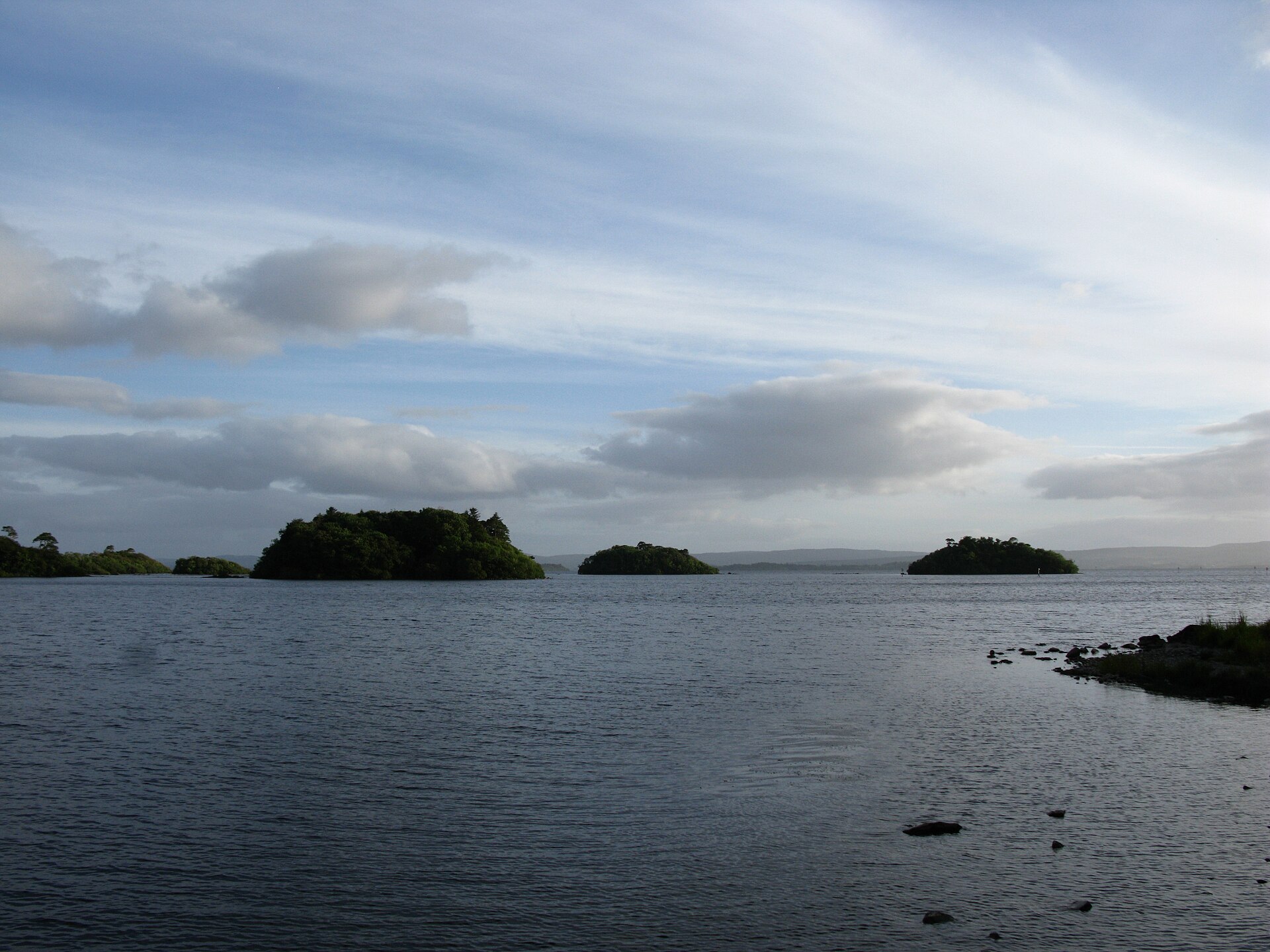
Lough Corrib is one of those rare places in Ireland where the land seems to pause, as if the earth itself has decided to show what stillness really looks like. Stretching across the western part of the country between County Galway and County Mayo, the lake spans nearly forty kilometers, narrowing into slender channels before widening into vast, open expanses. There are no crowded resorts here, no tourist traps—just the quiet lapping of water against the shore, the distant cry of gulls, and the occasional boat gliding across the surface like a whisper. The hills on the horizon blur into the sky, and the only movement comes from the wind rippling the water or the slow drift of clouds overhead.
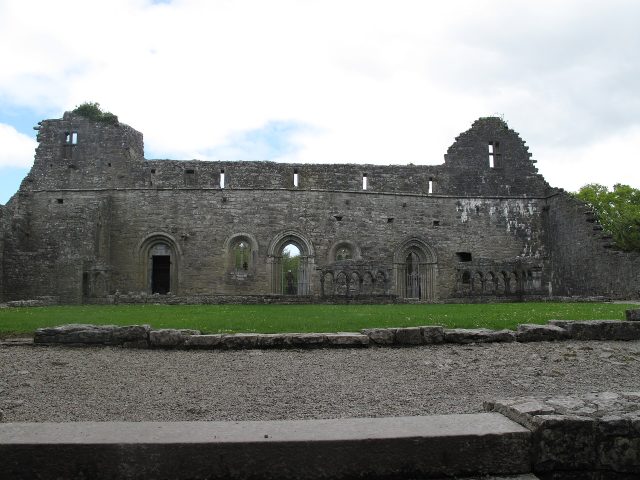
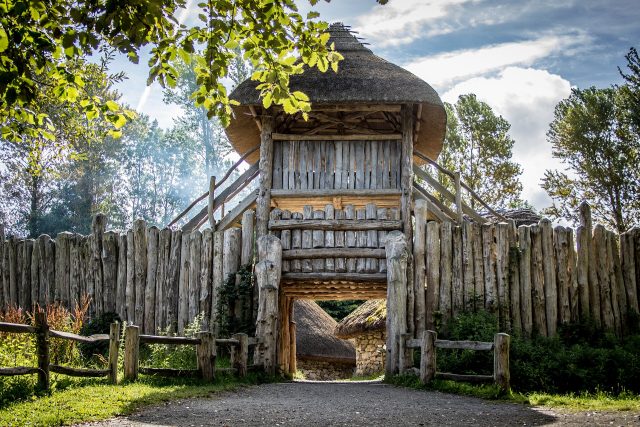
The lake’s origins trace back to the last Ice Age, when retreating glaciers carved its basin, leaving behind a jagged underwater landscape and dozens of small islands. People have lived along its shores for millennia, and traces of their presence remain scattered across the water. On Inishmacnaughtin, one of the larger islands, the ruins of a seventh-century monastery founded by Saint Patrick still stand. The crumbling stone walls, softened by moss, and the solitary round tower speak of a time when monks sought refuge here from Viking raids. Nearby, on the Ross Peninsula, archaeologists have uncovered remnants of a Bronze Age settlement, proof that these shores were home to people long before Christianity reached Ireland.
The water in Lough Corrib is clear, though not as dark as some of Ireland’s other lakes. Fed by rivers and streams tumbling down from the surrounding hills, as well as underground springs, it sustains a rich ecosystem. The lake is famous for its fish—salmon, trout, pike, and eel—drawing anglers who cast their lines much as their ancestors did generations ago. While fishing remains a way of life for some, others come for the wildlife. In spring and autumn, flocks of migrating birds pass overhead, and in winter, wild geese and swans gather along the shores. The lake feels alive in a way that’s hard to describe, as if the water itself breathes with the changing seasons.
The landscape around Lough Corrib isn’t dramatic in the way some might expect. There are no towering cliffs or dense forests, but there’s something more enduring here—a sense of untamed space that feels increasingly rare. The land rolls gently, covered in heather and peat bogs, shifting in color with the light. On clear days, the water turns an impossible shade of blue, while in overcast weather, it darkens to a slate gray, merging with the sky. The best moments often come at dusk, when the setting sun paints the lake in gold and pink, and the hills fade into shadow.
The small town of Cong, perched on the lake’s northern shore, serves as a quiet gateway to this world. It’s not a place that demands attention—just a handful of pubs where locals and visitors share a pint, a few cozy guesthouses, and a couple of shops selling handmade crafts. The real draw is Ashford Castle, a 19th-century estate built on the site of a medieval fortress. Now a luxury hotel, its grounds are open to the public, and even a short walk through the oak-lined paths or along the swan-filled ponds feels like stepping into another era. The castle’s presence adds a touch of grandeur to the otherwise understated landscape, though it never overshadows the lake itself.
For centuries, Lough Corrib played a vital role in the lives of those who lived nearby. In medieval times, it acted as a natural barrier against invaders, while later, it became a crucial trade route, carrying peat, fish, and goods between remote villages and larger towns. Today, the old jetties and abandoned barges are the only reminders of that past, but the rhythm of life here still follows the seasons. Summer brings small festivals and markets, winter offers quiet walks along the shore, and spring and autumn are for fishing and birdwatching. The lake doesn’t announce its importance—it simply endures, as it always has.
There are a few ways to explore Lough Corrib more deeply. Renting a boat offers the chance to visit islands like Inishturk, where ancient ruins hint at long-forgotten lives. For those who prefer to stay on land, the trail from Cong to the village of Corrib covers about twenty kilometers, winding along the shore with ever-changing views of the water and hills. Local boat tours provide another perspective, with guides sharing stories about the lake’s history, its fishing traditions, and the hidden corners that are difficult to reach on foot. Each approach reveals something different, whether it’s the play of light on the water or the way the wind carries the scent of damp earth and heather.
Lough Corrib isn’t the kind of place that makes it onto glossy travel brochures. There are no grand attractions or flashy entertainment, but that’s precisely what makes it special. This is a landscape that asks for patience, a place where time moves differently. You might come for the fishing or the history, but you’ll stay for the quiet—the chance to sit by the water, watch the clouds drift overhead, and feel the weight of the world slip away. It’s the kind of place that lingers in your memory long after you’ve left, not because of anything in particular, but because of the way it makes you feel. And perhaps that’s why people keep returning, not for something new, but for the same sense of peace they found the first time.