The woods around Cong are one of those rare places in Ireland where the landscape feels suspended in time. Tucked between Lough Corrib and Lough Mask in the west of the country, these forests stretch across the land like an old story half-remembered. Ancient trees stand where they always have, moss softens the ground, and the only sounds are leaves shifting and birds calling.
Cong Wood, as the locals call it, holds the memory of Ireland as it once was—wild, quiet, and vast.
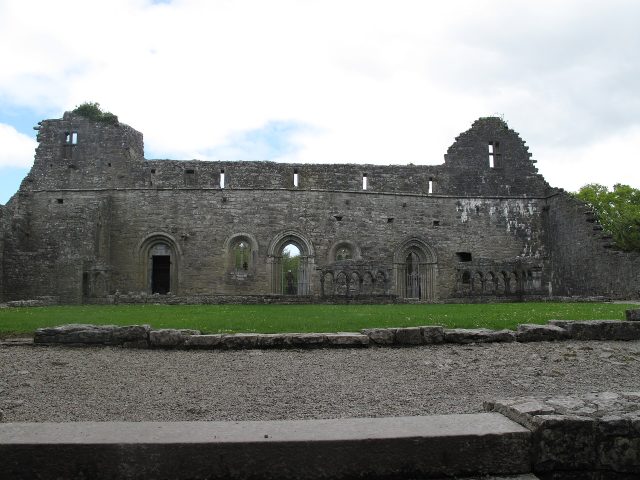
The history of these woods is tied to Cong, a village that was once a monastic center. In the Middle Ages, Saint Feichin of Fore founded a monastery here, and the forest marked its boundary. Later, the Browne family, Earls of Mayo, built Ashford Castle nearby. The woods were never cleared. Some say the land was too boggy; others believe the owners saw its value and left it alone.
Today, Cong Wood is a nature reserve. Oak, ash, birch, and pine grow thickly, sheltering ferns and heather. The ground is soft in places, almost spongy, while small bogs glisten in the hollows. In spring, wild garlic fills the air; in autumn, the forest floor turns gold and crimson. Winter brings stillness—bare trees against the sky, save for the pines that stay green.
One of the most lasting features is the network of 19th-century paths, once used by the aristocracy. The most famous leads to the Love Bridge, a small wooden footbridge over a stream. Local legend says a couple crossing hand in hand will stay together. The bridge is narrow, slightly crooked, but sturdy. Nearby stands an enormous oak, its trunk so wide it would take several people to encircle it. Some say it has stood for three hundred years.
Cong Wood is home to wildlife. Birds—woodpeckers, jays, thrushes—flit through the branches. If you’re lucky, you might see a kingfisher darting over the streams or a sparrowhawk circling above. Trout fill the waters; foxes and badgers move through the undergrowth. In summer, bees hum, crickets chirp, and fireflies flicker at dusk.
Walking trails vary in length. The shortest is a half-hour stroll from the car park to the Love Bridge. Longer routes lead to the lakes or old limestone quarries, where stone was once cut for building. One path passes the ruins of an 18th-century mill, its moss-covered walls all that remain. Even in decay, it shows how people once lived in rhythm with the land.
What makes Cong Wood special is its authenticity. There’s no grand scenery, no staged beauty—just trees, water, earth, and sky. That simplicity draws people, especially those tired of noise. You can walk the paths, listen to the wind, breathe the damp air, and feel the weight of the day lift.
The woods are part of Ireland’s living culture. Locals treat the place with quiet pride because it carries the memory of a time when people lived in harmony with nature. Stories of fairies and forest spirits still linger. Few believe in them now, but the atmosphere makes it easy to imagine.
If you come to Cong, don’t rush. Walk the trails, sit by the lake, listen to the water. It’s here you might feel *craic*—that sense of being exactly where you’re meant to be. Cong Wood isn’t just a place; it’s a piece of the real Ireland.