Kong Abbey is one of those places in Ireland where time seems to slow down, as if the land itself is holding its breath. Perched on the shores of Lough Corrib, surrounded by gentle hills and lush greenery, the ruins of this medieval monastery carry the quiet weight of centuries. Founded in the early 12th century, the abbey was once a center of religious and cultural life, and even now, its crumbling walls whisper stories of a distant past. There’s no grand spectacle here, no crowds pressing in—just the stillness of history etched into stone.
The abbey was established in 1134 by Turlough O’Connor, a powerful king of Connacht whose influence stretched across much of Ireland. He chose this spot deliberately. Kong had long been a crossroads of trade and politics, a place where rivers and roads converged, and where the land itself seemed to hum with significance. The Augustinians, known for their discipline and scholarship, made the abbey their home. Here, monks copied manuscripts by hand, taught local children, and maintained ties with monasteries across Europe. In an age when knowledge was fragile, places like Kong were vital—repositories of learning, faith, and tradition.
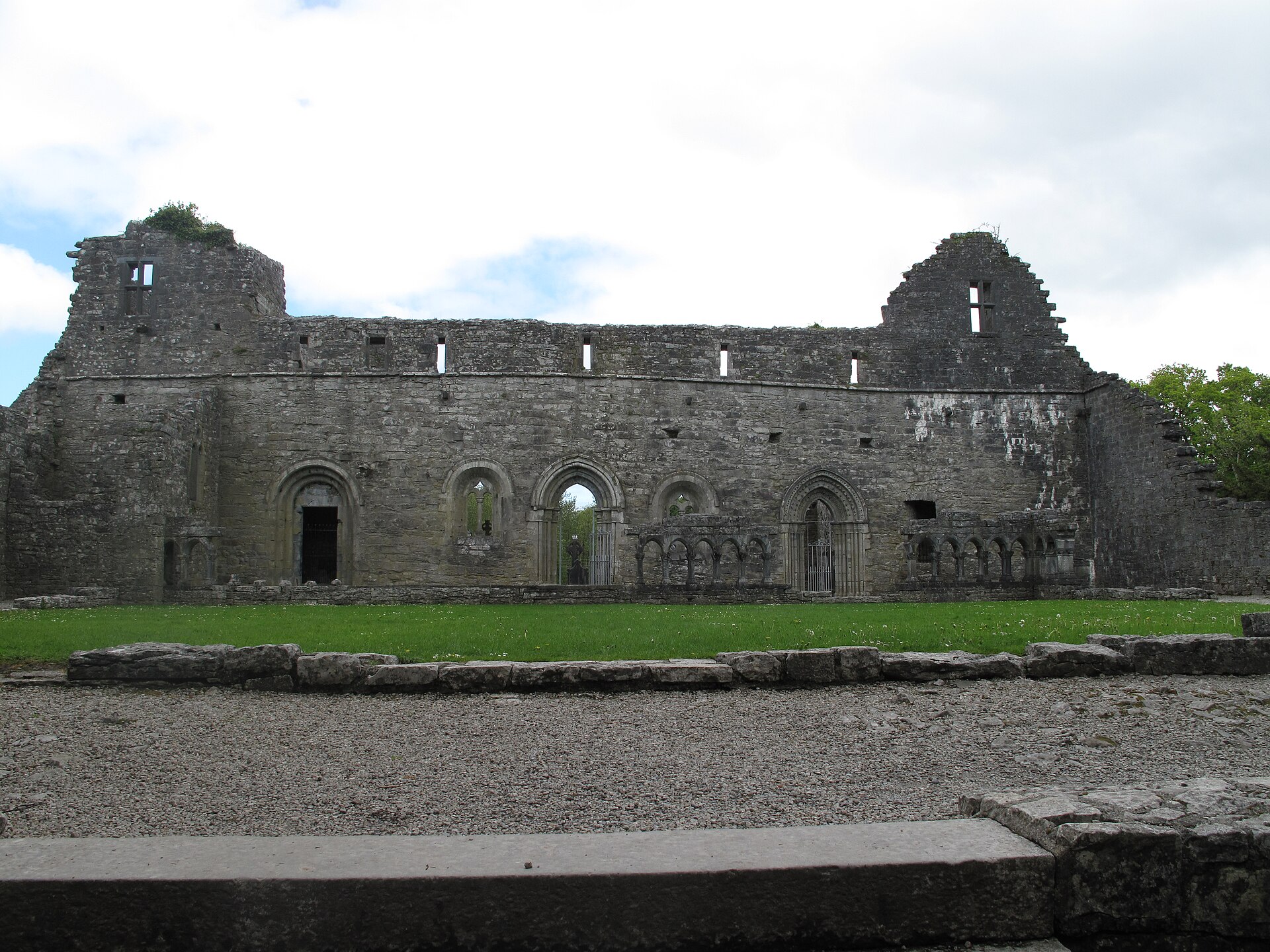
The architecture reflects the layers of history that shaped it. Romanesque arches blend into early Gothic details, a testament to the slow evolution of styles over the centuries. The remains of the nave, where monks once gathered for prayer, still convey a sense of solemn grandeur. Tall, narrow windows—long since stripped of their stained glass—frame the sky like forgotten portals. The columns, though weathered, stand firm, their proportions hinting at the care with which they were built. Even in ruin, the abbey feels alive, as if the stones themselves remember the voices that once filled the space.
One of the most striking features is the so-called "Window of Kong," a slender arch said to have been used by Turlough O’Connor to oversee the abbey’s construction. Legend claims he watched the work from here, ensuring every stone was laid to his satisfaction. Today, visitors pause to photograph it, though few realize the story behind it—a tale of ambition, power, and the fragile line between devotion and control. The window frames a view of the lake, its waters shimmering under the Irish sky, a reminder that this place was always more than just a building. It was a stage for human drama, where faith and politics intertwined.
Like many monastic sites in Ireland, Kong Abbey suffered during the Reformation. In the 16th century, it was looted and abandoned, left to the mercy of time and the elements. Yet even in decay, it never lost its hold on the local imagination. Villagers continued to regard it as sacred ground, and by the 19th century, travelers and antiquarians began to take notice. Efforts to preserve the ruins were modest at first, but they ensured that the abbey would endure—not as a living monastery, but as a monument to the past.
What makes Kong Abbey special today is its quietness. Unlike the bustling streets of Dublin or the tourist-packed trails of Killarney, this is a place where you can wander without hurry. The air is thick with the scent of damp earth and wild grasses, and the only sounds are the rustle of leaves and the distant lap of water against the shore. The ruins are open to the sky, their stones worn smooth by centuries of wind and rain. There’s no museum here, no guided tour—just the abbey, the land, and the sense that you’ve stepped into a moment frozen in time.
The best times to visit are early morning or late afternoon, when the light is soft and golden, casting long shadows across the grass. The ruins take on a different character then, their edges softened by the glow, as if the past is gently asserting itself. It’s easy to imagine the monks moving through the cloisters, their voices low, their footsteps muffled by the passage of years. There’s a melancholy beauty to it, the kind that lingers long after you’ve left.
Beyond the abbey, the surrounding countryside offers its own rewards. Footpaths wind through forests and along the lake, leading to hidden corners where the modern world feels far away. Nearby Ashford Castle, a 19th-century estate turned luxury hotel, is worth a detour, though its manicured grounds are a stark contrast to the wildness of Kong. Closer to the abbey, you might stumble upon old stone bridges or the remains of long-abandoned cottages, each with its own silent story. The land here is generous with its secrets, if you’re willing to look.
Kong Abbey isn’t just a relic of the past—it’s a place where history feels tangible, where the weight of centuries presses lightly against your skin. It’s a reminder that Ireland’s story isn’t just found in grand cathedrals or battle-scarred castles, but in quiet corners like this, where the land and the people who shaped it are still present in the stones. There’s no fanfare here, no grand narrative—just the quiet persistence of memory. And perhaps that’s why it stays with you. It’s not a place you visit for a quick snapshot, but one you carry with you, long after the last echo of your footsteps has faded.