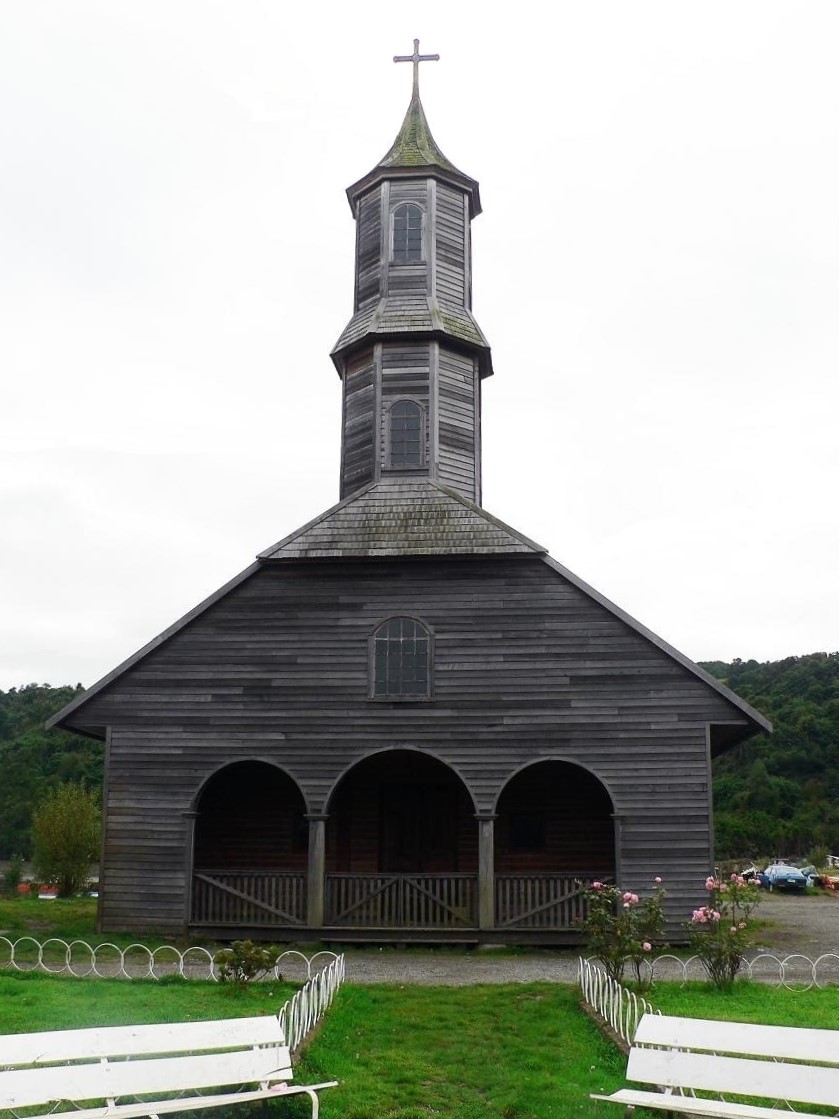
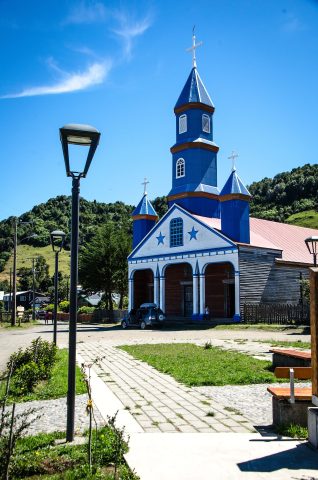
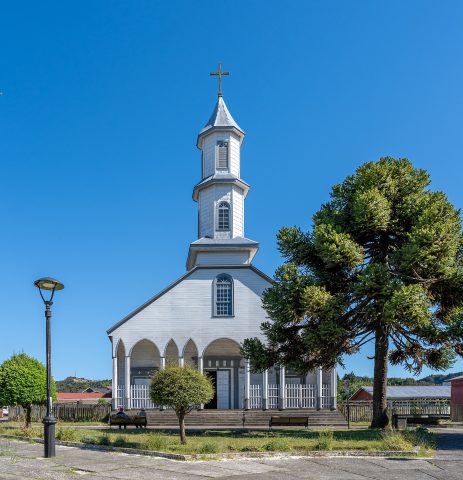
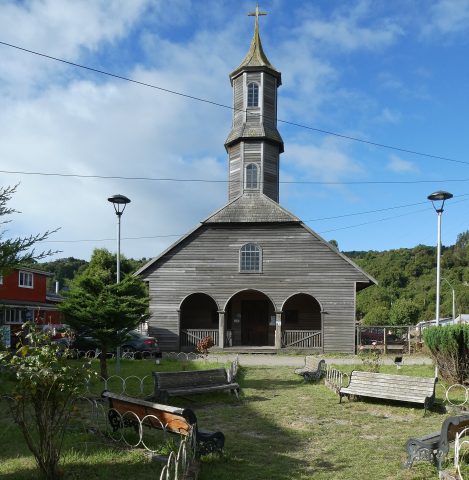
Dalcahue Church stands quietly on the main square of a small town on Chiloé Island, its weathered wooden walls blending into the landscape of gentle hills, misty mornings, and the waters of the bay. This is more than just a place of worship—it’s a piece of the archipelago’s history, where Catholic traditions merged with the beliefs of the indigenous people, and wooden architecture became a way to endure the harsh climate.
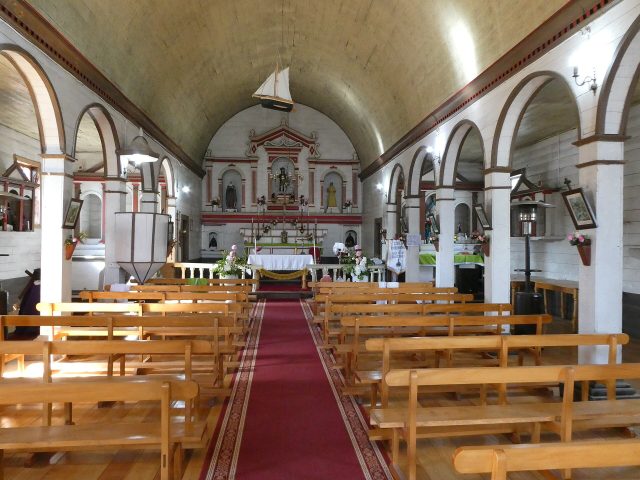
Built in the mid-19th century, the church is part of the unique tradition of Chilote churches, a distinctive style of wooden construction in Latin America. These churches were built without nails, using techniques brought by European missionaries and passed down through generations of craftsmen—descendants of Spanish settlers and local islanders. The facade of Dalcahue Church is simple: a three-part structure with a central tower and a gabled roof. Inside, the space feels open and airy, with light streaming through tall windows.
On Chiloé, faith and nature have always been intertwined. The island is steeped in stories of mythical creatures said to dwell in the forests and along the shores. For centuries, the churches served not only as places of prayer but also as shelters during storms. Dalcahue Church holds the memories of generations—baptisms, weddings, funerals—its wooden pews still bearing the echoes of voices that once filled the space. The carved altar remains a focal point for the community, a place where people gather as they have for over a hundred years.
Chiloé was long isolated from the main trade routes of South America. The churches here were never built for grandeur; they were built for the people. They became the heart of local communities, where residents came together for worship, celebrations, and even to discuss everyday matters. Dalcahue Church was no exception. It was constructed with contributions from parishioners—fishermen, farmers, and artisans—each giving what they could, whether money, materials, or labor. This collective effort became a tradition, one that shaped the identity of the island.
Today, Dalcahue Church is recognized as a UNESCO World Heritage Site, along with fifteen other Chilote churches. This designation acknowledges their architectural and cultural significance. Yet, despite the global recognition, the church remains a living part of daily life. Services are still held here, and for the people of Dalcahue, it is not just a historical monument but a place that continues to hold meaning.
Chiloé is known for its fog, and on misty days, the church takes on an almost mystical appearance. When the sun breaks through the clouds, the wooden walls glow with a warm, golden light. There is no rush here, no urgency—time moves differently on the island, as if following its own rhythm. The pace of life is slower, more deliberate, as it has been for centuries.
Visiting Dalcahue Church offers a glimpse into the soul of Chiloé. It’s a chance to imagine the lives of the people who have called this island home over the years—building their houses, fishing in the cold waters, celebrating festivals, and praying within these walls. The church is a thread in the larger tapestry of the island’s history, a reminder that the past is never truly gone. It lingers in the creak of the floorboards, the scent of aged wood, and the whisper of the wind through the windows.
If you find yourself in Dalcahue, take a moment to sit on one of the benches outside the church. Watch as locals pass by, children play in the square, and gulls circle above the bay. Maybe then you’ll understand why this place matters so much to those who live here. It’s not just about the architecture or the history—it’s about the quiet, enduring presence of a place that feels real, as if it has always been here, and always will be.