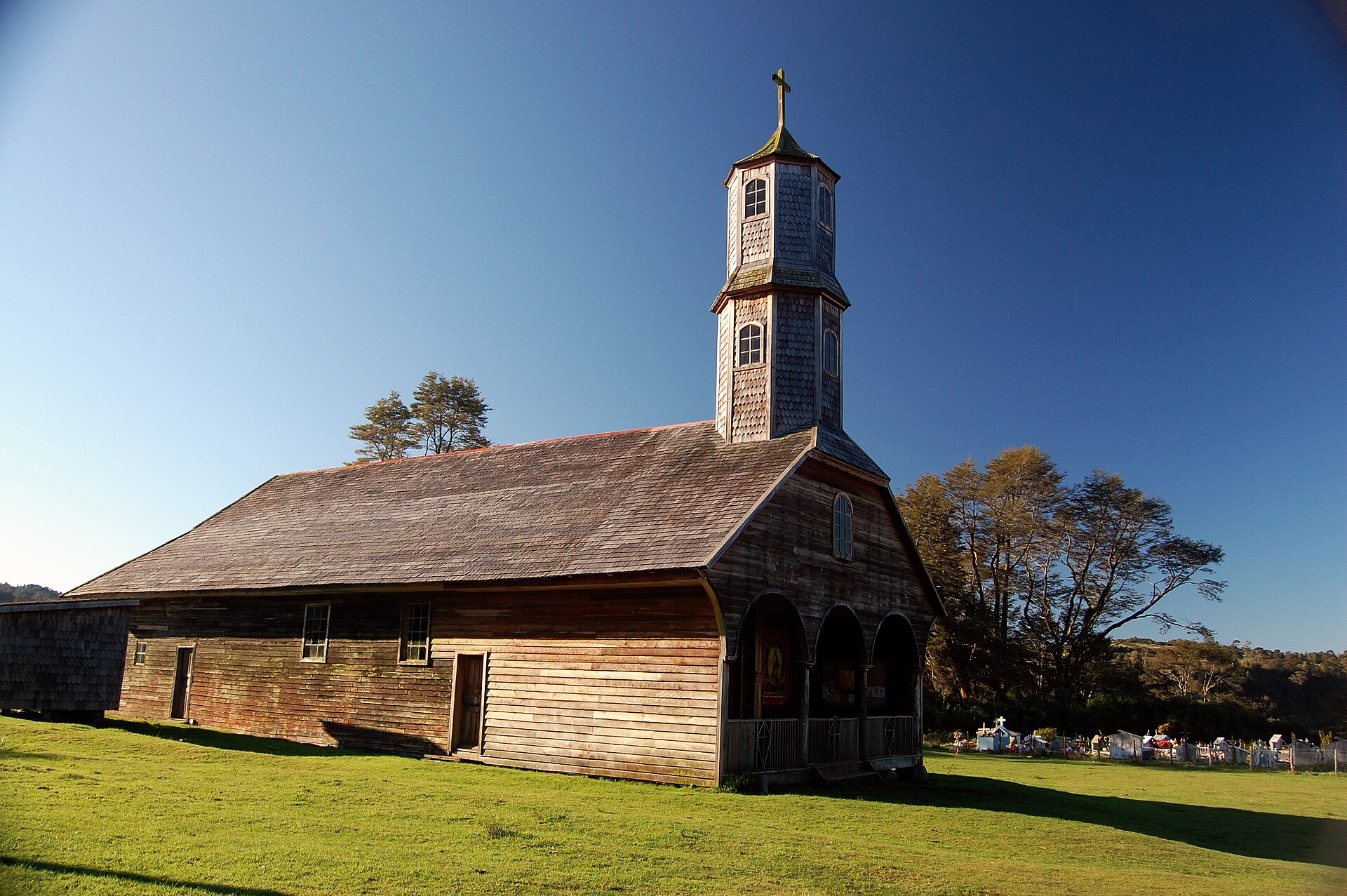
Perched on the edge of the world, where the vast Pacific meets the rugged shores of Chiloé Island, the Church of Colo stands as a quiet testament to the resilience and faith of those who have called this remote corner of Chile home. This isn’t just a building; it’s a living piece of history, a place where time moves to the rhythm of the tides and the whispers of the past feel almost tangible. The church is nestled in the small village of Colo, a settlement so far removed from the hustle of modern life that it feels like stepping into another era. Here, the ocean dictates the pace, and the church, with its weathered wooden beams and steadfast presence, has become a symbol of the island’s enduring spirit.
Built in the late 19th century, the Church of Colo is part of Chiloé’s famed tradition of wooden churches, a style that has come to define the island’s architectural identity. These structures are a marvel of ingenuity, crafted by local builders who relied on the natural resources around them—cypress, larch, and other native woods—shaped into a framework held together not by nails, but by an intricate system of wooden pegs and wedges. This technique, inherited from Spanish colonizers and refined over generations, allowed the churches to withstand the island’s harsh climate, where rain, wind, and salt air test the limits of any material. The result is a collection of buildings that seem to grow organically from the land, their forms blending seamlessly with the rolling hills and misty horizons of Chiloé.
From the outside, the Church of Colo appears unassuming, yet there’s a quiet grandeur to its design. Its two-tiered bell tower rises above the village like a beacon, guiding fishermen home from the sea. The facade is adorned with delicate wooden carvings, their patterns so intricate they resemble lace woven from timber. Inside, the church feels surprisingly spacious, with high ceilings supported by thick beams that draw the eye upward. Large windows filter the daylight into a soft, diffused glow, casting long shadows that dance across the wooden pews. The atmosphere is one of reverence, not just for the divine, but for the craftsmanship and care that went into creating this place.
Chiloé has always been a land where indigenous traditions and Catholicism intertwine, and the Church of Colo is no exception. While it remains an active place of worship, it’s also a gathering spot for the community, especially during festivals that blend religious devotion with local customs. One of the most vibrant is the feast of San Pedro, when the village comes alive with processions, music, and dancing. Tables groan under the weight of traditional dishes—curanto, a hearty stew cooked in an earth oven, and milcao, potato-based pancakes—shared among neighbors and visitors alike. On such days, the church isn’t just a building; it’s the heart of the village, a place where faith, culture, and community converge.
Like much of Chiloé, the Church of Colo is steeped in folklore. Locals speak of faint footsteps echoing through the empty nave at night, or the flicker of candlelight in the windows long after the doors have been locked. Some say these are the spirits of past priests, still tending to their flock. The island’s myths are woven into its very fabric—stories of ghost ships, shape-shifting creatures, and hidden treasures buried in the mist. The people of Colo don’t dismiss these tales; instead, they embrace them as part of their heritage. After all, in a place where the sea can swallow the shore overnight and fog obscures the horizon for days, a little mystery feels entirely natural.
In 2000, the Church of Colo was designated a UNESCO World Heritage Site, recognized alongside other wooden churches of Chiloé for their cultural and historical significance. This honor isn’t just about architecture; it’s a celebration of the island’s unique identity, a culture that has endured despite centuries of isolation and change. Visitors come here not for flashy attractions, but for something far more elusive: authenticity. The church offers a glimpse into a way of life where the sea is both provider and threat, where faith is as much about survival as it is about salvation, and where a wooden building can hold the weight of generations.
The village of Colo itself is a quintessential Chiloé settlement, a scattering of brightly painted houses on stilts, their colors muted by the salt air and the passage of time. The streets are narrow and winding, following the contours of the land rather than any grand design. There are no crowds here, no hurried footsteps—just the sound of waves crashing against the shore and the cry of gulls overhead. Time moves differently in Colo. A walk through the village feels like a journey into the past, where the present is measured in the slow rise and fall of the tide.
What makes the Church of Colo special isn’t just its age or its architecture, but the way it embodies the spirit of the island. It’s a reminder of how fragile yet enduring human culture can be, how traditions can take root in the most unlikely places and thrive against the odds. In a world that seems to spin faster every day, places like this offer a rare sense of continuity, a connection to something deeper than the fleeting present. If you ever find yourself on Chiloé, take the time to visit Colo. Step inside the church, listen to the silence, and let the weight of history settle around you. It’s in these quiet moments that travel reveals its truest purpose—not just to see new places, but to feel the threads that bind us to the past and to each other.