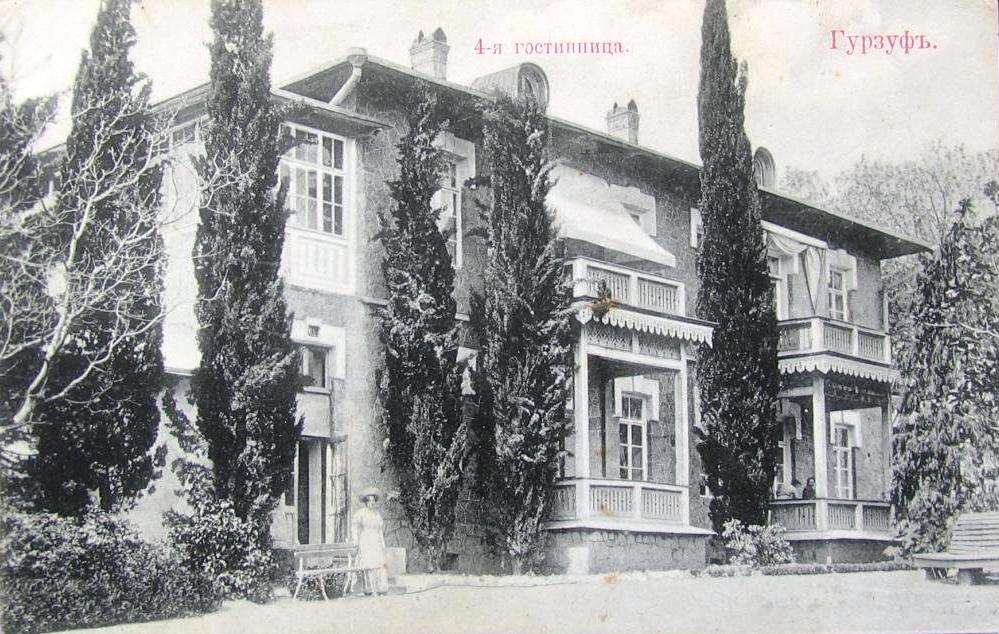
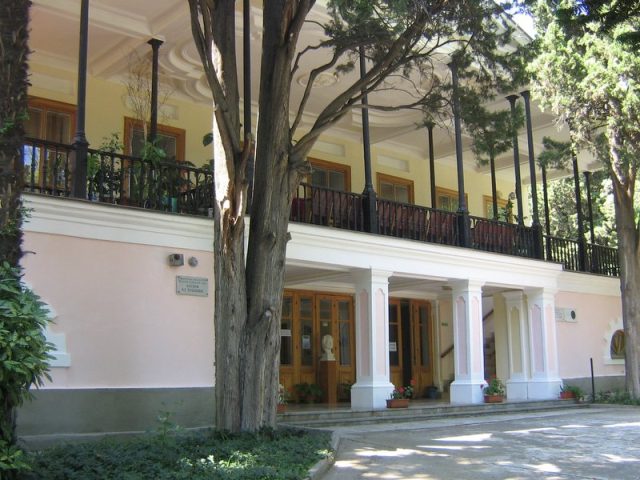
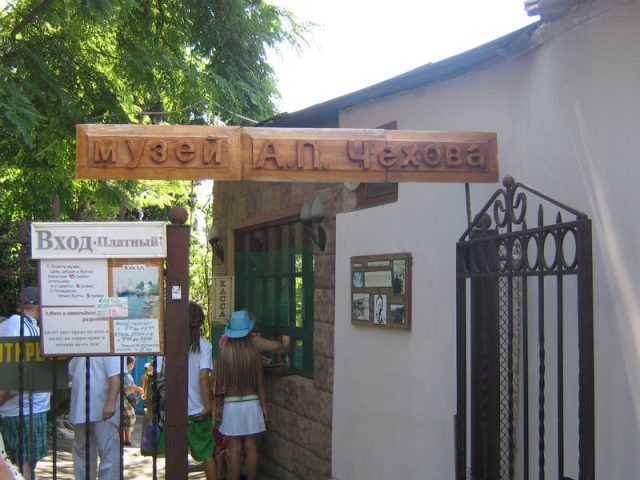
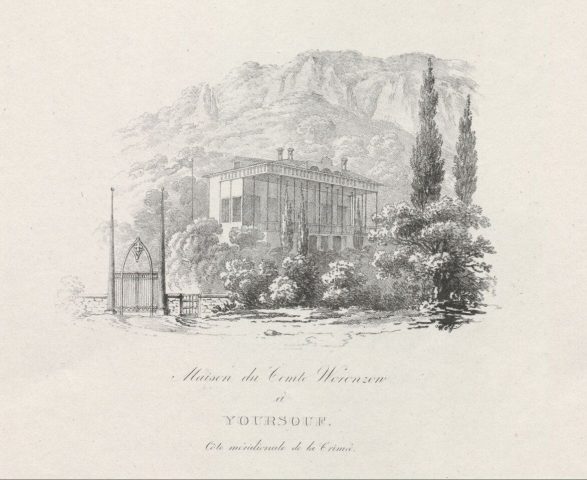
Perched on a quiet hillside in Gurzuf, where the scent of pine mingles with the salt of the Black Sea, the Chekhov House feels less like a museum and more like a place where time has paused to catch its breath. This unassuming wooden dacha, with its wide veranda facing the water, was where Anton Chekhov spent a few transformative months in the summer of 1900. He had come to Crimea seeking respite from the damp chill of St. Petersburg and the relentless pace of literary life, hoping the warm air and gentle rhythms of the coast might ease his failing health. What he found instead was something far more precious: a rare sense of stillness, the kind that seeps into the bones and lingers long after you’ve left.
The house itself is modest, built in the style of late 19th-century Crimean summer homes—small, practical, and designed for comfort rather than grandeur. Inside, the rooms are sparsely furnished, reflecting Chekhov’s own distaste for excess. A writing desk stands near the window, its surface still bearing the faint marks of use, as if the owner might return at any moment to pick up where he left off. The walls are lined with photographs, letters, and a few well-worn books, their spines creased from repeated readings. It’s easy to imagine Chekhov here, sitting in the evening with a cup of tea, listening to the waves below while the last light of day fades over the water. Though he stayed only a short while, this was where he wrote some of his later works, stories in which the landscapes of Crimea no longer served as mere backdrop but became woven into the very fabric of the narrative.
Gurzuf in those days was a retreat for artists, writers, and musicians, a place where the boundaries between work and leisure blurred into something richer. Evenings were filled with music drifting from open verandas, lively debates over politics and art, and the easy camaraderie of people who had come here not just to rest, but to think. Chekhov, ever the observer, preferred solitude to the bustle of social gatherings, though he wasn’t entirely reclusive. He took long walks along the shore, struck up conversations with fishermen and local craftsmen, and occasionally joined gatherings where ideas flowed as freely as the wine. It was here that he crossed paths with Maxim Gorky, who was also renting a dacha nearby. Their meetings, though brief, became part of the local lore—a quiet footnote in the larger story of Crimea’s cultural history.
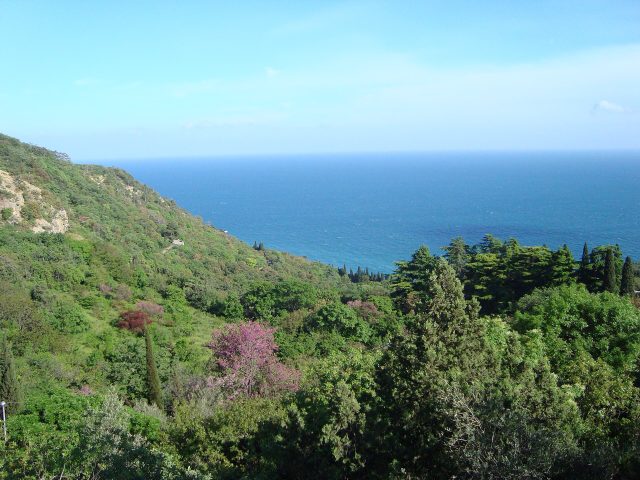
Today, the house stands much as it did then, surrounded by the same cypress and pine trees that Chekhov would have known. From the veranda, the view stretches across the bay to the twin rocks of Adalary, their jagged silhouettes rising from the water like something out of a myth. On clear days, the horizon seems close enough to touch, the sea shimmering under the sun in shifting shades of blue. Visitors come here not just to see the artifacts—a pair of spectacles left on a desk, a handwritten note, a well-thumbed copy of *The Seagull*—but to feel the weight of the place itself. There’s no grand narrative here, no sweeping historical drama, just the quiet persistence of memory.
Gurzuf has always been a town apart, less polished than Yalta, less imposing than Alupka. It’s the kind of place where the streets wind lazily between old dachas, where small cafés serve grilled fish caught that morning, and where the beaches are narrow strips of pebbles rather than wide expanses of sand. The Chekhov House fits seamlessly into this landscape, its simplicity mirroring the unpretentious charm of the town itself. Nearby, other fragments of history linger: the dacha where Gorky once stayed, the former home of the painter Ivan Aivazovsky, the crumbling remains of a Genoese fortress. Together, they form a patchwork of stories, each one a thread in the larger tapestry of Crimea’s past.
A visit to the Chekhov House isn’t like stepping into a traditional museum, with its guided tours and carefully curated displays. There are no crowds here, no rush to move from one exhibit to the next. Instead, it’s a place for slowing down, for sitting on the veranda with a book or simply watching the light change over the water. The house doesn’t demand attention; it invites contemplation. On some afternoons, when the wind dies down and the only sounds are the cry of gulls and the distant murmur of the sea, it’s easy to imagine Chekhov at his desk, the scratch of his pen the only interruption to the silence.
Crimea has always been a crossroads, a place where empires and cultures collided and coexisted—Greek, Tatar, Russian, Ottoman. Gurzuf, with its quiet streets and layered history, embodies that complexity. The Chekhov House is just one small piece of it, but it’s the kind of place that makes a journey through Crimea feel less like tourism and more like an encounter with something enduring. There’s no need for grand explanations here. The sea, the mountains, the old wooden walls—they speak for themselves. And if you’re lucky, on one of those evenings when the air is still and the light turns gold, you might catch a glimpse of what Chekhov found here: not just a moment in time, but the sense that some places, like some stories, never really end.