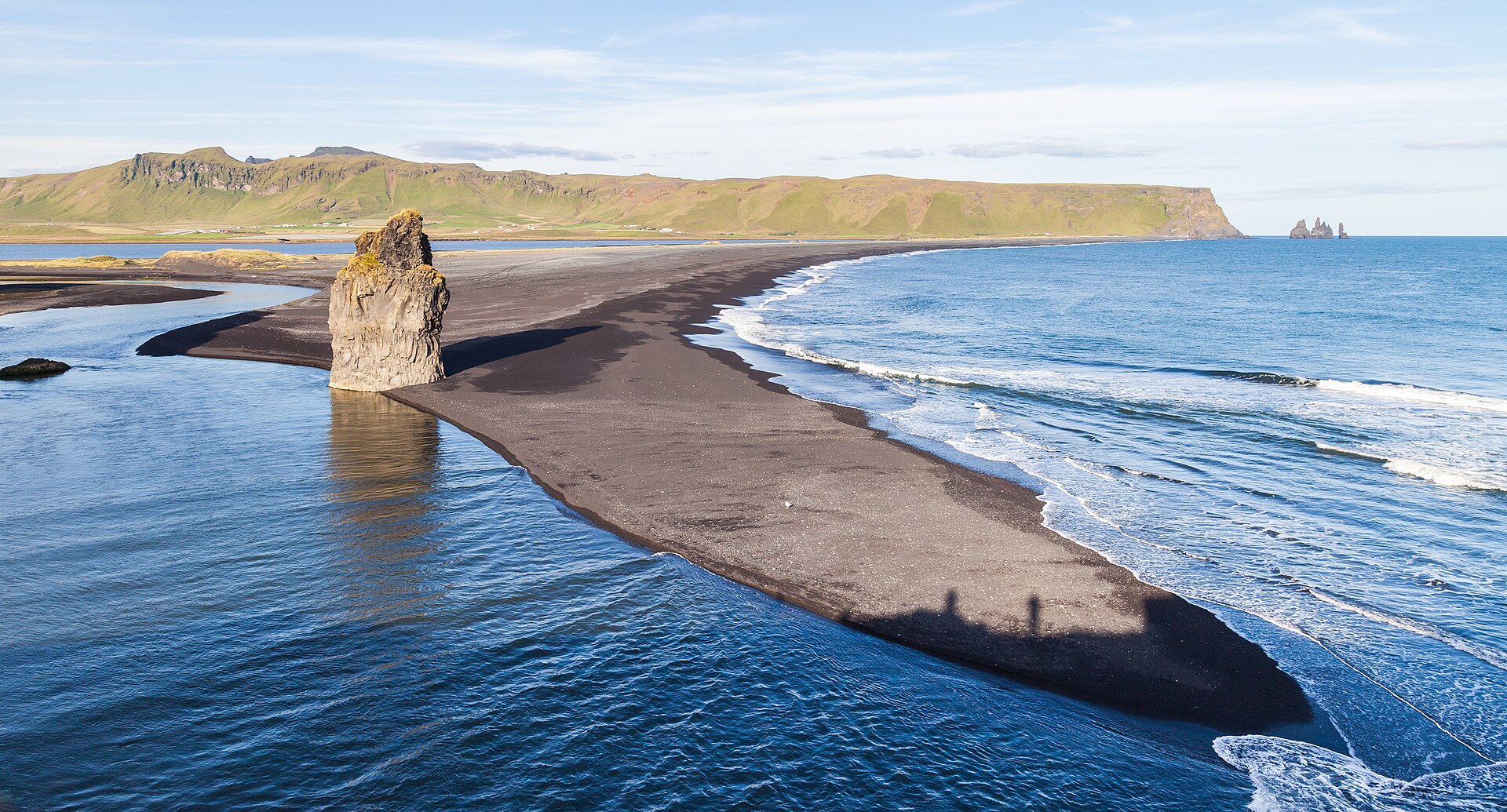
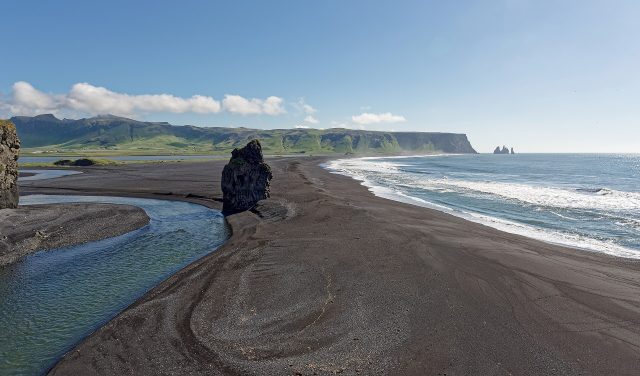
Vík’s black sand beaches are where Iceland’s raw, untamed nature feels closest. Stretching along the island’s southern coast, this stretch of shoreline is a collision of fire and water—volcanic grit underfoot, Atlantic waves crashing against the shore, and towering basalt cliffs standing guard over the landscape. There are no golden dunes or swaying palms here, just the stark beauty of a place shaped by forces far greater than human hands. The sand, coarse and dark, crunches beneath your boots, while the air carries the sharp scent of salt and seaweed, mingling with the faint metallic tang of the ocean.
The black sand is the legacy of ancient eruptions, when rivers of molten lava met the icy embrace of the sea. The sudden cooling shattered the rock into fragments, which the relentless waves then ground into the fine, dark grains that now cover the beach. This process didn’t happen overnight—it took millennia, and it’s still ongoing. Storms regularly churn up new layers of volcanic material, ensuring the landscape never stays the same for long. Walk here, and you’re literally stepping on the remnants of Iceland’s fiery past.
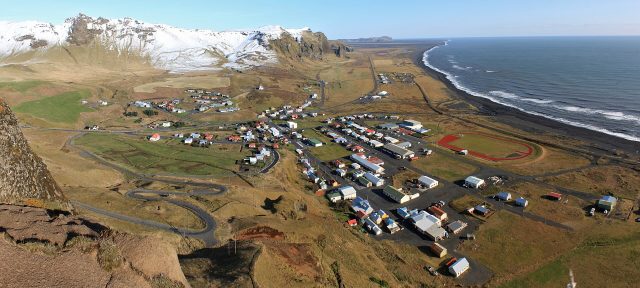
The nearby village of Vík í Mýrdal is little more than a cluster of houses huddled against the hills, dwarfed by the vastness around it. The most prominent building is the white church perched on a hillside, its steeple a rare vertical line in an otherwise horizontal world. Life here has always been shaped by the elements. Winter storms can be brutal, with winds strong enough to knock you off your feet, and the ocean is never far from mind. Yet for all its harshness, this is a place that draws people in. Unlike Reykjavík, where tourists crowd the streets, Vík offers a quieter kind of solitude—one where you can stand on the beach and feel the full weight of the North Atlantic stretching out before you.
Just offshore, the jagged rocks of Reynisdrangar rise from the water like the fingers of some submerged giant. Locals will tell you they’re trolls, turned to stone for lingering too long in the daylight. Geologists, of course, have a less fanciful explanation—erosion, glacial movement, the slow work of wind and water over centuries. But the legend lingers, and the rocks have become an iconic part of Vík’s identity. On clear days, their dark silhouettes stand out against the water; in fog, they seem to materialize and vanish like ghosts.
This isn’t a beach for swimming. The water is freezing, the currents treacherous, and the waves unpredictable. But that doesn’t stop people from coming. The real draw is the drama of the place—the way the black sand contrasts with the white foam of the waves, the way the cliffs loom over the shore, the way the light shifts with the weather. On stormy days, when the wind howls and the waves crash against the rocks, the beach feels like the edge of the world. In summer, when the midnight sun casts everything in a soft, golden glow, the sand takes on a silvery sheen, and the ocean turns an almost unreal shade of blue.
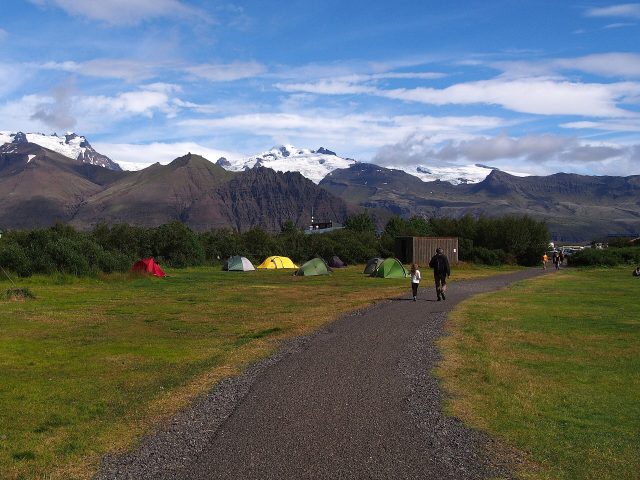
Vík is also a gateway to other parts of southern Iceland. From here, it’s an easy drive to Mýrdalsjökull glacier, a massive ice cap that dominates the skyline, or to Skógafoss, a waterfall so powerful it creates rainbows in its mist. But even if you don’t venture farther, there’s plenty to see. The small local museum offers a glimpse into the lives of Icelandic fishermen and the history of the village, while the handful of cafés serve fresh seafood and traditional dishes like fermented shark—for those brave enough to try. The food is simple, hearty, and unpretentious, much like the place itself.
There are no luxury resorts or high-end restaurants in Vík, and that’s part of its charm. This is a place for travelers who prefer authenticity over polish, who don’t mind trading a five-star hotel for a cozy guesthouse with a crackling fireplace. Evenings here often pass with stories—locals sharing tales of the northern lights, of shipwrecks washed ashore, of the ocean’s moods. The black sand beach isn’t just a scenic stop; it’s a reminder of Iceland’s wild heart, where every grain of sand and every crashing wave carries the memory of the earth’s ancient power. To stand here is to feel, if only for a moment, the sheer scale of nature—and our small place within it.