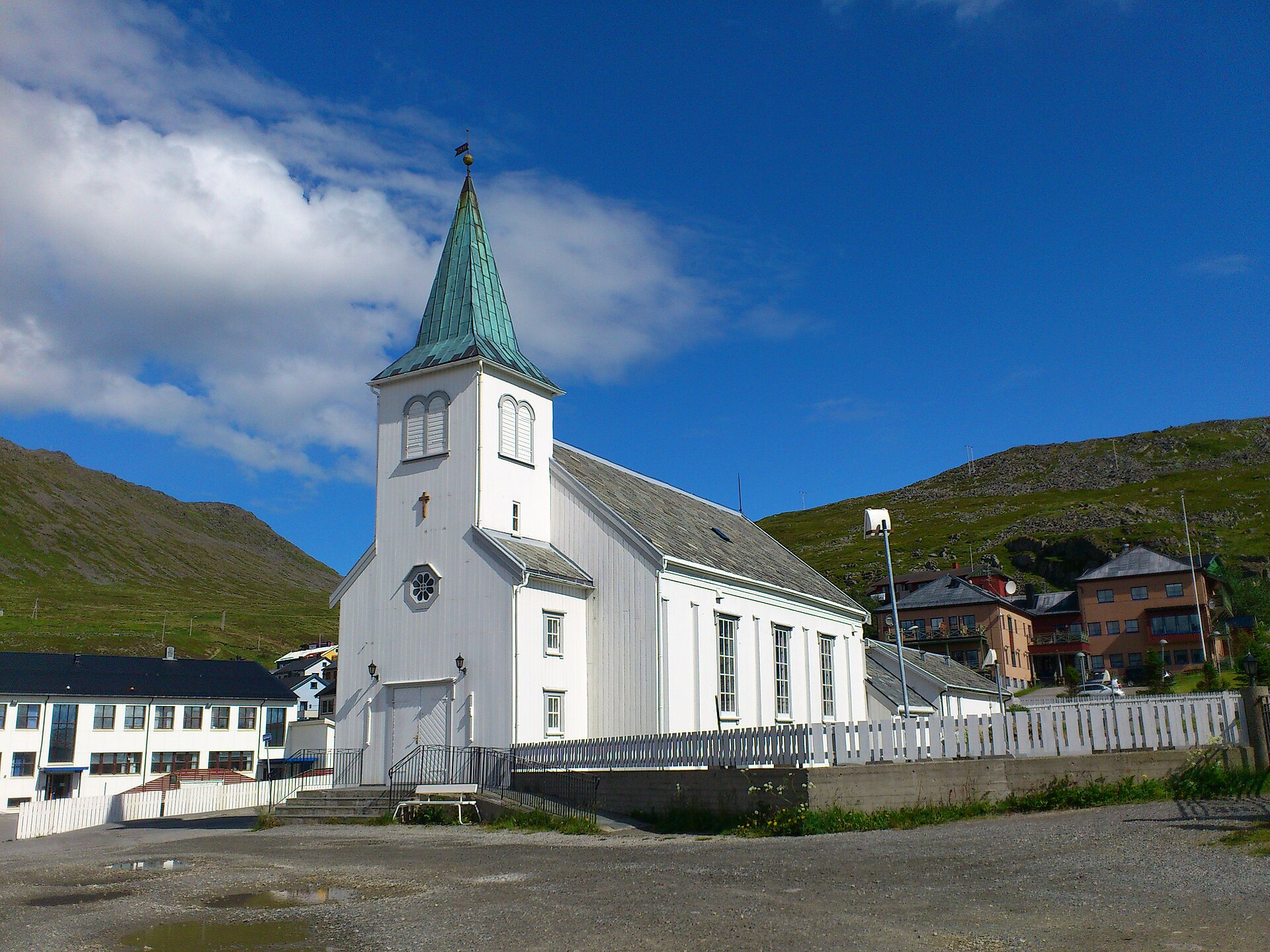
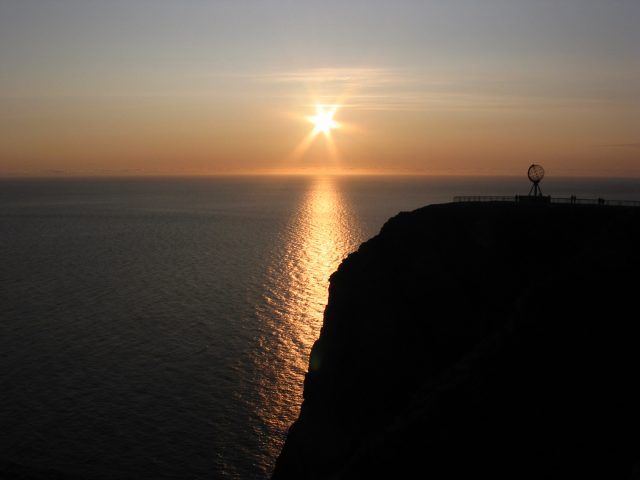
Honningsvåg Church stands quietly at the edge of the world, where the rocky shores of Magerøya Island meet the Barents Sea. This wooden building, perched in a small fishing town far above the Arctic Circle, feels like an unexpected presence in a landscape defined by raw nature and endless horizons. Built in the mid-18th century, it has witnessed the rhythms of life in one of Norway’s northernmost settlements—a place where winters stretch into months of darkness and summers bring the surreal glow of the midnight sun.
The church is a fine example of traditional coastal Norwegian architecture, designed to withstand the harsh climate. Its thick timber walls and sod-covered roof were practical choices, helping to retain warmth during long, bitter winters. Inside, the space is simple and unadorned, with wooden pews, a modest altar, and a few old icons. A chandelier hangs from the ceiling, a reminder of the time before electricity reached these parts. The atmosphere is one of quiet warmth, as if the building itself has absorbed the patience and resilience of the people who have gathered here over the centuries.
Constructed in 1752 to replace an earlier church lost to fire, Honningsvåg Church has always been more than just a place of worship. In its early years, the town was little more than a cluster of homes where life revolved around the sea. Fishermen—both Sámi and Norwegian—relied on cod and herring, and the church served as a gathering point for the community. It was where people came to pray, celebrate, and share news, especially in winter when the frozen sea cut off other forms of connection. For generations, it was the heart of the village, a place where isolation gave way to shared humanity.
The church’s history took a darker turn during World War II, when German forces occupied the region. Like many buildings in northern Norway, it was repurposed—first as a storage space, then as an observation post. Miraculously, it survived the conflict, though the scars of that time remain visible in small marks on the walls. After the war, it was returned to the community, becoming a symbol of renewal as people gathered to mark the end of occupation. Those faint reminders of the past have been left untouched, a quiet testament to the church’s endurance.
Today, Honningsvåg Church draws visitors who venture beyond the famous Nordkapp, the northernmost point of Europe. Unlike the crowded tourist spots nearby, this place offers stillness. There are no guided tours or souvenir stands, just the chance to sit on a wooden bench and listen to the silence. On clear days, the low Arctic sun filters through narrow windows, casting a soft glow over the timber walls. In winter, when storms rage outside, the interior feels even more sheltered, a refuge from the elements.
Though the town’s population has dwindled, the church remains a living part of Honningsvåg. Services, baptisms, and weddings still take place here, though the congregation is small. Locals take pride in maintaining the building, passing down traditions that keep its spirit alive. In summer, the church occasionally hosts concerts, where the sound of an organ or Sámi joik fills the air, blending with the creak of old wood. These moments create a sense of continuity, bridging the past and present in a way that feels both intimate and profound.
For travelers, the church is more than a historical site—it’s a pause in a journey to the far north. There’s no rush here, no pressure to move on to the next attraction. Instead, there’s space to reflect, to look out the windows at the vast sea and sky, and to imagine the lives of those who have stood in this same spot over the centuries. In winter, the horizon blurs into a monochrome expanse; in summer, the endless daylight paints the landscape in surreal hues. It’s easy to see why people have endured the harsh conditions of this place—there’s a quiet beauty in its simplicity.
Honningsvåg Church is a monument to resilience, a reminder of how people have found meaning in even the most challenging environments. It doesn’t offer grand architecture or dramatic stories, but something more subtle: a sense of steadfastness. In a world that often feels disconnected from history, this small wooden building invites visitors to slow down and consider what endures. It’s a place where the past isn’t just remembered—it’s still alive, waiting in the silence between the creaking floorboards and the wind outside.