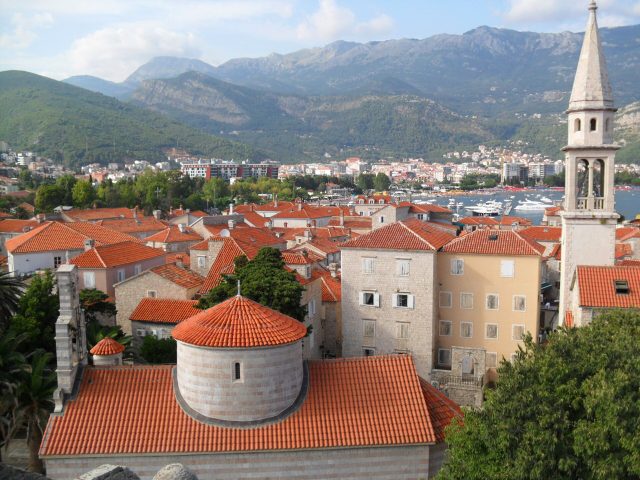
The Church of the Holy Trinity in Budva is one of those quiet places that seem suspended in time, holding within its walls the essence of the old town. Built in the early 19th century, it stands on a small square in the heart of Budva’s historic center, surrounded by narrow stone-paved streets and houses with terracotta roofs. Unlike many of Montenegro’s ancient churches, this one doesn’t boast centuries of history, but its understated elegance and harmony make it special. It blends seamlessly into the landscape, becoming an inseparable part of Budva’s character, where every stone seems to whisper stories of the past.
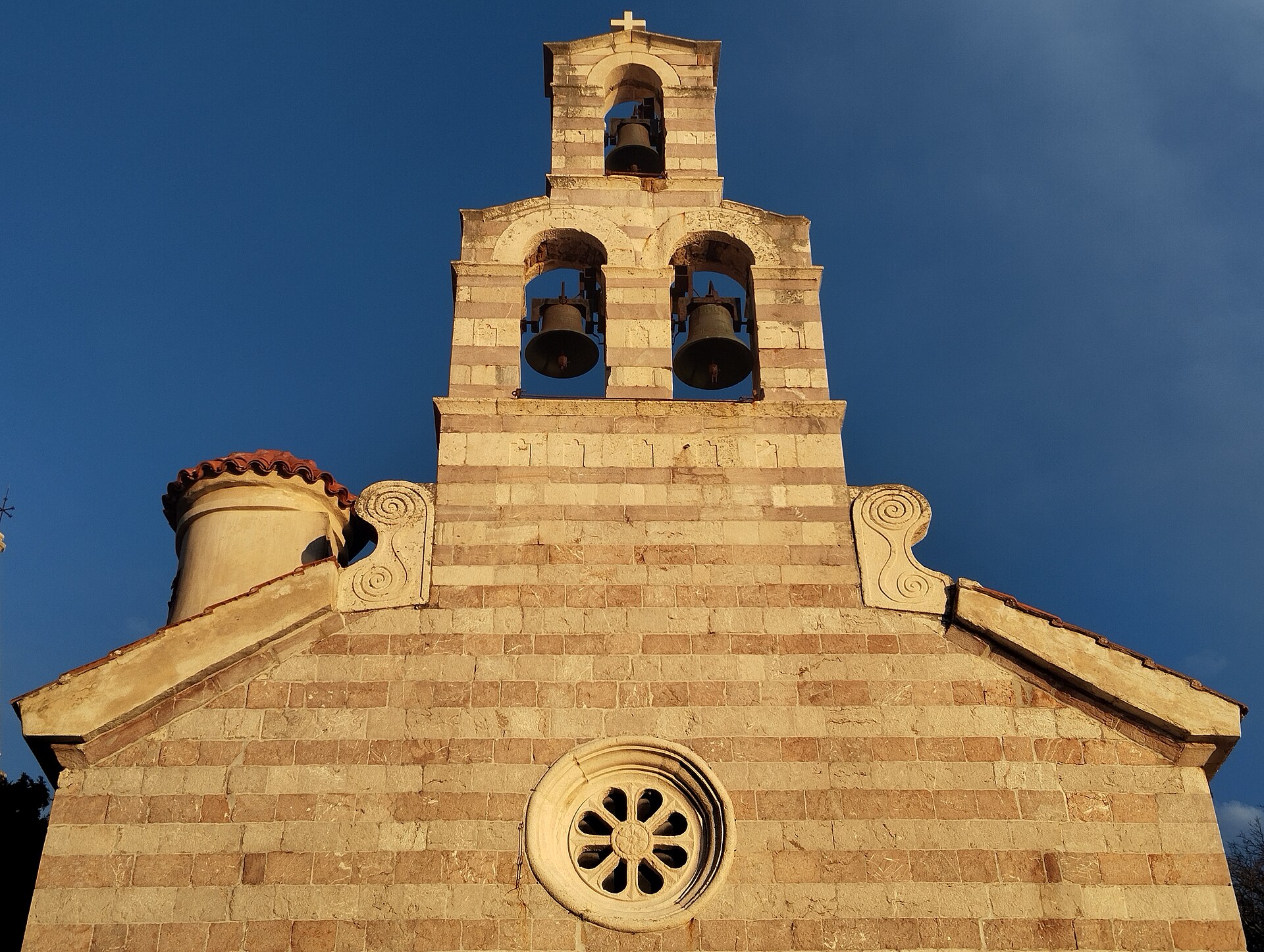
The church’s architecture follows classic Orthodox traditions with a subtle Mediterranean touch. Its white walls, domed roof crowned with a cross, and modest bell tower create a sense of tranquility and simplicity. Inside, the space is small but bright and welcoming, with an iconostasis painted in the traditional style. The frescoes, rendered in soft hues, add to the serene atmosphere, inviting quiet reflection. There’s no grandeur or opulence here—just an authenticity that resonates even with those who aren’t particularly religious.
Constructed in 1804, the Church of the Holy Trinity was built during a period when Budva had already endured centuries of change. Founded by the ancient Greeks, the city had been ruled by the Byzantines, the Venetians, the Ottomans, and the Austro-Hungarians, each leaving their mark. The church itself was erected on the site of an older one that didn’t survive, which might explain why its design feels like a continuation of something deeper, a thread connecting the present to a past that never truly faded.
For the people of Budva, this church is more than just a historical monument—it’s a living place where services, baptisms, and weddings still take place. On feast days, especially Trinity Sunday, the square fills with worshippers, hymns echo through the air, and the scent of incense lingers. Even visitors who come to Budva as tourists often step inside to escape the bustle of the seaside promenades, finding a moment of stillness. Unlike the crowded cathedrals of more famous destinations, this church offers something different: the quiet rhythm of a place where faith and daily life have intertwined for generations.
The church sits at the very center of Budva’s Old Town, where every winding street leads to another point of interest. Nearby, the ancient fortress walls offer views of the Adriatic Sea, while small cafés serve fresh seafood and local wine, and artisan shops display handmade souvenirs. Wandering these streets feels like stepping back in time—fragments of Venetian fortifications, remnants of old buildings, and unexpected glimpses of the past appear at every turn, reminding you that Budva has witnessed countless eras.
Beyond its religious significance, the Church of the Holy Trinity is also a cultural landmark. It often serves as a backdrop for photographs, a meeting spot, or even an informal gathering place. In the summer, the shade around the church offers relief from the heat, and in the evenings, when the street lamps glow, the square takes on a magical quality. You can sit on one of the benches, listen to the bells, and watch as locals and visitors stroll by, savoring the cool evening air.
The area around the church has its own microcosm, where tradition and modernity coexist. You might see elderly women hurrying to services, children playing in the square, or artists sketching the old town’s charm. Life here moves at its own unhurried pace, as if following an invisible rhythm. The Church of the Holy Trinity isn’t a museum piece—it’s part of the living fabric of the city, still evolving while holding onto its uniqueness.
If you find yourself in Budva, this church is worth visiting not just as another historical site, but as a place where you can feel the soul of the town. Perhaps here, in the quiet of a small church surrounded by the hum of the old city, you’ll discover that sense of harmony so often lost in the rush of modern life. After all, sometimes the most memorable moments of travel are found in the unassuming corners where time seems to stand still.