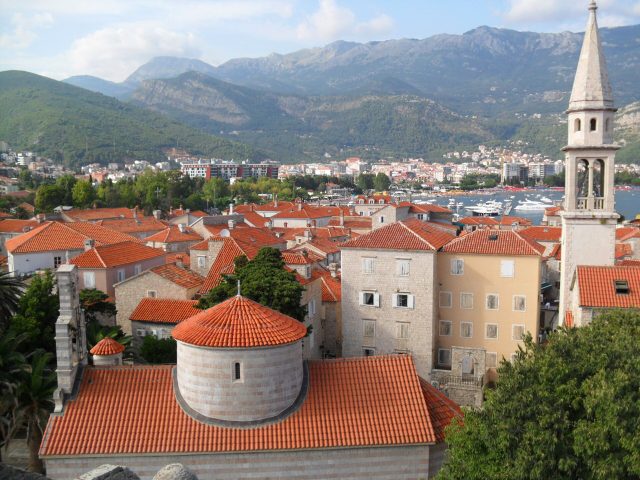
Perched above Budva’s Old Town, the Citadel of St. John stands as a quiet witness to centuries of history, its weathered stones holding stories of empires, battles, and everyday life. From its heights, the Adriatic stretches out in a shimmering expanse, framed by the terracotta rooftops of the town below. The fortress wasn’t always just a viewpoint—once, it was the last line of defense for a city that changed hands countless times, from Byzantine rule to Venetian dominion and beyond. Each era left its mark, layering the past into the very walls that now draw visitors upward along the winding streets.
The Citadel is less a single structure than a patchwork of fortifications, built and rebuilt over time. The oldest sections date back to the 6th century, when Budva was part of the Byzantine Empire, a small but strategic outpost guarding against pirates and rival powers. By the Middle Ages, when the Venetians took control, the fortress expanded, its walls thickened and new bastions added. The Venetians were meticulous about securing their Adriatic holdings, and Budva’s defenses grew to match the ambitions of its rulers. The church of St. John, after which the fortress is named, once stood within its walls, though today only fragments remain—a reminder that life here wasn’t solely about war. Barracks, storerooms, and even living quarters for the garrison filled the space, while in peacetime, soldiers drilled, craftsmen worked, and townspeople sought refuge when danger loomed.
For all its military purpose, the fortress also played a role in the rhythms of daily life. During lulls between conflicts, the clatter of tools and the murmur of voices would have filled the courtyards, blending with the sounds of the town below. Budva’s location made it a target—pirates, armies, and fleets all tested its defenses—but the Citadel often held, sparing the city from destruction. By the 19th century, however, its strategic importance faded. When the Austro-Hungarians took control, modern warfare had moved beyond medieval walls, and the fortress was left to crumble. It wasn’t until the mid-20th century that restoration efforts began, piecing together what remained to offer visitors a glimpse into the past.
Climbing to the Citadel is part of the experience. The route winds through the Old Town’s narrow alleys, past shuttered houses and small cafés where the scent of coffee mingles with the salt air. Stone steps lead upward, each turn revealing a broader view of the bay, the water shifting from deep blue to gold as the sun dips lower. Inside, the fortress is more ruin than museum—no grand exhibits or reconstructed interiors, just the raw bones of history. The upper terrace is the best place to pause, where the breeze carries the sound of waves and the coastline unfolds in both directions. On clear days, the mountains of the mainland rise in the distance, a reminder of how closely land and sea have always been tied here.
What makes the Citadel compelling isn’t just its age or its architecture, but the way it distills the layers of Budva’s past. There are no dramatic reenactments or polished displays, just the quiet weight of centuries pressing against the stones. Stand on the walls at dusk, when the light softens and the shadows lengthen, and it’s easy to imagine the echoes of the past—the creak of carts, the murmur of soldiers, the distant clang of a blacksmith’s hammer. Of course, it’s only imagination, but that’s the point. The fortress doesn’t need to tell its stories; it lets you feel them.
Budva’s Old Town itself is a natural extension of the Citadel’s history. Encircled by its own medieval walls, the labyrinth of cobblestone streets leads to small squares where fish and spices were once traded. Churches like St. Mary in Punta, dating back to the 9th century, and St. Sava, with its Byzantine frescoes, offer glimpses into the town’s religious and artistic heritage. The contrast between these ancient spaces and the modern resort just beyond the walls is striking. Here, time moves differently, as if the weight of history slows the hours, allowing the present to coexist with the past.
Visiting the Citadel isn’t about checking a box on a tourist itinerary. It’s about stepping into a place where the past isn’t just remembered—it’s still present. Whether you come for the views, the history, or simply the chance to sit on a weathered stone and watch the sea, the fortress offers something rare: a moment of connection. In a world where travel often feels rushed, places like this remind you that some destinations aren’t just seen—they’re experienced. And sometimes, that’s enough to make a journey unforgettable.