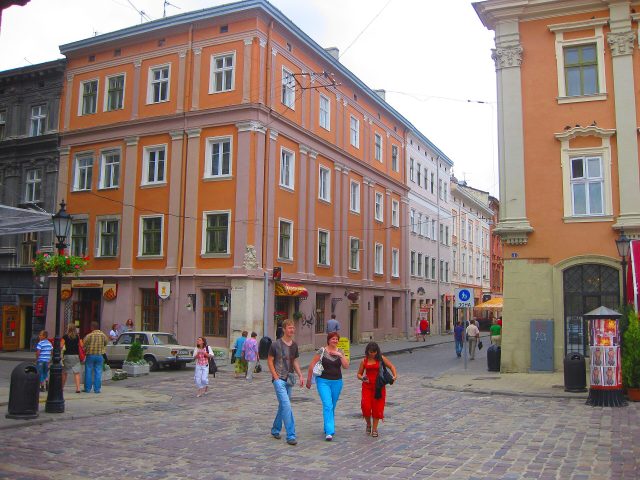
St. Paraskeva Pyatnitsa Church stands on one of Lviv’s oldest squares, where the clamor of a medieval marketplace once filled the air. Its unassuming facade blends into the surrounding buildings, but step closer, and you’ll notice how different eras have left their mark on its walls. The church has witnessed centuries of change, its stones holding layers of history like pages of a book no one bothered to close.
The first records of the church date back to 1292, when it was a wooden structure. Back then, Paraskeva Pyatnitsa was revered as the patron saint of merchants and craftsmen, and the square around it buzzed with trade and gossip. Deals were struck here, travelers shared news, and traders prayed for safe journeys before setting off on long roads. The wooden church was later replaced with stone in the 14th century, when Lviv was part of the Polish Kingdom. Gothic elements crept into its design—thick walls, narrow windows—hints of an era when faith and fortification went hand in hand.
Over the centuries, the church was rebuilt more than once. In the 17th century, a bell tower was added, and the facade was adorned with Baroque flourishes—ornate cornices and stucco details that softened the severity of the earlier Gothic style. Inside, fragments of frescoes from the same period still cling to the walls, though time and restorations have blurred their edges. The iconostasis, crafted in the traditional Galician style, is a study in restraint: no gilded excess, just careful craftsmanship that feels almost understated. It’s the kind of place where devotion isn’t announced with grandeur but lingers in the quiet corners.
The church wasn’t just a place of worship; it was a silent witness to the city’s history. During sieges, the Lviv magistrate took refuge within its walls, treating it like an impenetrable stronghold. In the 19th century, the church nearly met its end when city planners decided to widen the streets, but locals rallied to save it. That moment turned it into more than a religious site—it became a symbol of preserving the past, not just for faith, but for the sake of memory itself.
Today, the church remains active, and visitors can step inside during services or opening hours. The air is thick with the scent of wax and aged wood, and sunlight filters through narrow windows, casting soft patches of light on the walls. Unlike some of Lviv’s more tourist-heavy churches, this one feels untouched by crowds, as if it still moves to its own unhurried rhythm, indifferent to the bustle outside.
The church stands on what is now known as Old Market Square, one of Lviv’s oldest. Centuries ago, it was a hub for spice and cloth merchants; now, it’s lined with cafes and small shops selling souvenirs. But if you look closely, the cobblestones and the facades of the surrounding buildings still whisper of the past. St. Paraskeva Pyatnitsa isn’t just an architectural landmark—it’s a living piece of the city, one that has adapted without losing its roots.
For those curious about Lviv’s history, the church serves as a quiet starting point. From here, you can wander through narrow streets toward the High Castle, peek into hidden courtyards with their arched passageways, or simply sit on a bench and watch the square come to life. There are no pushy guides or signs dictating how to behave—just the occasional chime of bells and the sound of footsteps on stone.
What makes this place special is how history hasn’t been turned into a museum exhibit. It’s still part of everyday life, a reminder that Lviv wasn’t always a tourist destination but a medieval city with its own struggles, dreams, and beliefs. That’s why it draws people in—not with flashy displays, but with something far rarer: authenticity.