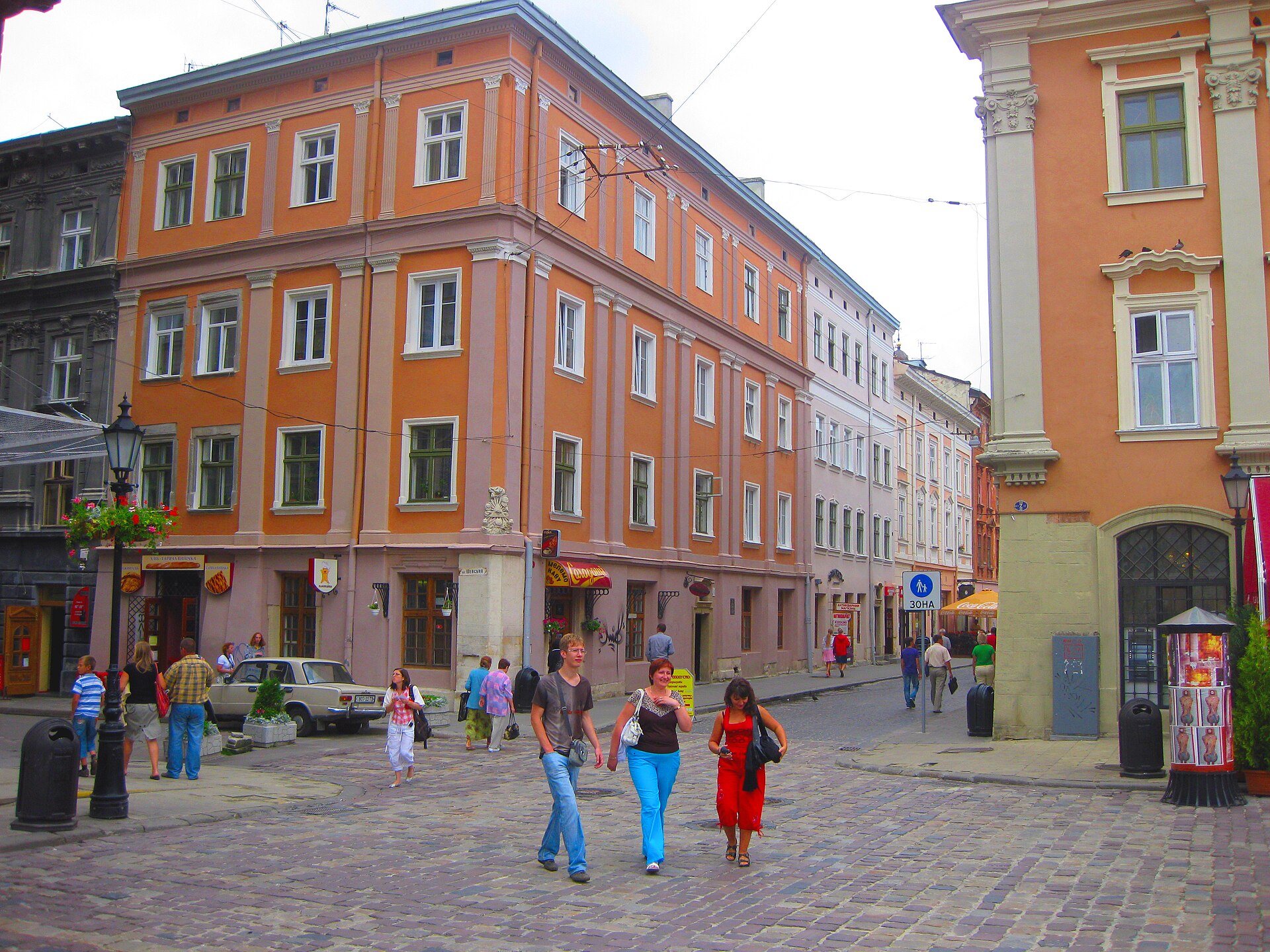
Lviv’s Rynok Square is the kind of place that feels both timeless and alive, as if every cobblestone has absorbed centuries of footsteps, conversations, and quiet moments. At the heart of the city’s Old Town, it has been the focal point of Lviv since the 14th century, when the city was laid out in the medieval tradition with a central square surrounded by merchant houses. Over the years, it has witnessed coronations, markets, public executions, and celebrations, each layer of history leaving its mark on the buildings that line its edges. Today, the square is less about grand events and more about the rhythm of daily life—locals sipping coffee at outdoor tables, tourists wandering with maps in hand, and the occasional street musician adding a soundtrack to the scene.
The architecture here is a patchwork of styles, reflecting the many cultures that have shaped Lviv. The square is framed by 44 townhouses, each with its own character, built between the 16th and 19th centuries. Some facades are adorned with intricate Renaissance details, others with Baroque flourishes or neoclassical simplicity. The most striking feature of many of these buildings is their attics, often decorated with sculptures or reliefs—mythological figures, saints, or symbols of trade. These weren’t just decorative; they were a way for merchants to advertise their wares or display their wealth. The Black House, with its dark stone facade, stands out as one of the oldest, while the Korniakt Palace, with its Italian-inspired courtyard, hints at the city’s connections to broader European trends.
At the center of the square, the Town Hall rises above the rooftops, its clock tower a familiar landmark. The current building dates to the 19th century, but its history goes back much further. The first town hall was built here in the 14th century, and over the centuries, it was rebuilt and expanded as the city grew. The tower offers one of the best views of Lviv, though climbing its 400-plus steps is a workout. Inside, the building still serves as the city’s administrative center, a reminder that Rynok Square isn’t just a tourist attraction but a living part of the city’s governance. The square itself is pedestrian-only, a rare oasis in a city where cars often dominate, and the lack of traffic makes it easy to imagine how it might have looked centuries ago.
The square has always been a place of commerce, and that tradition continues today, though in a more leisurely form. In the past, it was the site of a bustling market where merchants from across Europe traded goods—spices, fabrics, furs, and more. Now, the stalls are smaller, selling souvenirs, amber jewelry, and local crafts, but the spirit of exchange remains. On weekends, the square sometimes hosts flea markets or art fairs, where you can find everything from vintage postcards to handmade ceramics. Even on quieter days, the cafes and restaurants that spill out onto the square keep the atmosphere lively. Sitting at one of these tables, with a cup of Lviv’s famous coffee and a slice of honey cake, it’s easy to while away an afternoon watching the world go by.
What makes Rynok Square special isn’t just its history or architecture, but the way it feels like a crossroads of cultures. Lviv has always been a city where East meets West, and the square reflects that. The names of the buildings—like the Italian Courtyard or the Armenian House—hint at the diverse communities that once called this place home. The Jewish, Polish, Ukrainian, and German influences are all visible if you know where to look, from the inscriptions on the facades to the styles of the buildings themselves. Even the street names around the square tell a story: Serbska, Ruska, Virmenska—each one a nod to the city’s multicultural past.
In the evenings, the square takes on a different mood. The crowds thin out, and the streetlights cast a warm glow over the cobblestones. The cafes stay open late, and the sound of conversation mixes with the occasional clink of glasses. On summer nights, the square is a popular spot for locals to gather, whether for a casual drink or a spontaneous meetup with friends. In winter, the Christmas market transforms the space into a festive wonderland, with twinkling lights, wooden stalls, and the scent of mulled wine in the air. But even without the decorations, the square has a quiet charm, a place where the past and present coexist without fuss.
Walking through Rynok Square, it’s hard not to feel the weight of history, but it’s not the kind of history that feels distant or museum-like. This is a place that has always been lived in, adapted, and reinvented. The buildings may be centuries old, but they’re not frozen in time—they’ve been repaired, repurposed, and reimagined over the years. Some now house museums, like the Pharmacy Museum in the Black House or the Museum of Historical Treasures in the Korniakt Palace, while others are shops, restaurants, or even apartments. The square is a reminder that cities are never static; they evolve, just as the people who live in them do.
For visitors, Rynok Square is often the first stop in Lviv, and it’s easy to see why. It’s compact enough to explore in an afternoon but rich enough to reward a longer stay. You could spend hours just studying the details of the buildings—the carvings, the doorways, the hidden courtyards—or simply sitting on one of the benches, watching the world go by. But the real magic of the square lies in its ability to make you feel connected to something larger. Whether you’re admiring the architecture, sipping coffee at a sidewalk cafe, or just soaking in the atmosphere, you’re part of a continuum that stretches back centuries. That’s the kind of place Rynok Square is—one that doesn’t just tell a story, but invites you to be part of it.