Lviv’s High Castle is one of those places where history feels almost tangible, rising above the city like a quiet guardian. The hill itself has been a landmark for centuries, though the name can be a bit misleading—there’s no actual castle here anymore. What remains is the memory of one, along with a sweeping view that makes the climb worthwhile. The hill stands at 413 meters, the highest point in Lviv, and from its summit, the city unfolds in all directions: red-tiled roofs, church spires, and the patchwork of streets that have seen empires come and go.
The story of High Castle begins in the 13th century, when Prince Lev Danilovich, son of King Daniel of Galicia, built a fortress here to defend the young city. The castle was wooden at first, later reinforced with stone, and for a time, it was a key stronghold in the region. But like many medieval fortresses, it didn’t last. By the 17th century, it was already falling into ruin, and by the 19th, little was left except the hill itself. What you see today is mostly the result of later efforts—an artificial mound created in the 1860s when the city decided to turn the site into a public park. The idea was to give Lviv a green escape, a place where locals could stroll and take in the view.
The most striking feature now is the observation tower, built in 1957 to mark the 300th anniversary of Lviv’s union with Russia—a detail that hints at the political currents that have shaped the city over time. The tower is simple, functional, and not particularly grand, but it serves its purpose. From the top, the panorama is the real attraction. On clear days, you can see the Carpathian Mountains in the distance, their blue outlines fading into the horizon. Closer in, the city spreads out like a living map: the Old Town with its Renaissance and Baroque facades, the domes of St. George’s Cathedral, and the industrial outskirts where the urban landscape gives way to fields.
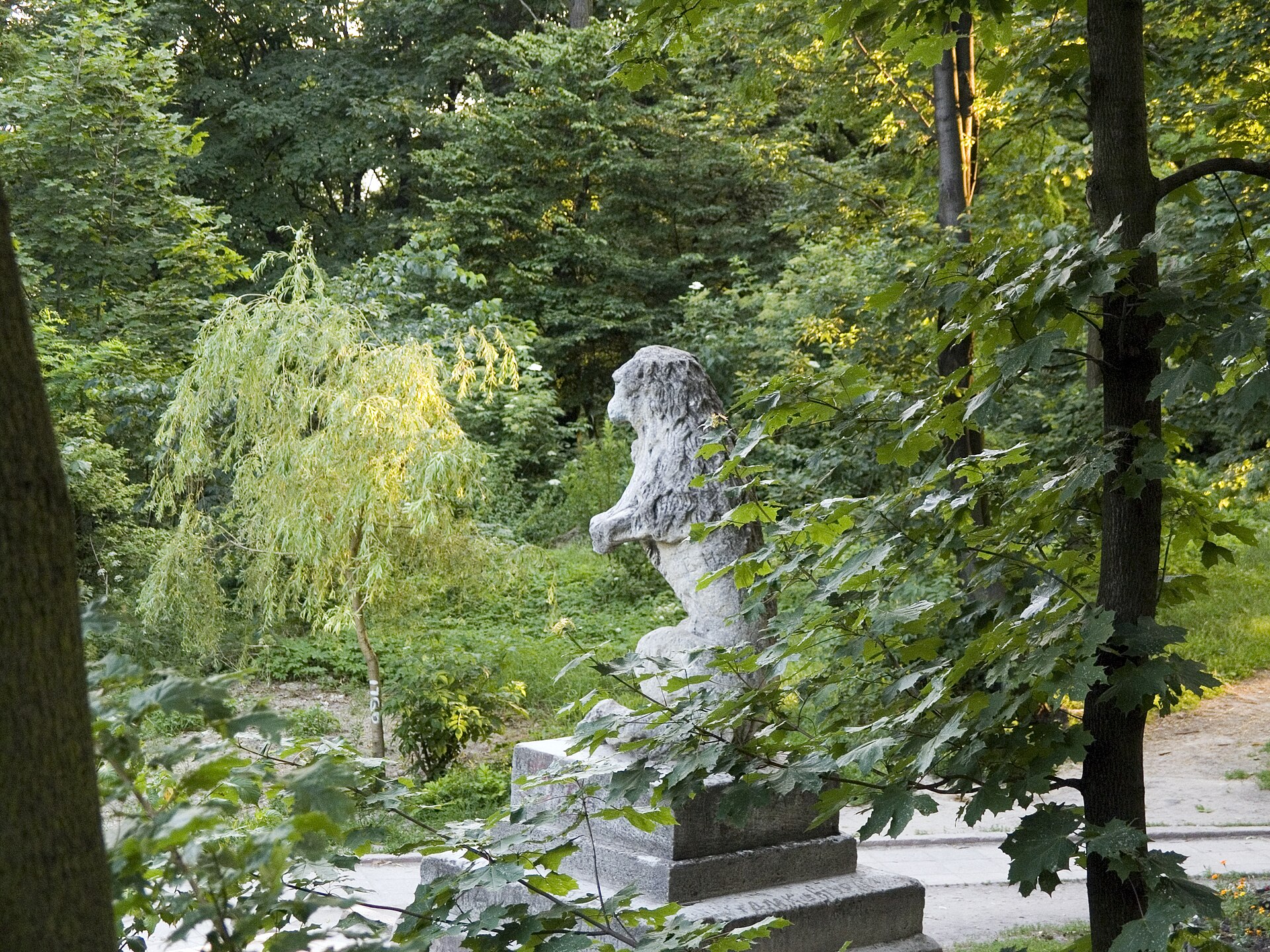
Getting to High Castle is part of the experience. The most direct route is a steep walk up from the city center, past quiet neighborhoods where the streets narrow and the buildings take on a more residential feel. The path winds through a small park, past benches and trees, before the final ascent. There’s also a road for those who prefer not to walk, but the climb is worth it for the sense of arrival. In winter, the hill is dusted with snow, and the city below looks like a scene from an old postcard. In summer, the grass is green, and the air carries the scent of pine and distant rain.
High Castle isn’t just a viewpoint—it’s a place where Lviv’s layers reveal themselves. The hill has been a fortress, a ruin, a park, and now a symbol of the city’s resilience. It’s where locals come to watch the sunset, where couples take photos, and where visitors try to imagine what the castle once looked like. There’s a certain melancholy to the site, a reminder that even the most imposing structures can fade, leaving only their stories behind. Yet the view remains, as does the sense that this hill has always been a part of Lviv’s identity.
The area around High Castle is worth exploring too. The park at the base of the hill is a quiet spot, with walking paths and open spaces where people picnic or let their dogs run. Nearby, the Lychakiv Cemetery offers a different kind of history, with its ornate tombstones and the graves of poets, soldiers, and scientists. The contrast between the two sites is striking—one a place of remembrance, the other a place of perspective.
High Castle doesn’t demand much from its visitors. There’s no museum, no guided tour, no grand monument to decipher. It’s simply a place to stand, look, and think. The wind up there is stronger, the air clearer, and for a moment, the noise of the city fades. It’s the kind of spot that doesn’t need fanfare to be meaningful—a hill that has watched over Lviv for centuries, offering the same view to generations of people who have stood in the same place, looking out at the same horizon.