The Church of the Dormition in Lviv is one of those rare places where the city’s layered history feels almost tangible. Built in the late 16th century, it wasn’t just a place of worship but a quiet act of defiance—a symbol of resilience for the Orthodox community in a city increasingly dominated by Catholic influence. At the time, Lviv was firmly under Polish rule, and the rights of Orthodox believers were often restricted. The church was funded by local merchants, artisans, and intellectuals who refused to let their traditions fade. Today, it stands as both an active house of prayer and a monument to the delicate balance of cultures that shaped this part of Europe.
The architecture of the Church of the Dormition reflects the unique blend of Renaissance elegance and local craftsmanship that defines much of Lviv’s old town. The exterior is restrained yet striking, with tall, narrow windows and subtle decorative elements that hint at the Ukrainian Baroque style that would later flourish in the region. The bell tower, added after the main structure was completed, integrates seamlessly into the design, its proportions complementing the church’s vertical lines. Inside, the space feels surprisingly open, filled with natural light that softens the weight of history. Over the centuries, the interior has evolved, but fragments of original frescoes and icons remain, each layer telling a different story of faith and artistry.
Beyond its religious role, the church was a hub of community life. In the 16th and 17th centuries, it became a gathering place for Orthodox scholars, traders, and craftsmen who sought to preserve their identity in a city where Polish nobility and the Catholic Church held sway. The Brotherhood of the Dormition, an influential lay organization, operated out of the church, running schools, distributing alms, and even establishing one of the first printing presses in the region. It was here that some of the earliest books in the Ukrainian language were published, making the church a vital center for cultural preservation. The Brotherhood’s work extended beyond religion, shaping education and social welfare in ways that left a lasting mark on Lviv.
Walking into the Church of the Dormition today is like stepping into a living archive. The 18th-century iconostasis, with its intricate carvings and gilded details, dominates the space, while older frescoes peek through later additions. Some elements were restored or altered during the Soviet era, when the church briefly served as a warehouse, but the sense of continuity remains. Services are still held here, yet the church welcomes visitors, offering a rare moment of stillness in the heart of the bustling city. The quiet inside feels almost deliberate, as if the walls themselves are holding their breath, preserving the echoes of centuries.
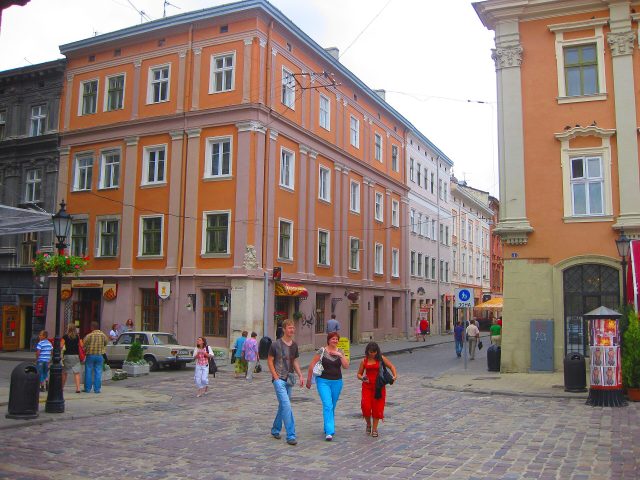
The church is nestled in Lviv’s historic center, surrounded by other landmarks that tell their own stories. Just steps away are the Dominican Cathedral, the Armenian Quarter, and Market Square, each a piece of the city’s intricate mosaic. The area is a testament to how different architectural styles and cultural influences coexist in Lviv, from Gothic spires to Baroque facades. The Church of the Dormition isn’t just a standalone monument; it’s part of a larger narrative, one where every street corner and stone has a role to play.
What makes this place special is its unfiltered connection to the past. There are no grand museum displays or curated exhibits—just the raw, unpolished layers of history. The icons that have witnessed generations of prayer, the walls that have endured fires and political upheavals, the very air that carries the weight of centuries. It’s a stark contrast to many tourist sites, where history is often packaged for convenience. Here, the past isn’t staged; it’s simply present, waiting to be noticed.
The church has weathered its share of hardships. It has survived fires, reconstructions, and shifting political tides. During the Soviet era, it was closed and repurposed, its religious significance erased for a time. Yet, like Lviv itself, it endured, eventually reclaiming its role as a place of worship. Even now, debates about its ownership and heritage occasionally surface, reflecting the complexities of a city that has always been a crossroads of cultures. These tensions aren’t hidden; they’re part of the story, adding depth to the church’s legacy.
Visiting the Church of the Dormition is more than just admiring an old building. It’s an opportunity to reflect on how identity is shaped over time—how people cling to their beliefs, their language, and their traditions even when the world around them changes. There are no grand declarations here, just the quiet persistence of a community that refused to disappear. That’s why the church matters, not just to the faithful, but to anyone who wants to understand Lviv beyond its postcard-perfect facades. It’s a place where history isn’t just remembered; it’s still being lived.