Berat is often called the city of a thousand windows, but its true soul lies hidden behind the walls of its old churches. One of them, the Church of St. Mary of Blachernae, sits quietly on a hillside, as if watching time flow slowly through the narrow streets of the lower town. It doesn’t stand out immediately among the whitewashed houses and lush greenery, but this unassuming corner holds something rare—a place where Byzantine traditions, Ottoman influences, and Albanian history intertwine without fanfare.
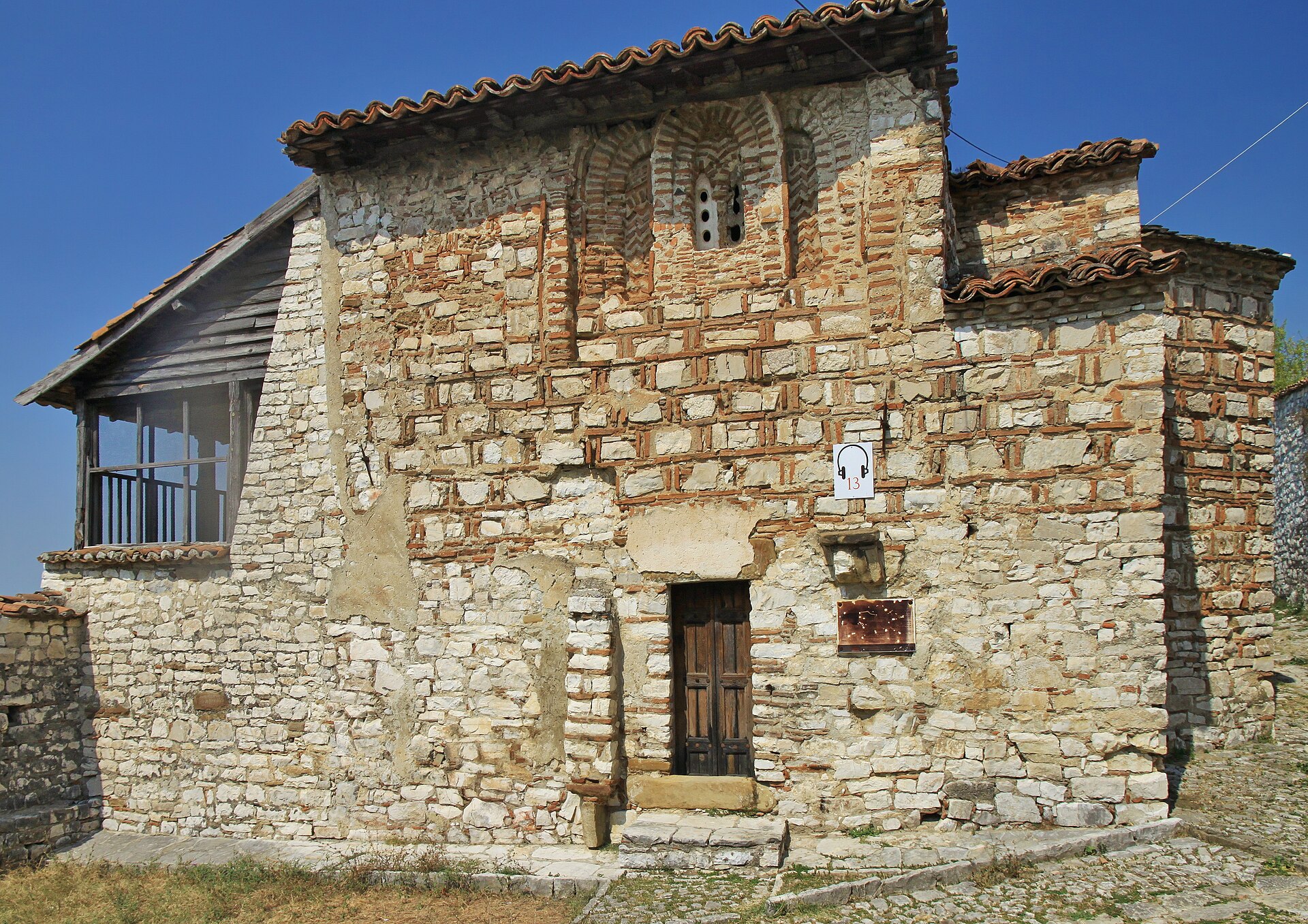
The church dates back to the 13th century, though historians still debate its exact origins. Some suggest an even earlier foundation, while others link it to the Muzaka family, local feudal lords who supported Orthodox Christianity in the region. Whatever its beginnings, the building has endured earthquakes, wars, and shifting rulers, yet its original character remains intact. From the outside, it appears modest—low stone and brick walls, a small dome, narrow windows. But step inside, and that simplicity gives way to something far richer.
The interior is covered in frescoes, their vibrant colors and dynamic lines filling nearly every surface. Painted in the Byzantine style, they carry a distinct local flavor—faces of saints feel almost lifelike, and the scenes pulse with movement. The most striking is the Last Judgment on the western wall, where angels, demons, and sinners twist in dramatic poses, as if caught mid-motion. Art historians consider these frescoes among the finest examples of medieval Balkan painting, though they remain less known than those in Mistra or Ohrid. Perhaps because they were never meant to impress outsiders, but to speak to those who already understood their language.
Like many Christian churches in Albania, this one was converted into a mosque during the Ottoman era. A minaret was added, later removed, but the building retained much of its original art. The Muslims who worshipped here covered the faces of the saints, yet left the rest untouched—a rare compromise where two faiths overlapped rather than erased each other. The result is a quiet testament to coexistence, layers of history visible in the same brushstrokes.
Today, the church still holds services, though not as frequently as larger Orthodox cathedrals. On weekdays, its doors are usually open, inviting visitors to sit in the hush, broken only by the rustle of leaves outside. Locals treat it with quiet respect, not as a relic, but as part of their daily lives. Tourists sometimes wander in, but never in crowds. Maybe because the church doesn’t demand attention, or because its beauty reveals itself slowly, to those willing to look.
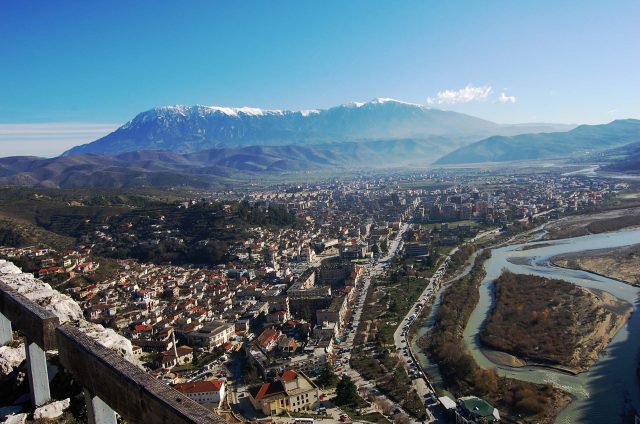
A small garden surrounds the building, where fig and pomegranate trees offer shade. It’s a peaceful spot to rest after climbing the steep alleys of the old town. From here, the view stretches across the Osum River valley, winding between hills toward the fortress walls on the opposite bank. On clear days, the mountains in the distance seem close enough to touch. The place feels made for pausing, for realizing that history isn’t always grand or loud. Sometimes, it lingers in quiet corners, in walls that have seen centuries pass but keep their silence.
The Church of St. Mary of Blachernae isn’t just an architectural monument. It’s a living record of how different eras and cultures shape a single place. There’s no attempt to dazzle with size or opulence, and that’s its strength. No crowds, no noise, no forced experience—just stone, paint, and light filtering through narrow windows. Time moves differently here, deeper and slower. That’s why some return, not for photos or souvenirs, but to feel that stillness again, the kind that holds stories without telling them.