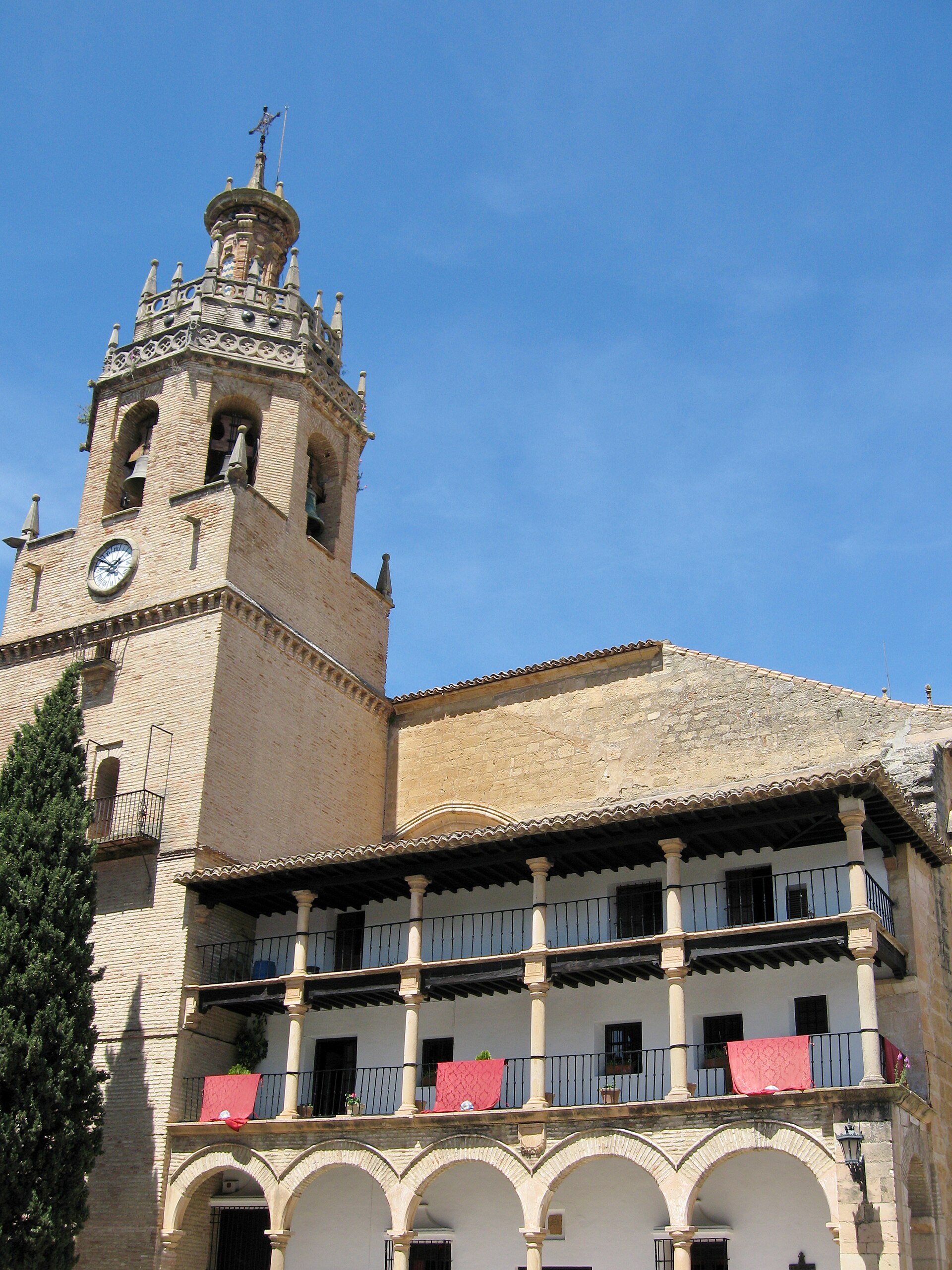
Santa María la Mayor in Ronda is one of those places where history isn’t just remembered—it lingers in the very stones. Built on the site of a former mosque after the Reconquista, the church carries the weight of centuries in its architecture, a quiet testament to the layers of faith and culture that have shaped this town. The original structure was repurposed rather than demolished, and traces of its Islamic past remain visible in the arches and details that survived the transition. The minaret, for instance, was converted into a bell tower, its form still recognizable beneath the Christian additions. It’s a rare example of how two worlds, often seen as opposing, could coexist in a single space.
The exterior of the church is a study in contrasts. The Gothic facade, with its pointed arches and solemn lines, stands alongside Renaissance flourishes that soften its severity. Inside, the nave is spacious and uncluttered, its high vaulted ceilings drawing the eye upward. Light filters through stained glass, casting a muted glow over the whitewashed walls. There’s no overwhelming grandeur here, no gilded excess like in Seville’s cathedral or the ornate splendor of Toledo. Instead, the church feels intimate, almost understated, as if inviting visitors to pause and reflect rather than simply admire.
Ronda has always been a place of thresholds—perched on the edge of a dramatic gorge, straddling the divide between Christian kingdoms and Al-Andalus, between the rugged mountains and the fertile valley below. Santa María la Mayor embodies this duality. The church isn’t just a religious building; it’s a physical manifestation of the town’s layered identity. The original mosque’s arches, the later Christian altarpieces, and the Baroque touches all coexist, each era leaving its mark without erasing what came before. Walking through its doors is like stepping into a conversation between past and present, one that has been unfolding for over five hundred years.
The main altarpiece is a striking example of Baroque artistry, its gilded figures and intricate carvings standing out against the simplicity of the surrounding walls. Yet even here, the church resists ostentation. The whitewashed surfaces and unadorned stone create a sense of calm, allowing the details to speak for themselves. Above the entrance, the wooden choir loft—with its carved panels and rows of seats—harks back to a time when worship was a communal event, a gathering place for the town’s residents. The side chapels hold works by local artists from the 17th and 18th centuries, paintings and sculptures that tell stories of Ronda’s history and the lives of its people.
In the Middle Ages, the church was more than just a place of worship. It served as a civic hub, where the town council met and important documents were stored. During times of conflict, it offered refuge, its thick walls providing safety in an uncertain world. This dual role—spiritual and practical—reflects the way churches often functioned in smaller communities, where they were as much a part of daily life as the market square or the town hall.
By the 19th century, Ronda had begun to attract a different kind of visitor. Travelers, writers, and artists were drawn to the town’s dramatic landscapes and its air of timelessness. Santa María la Mayor became one of its most photographed and sketched landmarks, a place where the past felt tangible. The church’s quiet dignity appealed to those seeking inspiration, its history and architecture offering a counterpoint to the more flamboyant monuments of Spain’s larger cities.
Today, the church remains an active place of worship. Services are still held here, and the sound of the organ occasionally fills the nave. Visitors can attend a mass, listen to the music, or simply sit in the stillness. There’s no rush, no sense of being hurried along. The church feels like a place where time moves differently—cooler in the summer, warmer in the winter, the stone floors retaining the day’s temperature long after the sun has set. The atmosphere is one of quiet reverence, not just for the sacred, but for the history that surrounds it.
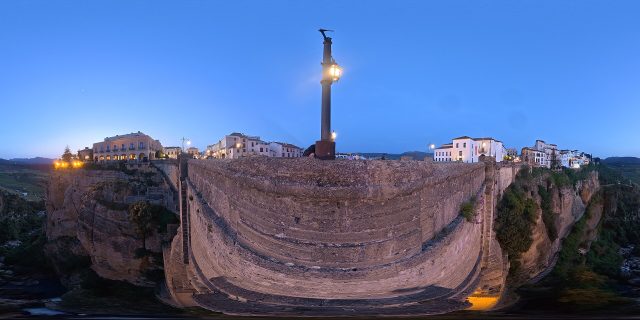
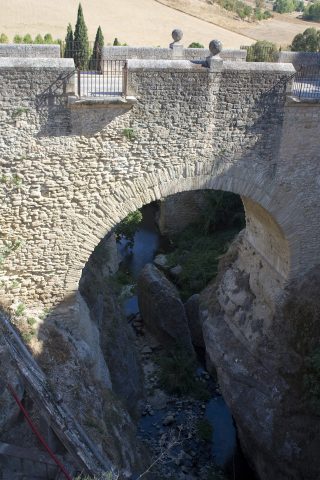
One of the most striking aspects of Santa María la Mayor is its setting. The church stands near the edge of the Tajo gorge, and from the bell tower, the view is breathtaking. The Puente Nuevo bridge spans the chasm below, while the Sierra de Ronda mountains rise in the distance, their slopes covered in olive groves and pine forests. The river Guadalevín winds through the valley, its waters reflecting the changing light. This view is a reminder of why Ronda has always been a place of contrasts—where the wild beauty of nature meets the enduring presence of human history.
To visit the church is to step into a space that has witnessed centuries of change. The carved capitals, the faded frescoes, the worn stones—all bear the marks of time, each scratch and crack telling a story. There’s nothing flashy about Santa María la Mayor, no attempt to impress with opulence. Instead, its beauty lies in its authenticity, in the way it has absorbed the layers of history without losing its sense of self. It’s a place that doesn’t just preserve the past but continues to engage with it, offering something new to each person who walks through its doors. Whether you come for the architecture, the history, or simply the quiet, the church has a way of making you feel connected to something larger than yourself.