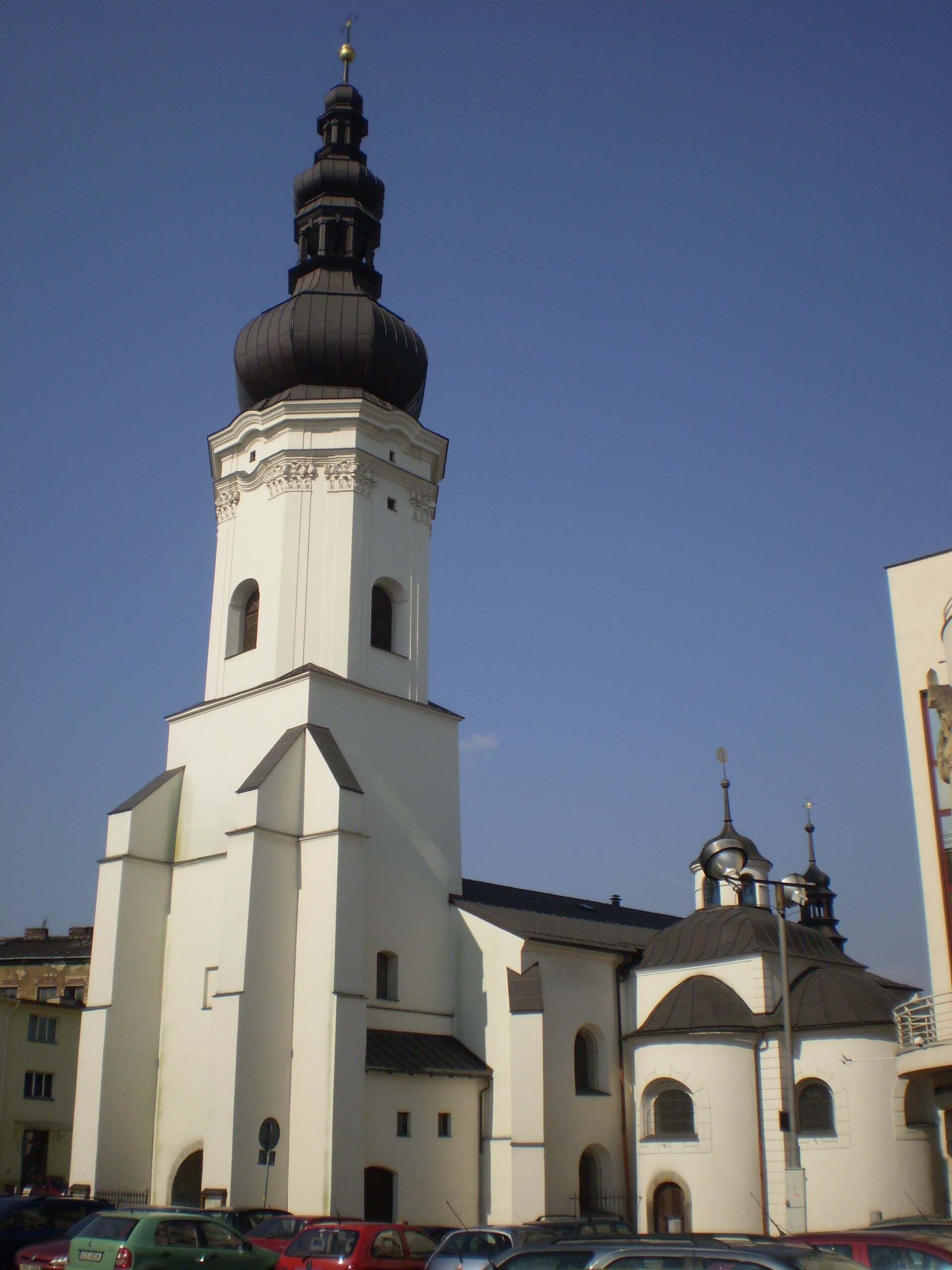
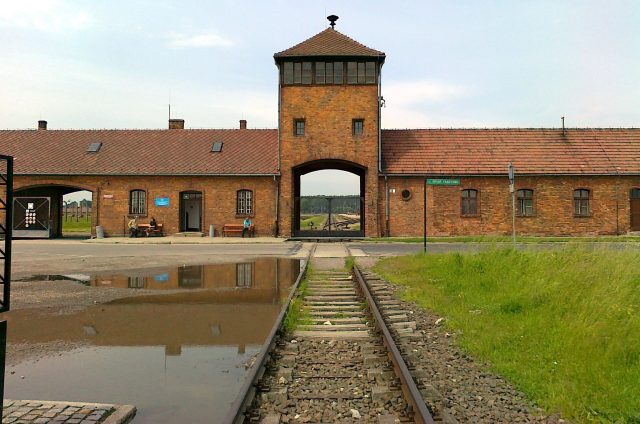
St. Wenceslas Church stands in a town where history lingers in the air—not as a grand narrative, but as something personal. Terezín is often remembered for its role during World War II, when it became the site of the Theresienstadt ghetto and concentration camp. Yet the town existed long before those years. Founded in the late 18th century as a fortress under Emperor Joseph II, it was named after his mother, Empress Maria Theresa. Over time, its military origins gave way to civilian life, and places of worship became part of its rhythm. St. Wenceslas Church arrived later, after Terezín had lost its strategic importance and settled into the quiet of a small provincial town.
The church was built in the mid-19th century, when neo-Romanesque architecture was common across Central Europe. Its design reflects that era’s interest in medieval forms—thick stone walls, rounded arches, and narrow windows. Inside, the space is uncluttered. High vaulted ceilings, simple wooden pews, and an unadorned altar create a sense of quiet. There are no frescoes or gilded decorations, just a simplicity that leaves room for thought.
St. Wenceslas, the church’s patron saint, is a figure from Czech history. A 10th-century duke and martyr, he became a symbol of national identity. In Terezín, where people of different faiths had lived side by side for generations, dedicating the church to him made sense. For decades, it served the local Catholic community, its doors open to anyone seeking connection. But its story changed during the war, when the church found itself within the ghetto walls.
When the Nazis established Theresienstadt in 1941, St. Wenceslas Church was enclosed within its perimeter. For the thousands of Jewish prisoners brought here from Czechoslovakia, Germany, Austria, and beyond, it became a rare place of refuge. Though religious services were forbidden, the church’s walls held secret prayers, whispered conversations, and music. Some prisoners found moments of quiet inside; others gathered strength there before facing another day. After the war, the church reopened, but the weight of those years remained. Today, memorial plaques inside mark the lives lost, and occasional concerts or exhibitions keep the memory of Theresienstadt present.
The church looks much as it did when it was first built. The same stone façade, the same bell tower with its cross, standing against a quiet park where locals walk or sit on benches. The town around it has changed—layers of history visible in the old fortress walls, the preserved barracks, and the post-war apartment blocks. St. Wenceslas Church has seen it all.
Visiting the church isn’t like stepping into a museum. There are no guided tours, just the quiet of a place that has absorbed decades of human experience. If you sit on one of the pews, you might notice the way light falls through the narrow windows or the sound of the floorboards beneath you. The stories here aren’t shouted; they’re carried in the silence.
Terezín is a town of contradictions. Beauty and tragedy coexist in its streets, where the remnants of a fortress stand alongside the scars of a concentration camp. St. Wenceslas Church holds that duality. It was built as a house of worship, became a refuge in dark times, and now stands as a place where past and present meet. For those who come here, it offers a chance to reflect—not just on history, but on the people who lived it.
The church speaks in the language of stone and silence.