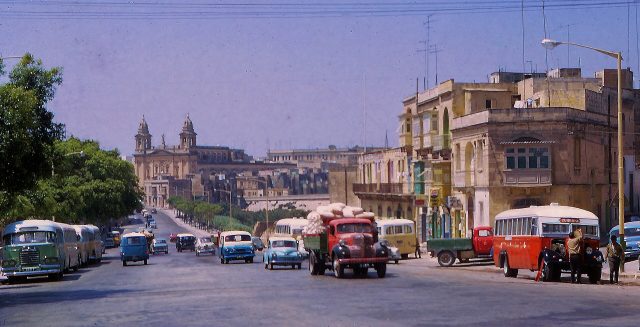
St. Ubena’s Church in Paola is one of those places that doesn’t demand attention but quietly lingers in the memory. Tucked away from the usual tourist paths, it stands in a quiet corner of the town where the streets feel steeped in history and time moves at a slower pace. There’s no grandiosity here like in Valletta’s cathedrals or the bustle of Mdina’s squares, yet it holds a significance all its own. For the people of Paola, it’s more than just a building—it’s a symbol of faith and heritage passed down through generations.
The church’s architecture is a modest example of Maltese Baroque, stripped of excess. The façade is simple, with two bell towers flanking a tall pediment adorned with a relief. Inside, the space feels open despite its small size. Light walls, high vaulted ceilings, and wooden pews create an uncluttered atmosphere. The marble main altar is crowned by a statue of St. Ubena, drawing not only locals but also pilgrims from other towns who come to pay their respects.
Paola itself was founded in the 17th century under the rule of Grand Master Antoine de Paule, but the church came later, in the 18th century, when the town had already taken shape. Built as a parish church, it became a spiritual hub for the growing community. At the time, Malta was under the rule of the Knights of St. John, and the church served not only as a place of worship but also as a gathering point for communal matters. It was where decisions were made, news was shared, and the rhythms of daily life were marked by the tolling of its bells.
St. Ubena, a 3rd-century saint from North Africa, is venerated in Malta as a protector against illness and a patron of farmers. According to tradition, his relics were brought to the island in the Middle Ages, and his feast day on February 19th is celebrated with particular devotion in Paola. For several days, the church becomes the heart of festivities—processions, masses, and folk celebrations spill out into the streets, keeping centuries-old traditions alive.
The church houses works by local artisans, each telling a story of faith and craftsmanship. In a side chapel, an 18th-century painting depicts the martyrdom of St. Ubena, while nearby, a carved wooden pulpit illustrates scenes from the life of Christ. These details offer a glimpse into how art and devotion intertwined over the centuries, serving not just as decoration but as a means of teaching and inspiration.
For the people of Paola, St. Ubena’s Church is woven into the fabric of daily life. It’s where baptisms, weddings, and funerals take place, where families gather after Sunday mass to chat in the square or linger over coffee at the nearby bar. On weekdays, the church is quiet, its stillness broken only by the occasional chime of the bells. It doesn’t exist to impress visitors—it’s simply part of the town’s heartbeat.
Those interested in Malta’s history will find something meaningful here. The church offers a window into 18th-century life, revealing how the Knights of St. John interacted with local communities and how faith shaped the island’s towns. There are no museum displays, just the quiet presence of stone walls, an altar, the scent of incense, and the faint rustle of old prayer books. History isn’t preserved here—it’s lived.
If you find yourself in Paola, it’s worth stepping inside for a few minutes. Sit on one of the pews, listen to the silence, and watch the light filtering through the stained glass. In a place like this, you might begin to understand what makes Malta so compelling—not just its beaches and ancient temples, but the quiet beauty that exists in every corner, waiting to be noticed.