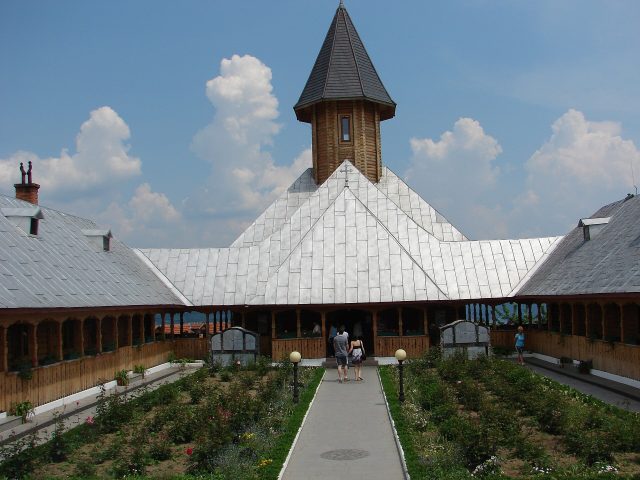
St. Nicholas Church in Orșova feels like a quiet guardian of time, standing where history has layered itself into the very stones beneath your feet. Perched on the banks of the Danube, it occupies a place where empires once shifted like tides—where trade routes converged, borders blurred, and cultures left their marks without fanfare. Today, the church is less a monument than a witness, its walls holding stories that stretch back centuries, though it asks nothing of those who pass by.
The building itself is modest in size, but its architecture tells a story of influences that have shaped this corner of Romania. The clean lines of the facade reflect Orthodox traditions, yet closer inspection reveals subtle traces of Baroque, a nod to the Habsburg era when Orșova was part of a vast empire. The bell tower, rising gently above the entrance, gives the church a welcoming, almost intimate feel, as if it were a home rather than a place of worship. Inside, the simplicity is striking—no grand flourishes, just a sense of warmth that lingers in the air.
The iconostasis, crafted in the traditional style, is adorned with saints whose faces seem to watch over visitors with quiet understanding. Among them, St. Nicholas holds a special place, his presence a natural choice for a town where the Danube has always been a lifeline. For generations, travelers, fishermen, and merchants turned to him for protection, and the river, ever-present just beyond the windows, still carries that legacy. The frescoes, though faded by time, retain a soft vibrancy, their colors deepening in the muted light that filters through narrow windows. The effect is one of stillness, a place where the outside world feels distant.
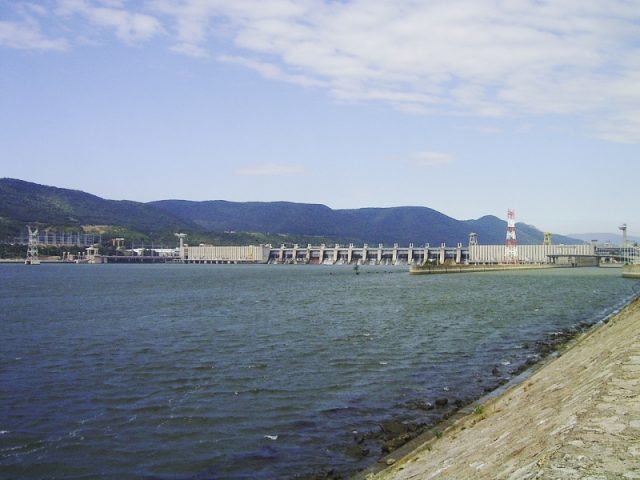
Orșova’s history is one of resilience, and the church has stood through much of it. The town has seen wars, changing rulers, and the ebb and flow of peoples who called this land home. In the early 20th century, when the Iron Gates dam was constructed, part of the old town was submerged, leaving St. Nicholas Church as one of the few structures to survive on the new shoreline. Today, it sits slightly apart from the usual tourist paths, which only adds to its charm. There are no crowds here, no hurried footsteps—just the quiet rhythm of a place that has seen centuries pass without losing its soul.
A small park surrounds the church, where locals often come to sit beneath the trees, watching the Danube stretch out before them. The river here is wide and calm, framed by rolling hills that soften the horizon. On clear days, the opposite bank belongs to Serbia, a reminder that the Danube has never been a divider but a connector, a thread weaving through different lands and peoples. The view is unassuming, yet it carries the weight of history—of merchants, soldiers, and families who once looked out over these same waters.
This isn’t a place that demands attention. There are no grand attractions here, no guided tours rushing from one highlight to the next. Instead, time moves differently, allowing space for reflection. For the people of Orșova, St. Nicholas Church is more than a building; it’s a piece of their identity, a link to the past that still feels alive. It’s where baptisms, weddings, and funerals have taken place for generations, where the same prayers have been whispered in different eras, under different flags.
What makes the church special isn’t its size or its ornamentation, but its authenticity. In a world where so much is polished and packaged for consumption, this place remains unpretentious, almost stubborn in its refusal to be anything other than itself. It doesn’t try to impress; it simply endures. And perhaps that’s why it resonates so deeply—because it offers something rare: a sense of continuity in a time of constant change.
Orșova itself is a town that doesn’t give up its secrets easily. It doesn’t clamor for visitors or put on a show. But for those who take the time to look, there’s a quiet richness here, a reminder of what makes Romania’s lesser-known corners so compelling. St. Nicholas Church is just one piece of that, a small but enduring thread in the fabric of a place where history isn’t just remembered—it’s still being lived.