Saint Mamas Church in Lythragkomi feels like a place where time has quietly settled into the landscape. Tucked away in a small village on Cyprus’s northeastern coast, it stands apart from the island’s more frequented sights. There are no crowds here, no hurried footsteps or raised voices—just the stillness of old stone and the quiet rhythm of rural life.
The church is dedicated to Saint Mamas, a figure deeply woven into Cypriot tradition. According to legend, he was a hermit who lived in a cave near Morphou, known for his ability to tame wild animals. One story tells of him arriving at a tax collector’s court riding a lion, a moment that earned him sainthood. On Cyprus, he is venerated as the protector of shepherds and the poor, and in Lythragkomi, the church holds a special place in the hearts of locals.
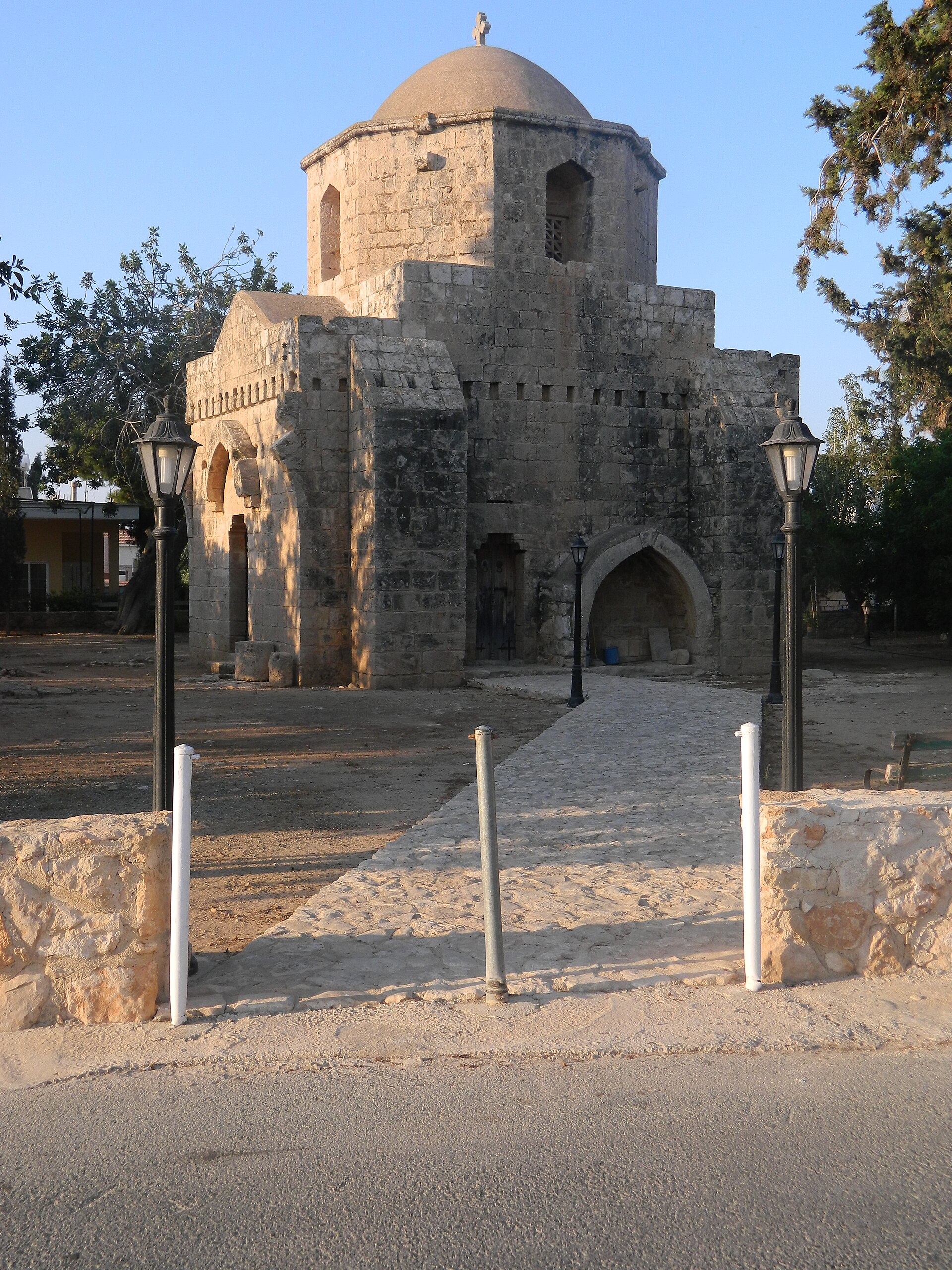
The building itself is a modest example of Byzantine ecclesiastical architecture, though its exact origins are unclear. Historians suggest it was likely constructed between the twelfth and thirteenth centuries, with later modifications during the Frankish and Venetian periods. From the outside, it appears unassuming—low stone walls, a tiled roof sloping gently in two directions, and a small bell tower. Inside, narrow windows filter the light, casting the space in a soft, muted glow. The walls are covered in faded frescoes, their colors softened by centuries of candle smoke and time.
These frescoes are the church’s most striking feature. They depict biblical scenes and the lives of saints in the distinctive style of Byzantine art—elongated figures, solemn expressions, and golden halos that once shimmered in the dim light. Among them, the image of Saint Mamas astride a lion stands out, a quiet echo of the legend that defines him. The plaster is cracked in places, the pigments worn thin, but this only adds to their presence. They feel less like relics and more like witnesses to the prayers and lives of those who have passed through these doors over the centuries.
Lythragkomi itself is a village of stone and silence. The houses, built from local limestone, blend into the landscape, their earthy tones shifting with the seasons. Narrow lanes wind between them, often empty except for the occasional stray cat or the distant sound of a farmer’s truck. In summer, the air carries the scent of wild thyme and pine; in winter, the rains turn the ground to mud, and the village slows, waiting for the return of warmer days. The church is part of this rhythm, its bell once marking the hours for those who lived nearby. Now, it rings only occasionally, a faint sound carried on the wind.
Visiting the church is possible year-round, though spring and autumn are particularly pleasant—cooler than the scorching summers, with the countryside at its most vibrant. The door isn’t always open; sometimes it’s locked, and you might need to ask around for the keyholder. Even if you can’t step inside, the place has a way of lingering in the mind. The church sits on a gentle rise, offering views of olive groves, patchwork fields, and the distant mountains beyond the sea. From here, it’s easy to imagine the lives of those who built it, who knelt before its frescoes, who listened to its bell calling them to prayer.
This isn’t a place preserved for tourists. It’s a living part of the village, though one that sees few visitors. On feast days, locals gather here, filling the space with voices and candlelight. The rest of the time, it stands empty, exposed to the elements. The stones are worn smooth by time, the frescoes fading slowly, the roof bearing the weight of centuries. There’s no grandiosity here, no attempt to impress. What remains is something far more enduring—the quiet authenticity of a place that has simply been, and continues to be, a part of the land and the lives of those who call it home.
For those who seek out Saint Mamas Church, it offers a glimpse of Cyprus beyond the postcards and resorts. It’s a place where history isn’t staged but simply exists, where the past feels close enough to touch. The island has many grander churches, more famous ruins, but few that feel as intimately connected to the people who have shaped them. Here, in the stillness of Lythragkomi, the weight of centuries is not a burden but a presence—one that reminds you that some places are meant to be lived in, not just visited.