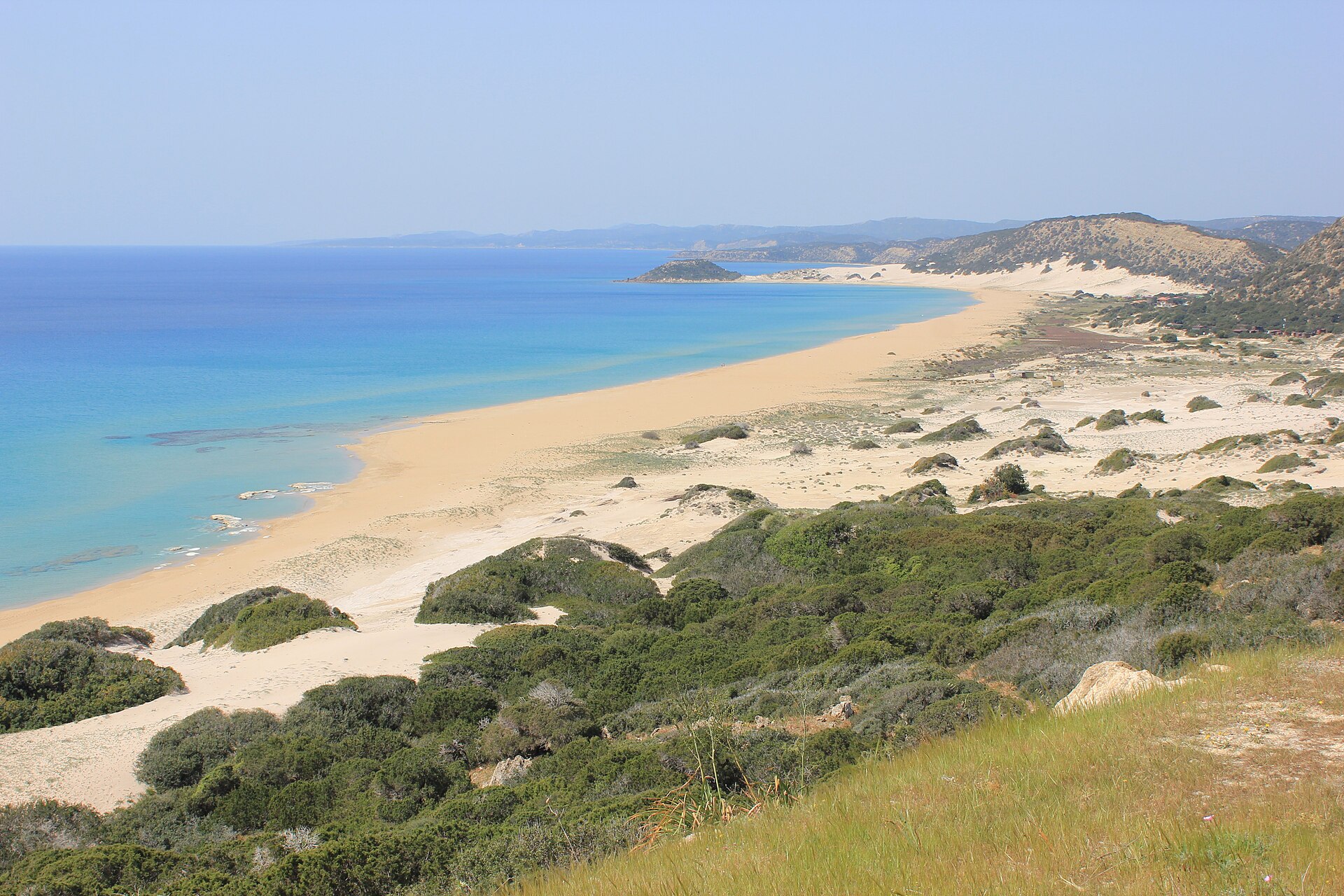
Golden Beach is one of those rare places where time seems to slow down, where the rhythm of life is set by the waves and the wind rather than the hum of tourist crowds. Tucked away on the Karpas Peninsula in northern Cyprus, it feels worlds apart from the island’s bustling resorts. The sand here is soft and golden, almost powdery underfoot, though by midday the sun can make it too hot to walk on barefoot. The water is clear, with a faint turquoise tint, but the sea isn’t always gentle—waves can be strong, and the seabed is rocky in places. That’s part of the appeal, though. This isn’t a beach for those who want convenience; it’s for those who prefer raw, untouched beauty over manicured perfection.
There are no sunbeds, no beach bars, no lifeguards—just sand, sea, and the occasional visitor. Most are locals or travelers who’ve made the journey specifically for the solitude. The landscape around the beach is wild and unspoiled: low shrubs give way to rolling hills covered in dry grass and scattered pines. In the early morning or late afternoon, you might spot sea turtles crawling ashore to lay their eggs, or flocks of gulls wheeling overhead. As the sun sets, the sky turns shades of pink and orange, and the water takes on a deep, almost violet hue. It’s the kind of place where you can sit for hours without saying a word, just watching the horizon.
The Karpas Peninsula, where Golden Beach is located, is often called the "real" Cyprus—a place where life moves at a slower pace, untouched by mass tourism. The villages here are small and quiet, with stone houses, narrow streets, and churches that have stood for centuries. The peninsula is also home to nature reserves where wild donkeys roam and rare birds nest. The drive to the beach takes you through a landscape of gentle hills, abandoned villages, and fields of wild herbs. Along the coast, cliffs drop sharply into the sea, and in some places, you can still see the ruins of ancient settlements or medieval fortifications. It’s easy to feel as though you’ve stepped into another era.
The history of this part of Cyprus is layered and complex. The Karpas Peninsula has been inhabited since antiquity, and traces of its past are scattered across the landscape. Ancient Greek temples, Byzantine monasteries, and Venetian fortresses all tell stories of the civilizations that once thrived here. In the Middle Ages, the peninsula was a battleground for competing powers, and later, in the 20th century, it became a focal point in the island’s political divisions. Today, Golden Beach lies in an area administered by the Turkish Cypriot community, though the borders here feel more symbolic than real. The atmosphere is one of quiet resilience, as if the land itself has absorbed the weight of history and moved on.
There’s no grand architecture at Golden Beach—just nature and a few abandoned fishing huts. But if you venture inland, you’ll find villages where time seems to have stood still. The houses are built from local stone, with flat roofs and wooden shutters, and the streets are so narrow that cars can barely pass through. Some villages still have old churches with faded frescoes, while others show remnants of ancient aqueducts or wells. These places offer a glimpse into a way of life that has remained largely unchanged for generations, shaped by the harsh climate and the rugged terrain.
The climate on the Karpas Peninsula is drier than in other parts of Cyprus. Summers are hot and arid, with temperatures often exceeding thirty-five degrees Celsius, while winters are mild but windy. The sea can be rough in the cooler months, making swimming difficult. The best time to visit Golden Beach is in the spring or early autumn, when the heat is less intense and the water is still warm enough for a swim. During these seasons, the beach is at its most beautiful—the sand doesn’t burn your feet, and the hills are dotted with wildflowers, filling the air with the scent of thyme and sage.
Getting to Golden Beach isn’t straightforward. The nearest major town is Famagusta, but the journey from there involves winding roads through villages and hills. A car is essential, and the roads can be rough in places. Renting a vehicle from Larnaca or Paphos is an option, though fuel tends to be more expensive in the north, and gas stations are few and far between. Taxis are another possibility, but they’re costly, and not all drivers know the way to such a remote spot. The difficulty of reaching the beach is part of what makes it special—it keeps the crowds away and ensures that only those who truly want to be here make the effort.
If you plan to spend the day at Golden Beach, come prepared. There are no shops, no cafes, no amenities of any kind. Bring water, food, and something to sit on. The lack of infrastructure is part of the charm, though. You can have a picnic on the sand, watching the waves roll in, or take a walk along the coast, where small coves and sea caves offer hidden spots to explore. In some places, the cliffs form natural pools where you can swim if the weather is calm. As evening falls, the sea turns a deep blue, and the sound of the waves becomes the only soundtrack you need.
Golden Beach isn’t for everyone. There are no luxury hotels, no beachfront restaurants, no entertainment beyond what nature provides. But for those who crave space, silence, and a sense of freedom, it’s a place that feels almost untouched by time. It’s a reminder of what Cyprus might have looked like decades ago, before tourism reshaped its coastline. If you ever find yourself in the north of the island, it’s worth making the trip—just to see what paradise looks like when it’s left alone.