Lambousa is one of those quiet places in Cyprus that most travelers overlook, yet it holds the faint echoes of the island’s long and layered past. Tucked away near the village of Lythragkomi on the northeastern coast, far from the crowded resorts and well-trodden tourist paths, its ruins sit in near solitude. There are no crowds here, just the sound of wind rustling through wild grasses and the occasional cry of gulls circling overhead. Unlike the grand archaeological sites of Paphos or Salamis, Lambousa’s remains are modest, almost unassuming. But that’s precisely what makes it special. It doesn’t demand admiration—it invites reflection, a chance to imagine what life was like on this island two thousand years ago.
The city flourished from the classical period through early Byzantine times, reaching its peak under Roman rule. Though small, Lambousa was strategically important, perched at the crossroads of trade routes that carried copper, wine, and olive oil from the surrounding villages. Archaeological finds suggest a community of artisans, merchants, and farmers whose lives were deeply connected to the sea. Later, the Byzantines fortified the settlement, but over time, its inhabitants drifted inland to safer ground, leaving Lambousa to fade into the landscape.
Today, only fragments of walls, foundations, and public buildings remain. The most striking structure is the ruins of an early Christian basilica, its mosaic floors still visible beneath the open sky. Unlike the vibrant, intricate designs found in Paphos, these mosaics are simpler—geometric patterns and symbols that hint at the early spread of Christianity on the island. Nearby, the remnants of Roman baths stand as a reminder of how these spaces once served as social hubs, where people gathered not just to bathe, but to talk, trade, and connect.
Walking through the site, it’s easy to picture Lambousa in its prime. The streets were likely narrow and winding, lined with houses built from local limestone. At its heart would have been the agora, a bustling marketplace where daily life unfolded. Now, little remains of that center, but if you look closely, you can still make out the outlines of foundations and the stumps of columns that once supported shaded porticos. Archaeologists believe small temples dedicated to local deities may have stood here, though no traces have been found yet.
What makes Lambousa intriguing is its ordinariness. It was never a capital or a major religious center, so its history isn’t as well-documented as other Cypriot cities. This lack of grand narratives leaves room for imagination. Its people were likely fishermen, winemakers, and farmers tending olive groves on the nearby hills. Their names and stories are lost to time, but the stones they laid still hold their memory.
Visiting Lambousa isn’t like touring a polished open-air museum. There are no detailed plaques or guided tours, and that’s part of its charm. You can wander the overgrown paths, sit on ancient stones, and listen to the distant murmur of the sea. Occasionally, a shard of pottery or a fragment of marble catches the light, a quiet reminder of the lives once lived here. Locals rarely venture this way, which adds to the site’s sense of isolation and tranquility.
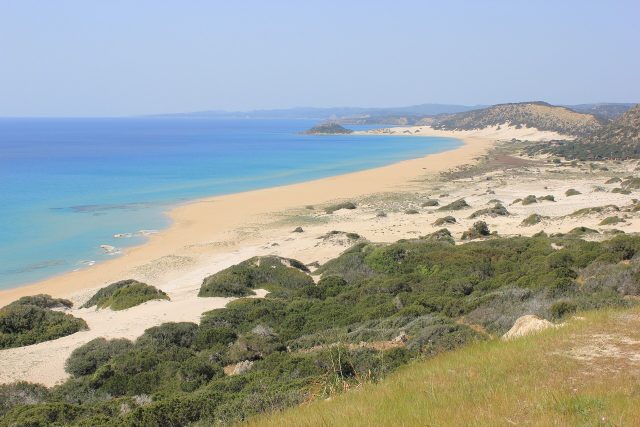
The northeastern coast of Cyprus feels different from the rest of the island. There are fewer resorts, more wild landscapes, and a slower pace of life. Lambousa sits among low hills covered in scrubby bushes and scattered pines, with the sea just beyond. The salty breeze mixes with the scent of thyme and sage, and if you climb one of the hills, you’ll see a small bay with clear water where trading ships might have once docked.
This isn’t a place for those seeking excitement or entertainment. It’s for those who want to step into history without distractions—no cafes, no souvenir stalls, no guides reciting rehearsed facts. Just wind, stone, and the sea, quietly telling the story of how this island has changed over centuries. Lambousa doesn’t try to impress. It simply exists, as it always has, offering a rare moment of stillness in a world that moves too fast.