Lythragkomi
Cyprus · 7 places
Photo: Julian Nyča, CC BY-SA 3.0
Lythragkomi sits quietly on the northeastern edge of Cyprus, a place where the hours seem to stretch just a little longer. There are no crowded promenades or tourist-packed beaches here, no souvenir shops or beachfront bars competing for attention. Instead, the only sounds breaking the silence are the cries of gulls wheeling overhead and the steady rhythm of waves lapping against the shore. The village clings to the tip of the Karpas Peninsula, a wild and untouched stretch of land where the landscape feels as if it has barely changed in decades. Life moves at its own pace—fishermen mend their nets by the harbor, farmers tend to their olive groves, and the same families have lived in the same whitewashed houses for generations.
The architecture is simple, almost unassuming. Low, flat-roofed homes line narrow streets that twist and turn without any grand design, as if they grew organically over time. At the heart of the village stands the Church of Saint Andrew, a modest Byzantine structure that has watched over Lythragkomi for centuries. Inside, faded frescoes hint at the island’s long history under Byzantine rule, their colors softened by time. Outside, the air is thick with the scent of wild herbs and saltwater, and the only movement comes from the occasional figure shuffling past—an old man carrying a basket of olives, a woman sweeping the dust from her doorstep, or a group of friends gathered beneath an olive tree, their laughter mingling with the clatter of backgammon pieces.
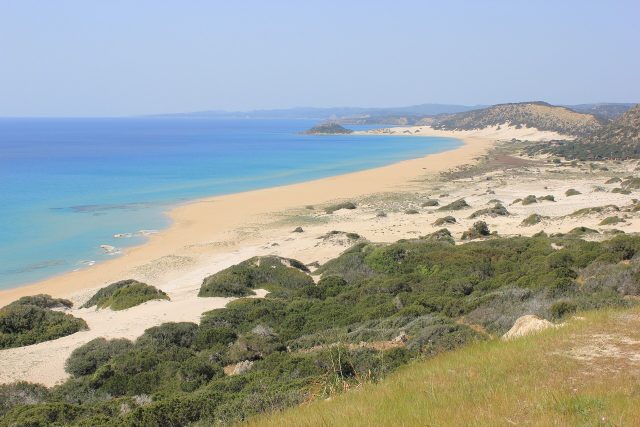
The Karpas Peninsula is often called the last wild corner of Cyprus, and Lythragkomi feels like its quiet soul. There are no luxury resorts here, no fine-dining restaurants or nightclubs. Instead, the coastline unfolds in long, empty stretches of golden sand, where the sea is so clear it feels like you could count the pebbles beneath the surface. The sun shines relentlessly, turning the water into a shifting mosaic of blues and greens. Away from the village, the land grows wilder—abandoned hamlets crumble under the weight of time, their stone walls still standing but their stories long forgotten. Ruins from ancient civilizations dot the landscape, a reminder that people have walked these shores for thousands of years.
Time moves differently in Lythragkomi. There’s no rush, no need to fill the hours with activity. The days begin with the slow ritual of coffee and conversation, the clink of cups against saucers the loudest sound in the morning stillness. Fishermen return with their catch as the sun dips low, painting the sky in streaks of pink and gold. Evenings are for sitting by the water, watching the light fade and the stars emerge, one by one. Some might find it too quiet, too slow, but that’s precisely the point. This is a place where you can step off the treadmill of modern life and simply be.
If you come here, don’t expect nightlife or organized entertainment. Lythragkomi isn’t that kind of destination. It’s for those who want to wake up to the sound of waves, to spend their days wandering empty beaches or cycling down dusty roads that lead to nowhere in particular. You might stumble upon a forgotten chapel, its walls covered in centuries-old icons, or a hidden cove where the water is so still it mirrors the sky. The real joy is in the unplanned moments—the unexpected detour, the conversation with a local who invites you in for a glass of wine, the way the light catches the sea at dusk. The key is to let go of the need to do or see it all. In Lythragkomi, the best experiences are the ones that find you when you’re not looking.
See & Do
All of them

Places on the map
Marker colour follows the categoryClimate and weather
Detailed weather: Lythragkomi- Average temperature
- 21 °C
- Precipitation per year
- 328 mm
- Sunshine hours per day
- 7.6 h
Average air temperature
°C
13
13
15
19
23
26
29
29
27
24
19
15
Jan
Feb
Mar
Apr
May
Jun
Jul
Aug
Sep
Oct
Nov
Dec