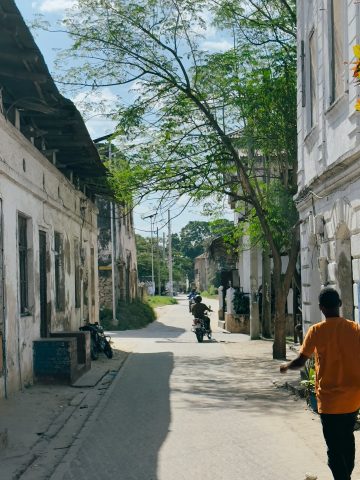
Bagamoyo is a town where the weight of history lingers in every stone. Perched on the shores of the Indian Ocean, it has long been a crossroads of cultures, faiths, and human stories—Arab traders, European explorers, and African communities all left their mark here. The streets are narrow and shaded by bougainvillea, lined with low-slung houses topped with terracotta roofs. Among them stands the modest Church of St. John the Baptist, unassuming yet deeply resonant.
Built in the late 19th century, the church arose during a time when Bagamoyo was one of East Africa’s most vital hubs. Caravans arrived from the interior, laden with ivory, spices, and enslaved people, while European missionaries and colonial administrators sought to reshape the region. The church was erected on the site of a former slave market, a place once synonymous with suffering. Today, it stands as a quiet testament to both faith and the possibility of change.
The architecture is simple and practical, reflecting the needs of its time. The walls are made of coral stone, quarried from nearby reefs, while the roof is covered in red tiles, likely imported from Europe. Inside, wooden pews face a plain altar, and a few stained-glass windows cast muted light across the space. The most striking feature is a carved wooden cross, said to have been brought from Germany. Outside, a garden of palms and flowering shrubs offers a cool retreat from the tropical heat.
The church played a central role in the spread of Catholicism in Tanzania. In the late 1800s, Bagamoyo became a base for missionaries venturing into the African interior, carrying not just religious teachings but also Western medicine and education. The church itself was more than a place of worship—it housed a school, a hospital, and a refuge for freed slaves. Nearby, the first seminary in East Africa trained local priests, many of whom later became influential figures in the country’s history.
The church remains active today. On Sundays, worshippers gather—descendants of freed slaves and newer residents of Bagamoyo—singing hymns in Swahili and English. On weekdays, the space is quieter, occasionally visited by tourists or locals seeking a moment of peace. The surrounding grounds hold the graves of early missionaries and the first African Christians, their weathered headstones bearing silent witness to the past.
Bagamoyo is often called a ghost town, its former glory faded as trade routes shifted and the port declined. Yet the Church of St. John the Baptist endures, a steady presence amid the town’s ebb and flow. Its walls hold the stories of Africans, Arabs, Europeans, and Indians—all who once called this place home. The layers of history here are tangible, from the remnants of old wells to the crumbling colonial-era buildings that still line the streets.
Visiting the church invites reflection on how this place has transformed. Where human beings were once bought and sold, prayers for peace now rise. The past isn’t erased—it lingers in the air, in the coral stone, in the quiet rustle of palm leaves. Bagamoyo doesn’t try to be a tourist attraction; it simply exists, a living museum under the open sky.
If you find yourself here, take your time. Walk along the waterfront, where fishermen mend their nets and children play in the shallows. Stop at a café for fresh seafood and strong coffee. Then step into the church—not for photographs, but to feel the weight of history in the stillness. There’s no grandeur here, just the quiet persistence of memory.