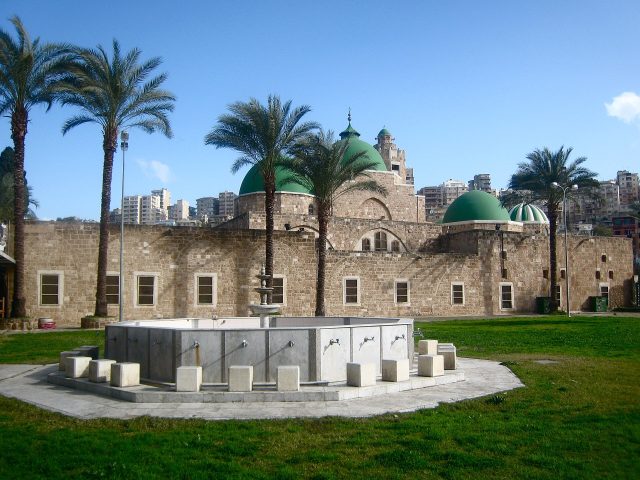
Saint George’s Church in Tripoli is one of those rare places where history isn’t just preserved in stone but still breathes, shifts, and endures alongside the city itself. Tucked into the heart of the old town, it stands among narrow streets where layers of time—Byzantine, Arab, Ottoman—overlap like pages of a well-worn book. The church is dedicated to Saint George, a figure revered across the Christian world, but here his presence feels especially tangible, as if the legends of his travels through these lands still linger in the air.
From the outside, the church doesn’t demand attention. It’s modest, almost blending into the surrounding buildings, its walls built from local stone that has mellowed into a warm, golden hue over the centuries. The entrance is marked by a simple arched portal, a detail common to many churches in the Levant. Inside, the space unfolds into a series of naves divided by columns, some of which likely came from older structures—a practice not uncommon in a region where every piece of stone might carry echoes of the past. The architecture isn’t grand, but that’s part of its quiet charm.
The church’s history is inseparable from that of Tripoli itself. Founded by the Phoenicians and later a key Byzantine stronghold, the city has always been a crossroads of cultures and faiths. Christianity took root early here, and while the exact origins of Saint George’s Church are unclear, it likely dates back to the Byzantine era. Over the centuries, it has witnessed the rise and fall of empires—Arab conquests, Crusader rule, Ottoman dominance—each leaving its mark on the building and the city around it. The church has seen wars, sieges, and shifting powers, yet it remains standing, a silent witness to change.
One of the most intriguing chapters in its history unfolded during the Crusades. Tripoli was the capital of the County of Tripoli, one of the Crusader states, and the church would have been more than just a place of worship. It may have served as a gathering point for knights before battles or a site of thanksgiving after victories. When the Crusaders fell to the Mamluks, the church wasn’t destroyed but adapted, continuing under new rulers. This resilience is striking in a region where many Christian sites were either demolished or repurposed into mosques.
Inside, the atmosphere is hushed, almost reverent. Light filters through narrow windows, illuminating faded frescoes and icons that cover the walls. Some date back centuries, while others have been restored or repainted over time. The image of Saint George slaying the dragon appears more than once, a motif that feels particularly resonant here. The iconography blends Byzantine influences with local traditions, creating something distinct. In one corner, old tombstones bear inscriptions in Arabic and Greek—a reminder of how closely different cultures have intertwined in this city.
Today, Saint George’s Church remains an active place of worship, though Tripoli’s Christian community is much smaller than it once was. On Sundays and feast days, the church still draws parishioners, along with the occasional visitor curious about its history. The surrounding streets retain the character of the old city: narrow alleys scented with spices and fresh bread, small shops selling everything from antiques to sweets. It’s easy to imagine the city as it was centuries ago, when Tripoli was one of the Mediterranean’s busiest ports, a place where merchants, pilgrims, and soldiers passed through in a constant flow.
The church isn’t cut off from the modern life of the city. It stands near mosques, markets, and homes, a coexistence that hasn’t always been peaceful. Lebanon’s history has seen periods of tension, when religious communities found themselves on opposing sides. Yet Saint George’s, like many other churches in the region, has endured. It’s more than just a place of prayer; it’s a symbol of how history can persist even when the world around it changes.
Visiting the church isn’t like touring a museum exhibit. There are no grand displays or dramatic narratives, just the quiet weight of centuries. What lingers is the sense of connection—to the people who once knelt here, to the city that has grown and shrunk around it, to the idea that some stories never truly end. The church doesn’t offer easy answers, but it does offer something rarer: a place where the past isn’t just remembered, but still alive.