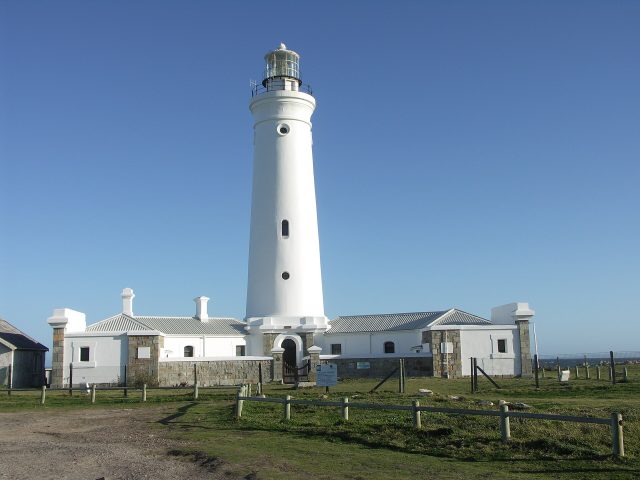
St. Francis of Assisi Church in Cape St Francis is the kind of place that doesn’t demand attention but lingers in the mind long after you’ve left. Tucked away on a gentle hill, surrounded by low houses and wild coastal vegetation, it feels almost hidden from the bustle of the seaside village. The whitewashed walls, simple bell tower, and unassuming spire suggest quiet modesty, yet there’s something warm and familiar in its design. This was never meant to be a grand cathedral—it was built for the people who live here, not for tourists passing through for a day of surfing or sunbathing.
The church’s history is woven into the story of Cape St Francis itself. The village began as a small fishing settlement in the mid-20th century, and the church was established in the 1960s, around the same time the first homes went up. Back then, it was a tight-knit community where everyone knew one another, and the church served as more than just a place of worship—it was a gathering point, a quiet anchor in daily life. Over the years, the village grew, drawing visitors with its beaches and waves, but the church remained unchanged, still a quiet presence for those who call Cape St Francis home.
The architecture is simple, almost understated, but there’s a quiet harmony to it. The building follows the regional style—white walls that reflect the bright sunlight, tall narrow windows that soften the light as it filters inside. The interior is free of ornate decorations or gilded details. Instead, you’ll find wooden pews, a plain altar, and a few stained-glass windows depicting scenes from the life of St. Francis. The glass isn’t vivid or bold; it’s muted, almost as if designed to match the gentle, diffused light that fills the space on overcast days.
St. Francis of Assisi Church isn’t a tourist attraction in the usual sense. There are no crowds, no guided tours, and few people would make a special trip just to see it. That’s part of what makes it special. It exists as a natural part of village life, a place where people come not for photos or experiences, but because it’s where they mark the important moments—baptisms, weddings, quiet reflection. In that way, it feels more like an old village church in Europe than a modern landmark.
Cape St Francis itself is an unusual place. A small coastal settlement where the ocean is always present, shifting between calm and storm, its waves drawing surfers from around the world. There are no skyscrapers or busy streets, just low houses, sandy dunes, and a wind that never quite dies down. The church sits slightly off the main road that leads to the beach, easy to miss if you’re not looking for it. But if you turn off the main path and walk up the hill, the view opens up to the vast expanse of the ocean, endless and restless, with whitecaps rolling toward the horizon.
Inside, the church is always quiet, even when the wind howls outside. The wooden floors creak underfoot, and the light from the stained glass casts uneven patches on the walls. There’s no air conditioning, no modern comforts—just the natural coolness of the stone and the scent of aged wood. Time seems to move differently here, slower and without urgency. That might be why locals cherish it so much. It offers a rare chance to pause, to step away from the noise of everyday life, and simply be.
The church doesn’t try to be anything more than what it is. It doesn’t aim for grandeur or spectacle. It just exists—quiet, unassuming, but meaningful in its own way. For some, it’s a place of prayer. For others, a repository of memories. For a few, just a quiet corner in a loud world. In an age where everything competes for attention, places like this are becoming rare. And perhaps that’s why they matter so much.