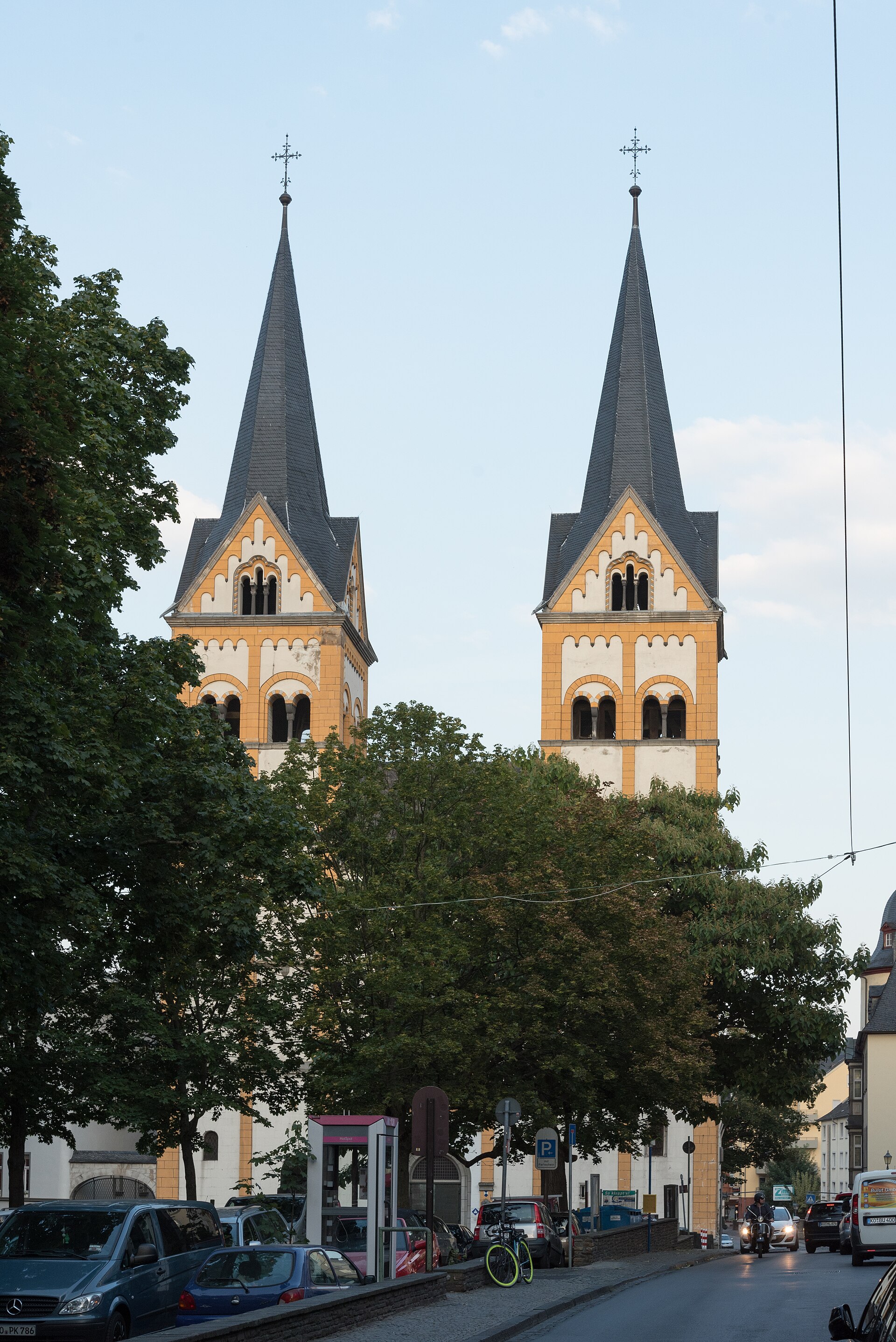
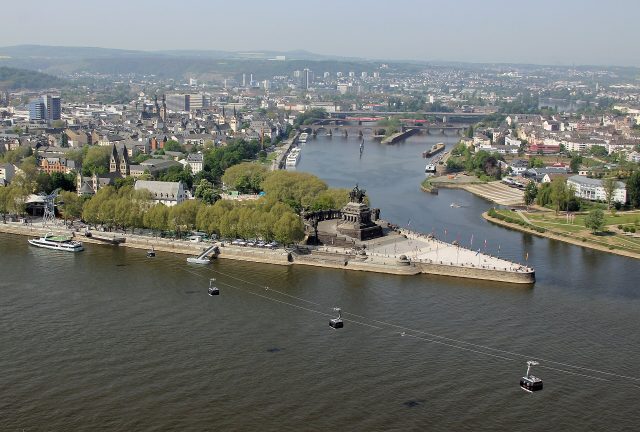
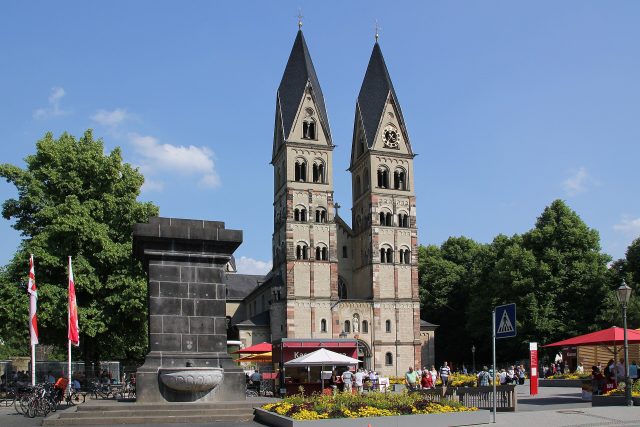
St. Florin’s Church in Koblenz is one of those rare places where time seems to stand still, its walls holding layers of history, faith, and the quiet echoes of countless lives. Nestled in the heart of the old town, it overlooks the Moselle River, where trade routes and cultures once intersected. Today, it remains both an active place of worship and a monument to the city’s enduring spirit, shaped by over a thousand years of change.
The church’s origins trace back to the 9th century, when a small Romanesque basilica stood on this site. Even then, Koblenz was a fortified stronghold along the Rhine, and the church served as both a spiritual center and a symbol of the power wielded by the Archbishops of Trier, who oversaw the city. Over the centuries, the building evolved, absorbing new architectural influences while retaining its sturdy core—a reflection of the unshaken faith it represented.
The true jewel of St. Florin’s is its Gothic choir, added in the 14th century. Tall, pointed windows filled with stained glass bathe the interior in a soft, diffused light, creating a sense of quiet reverence. Inside, fragments of medieval frescoes still cling to the walls, depicting scenes from the lives of saints. Among them, the figure of St. Florin himself stands out—once the church’s patron, his relics drew pilgrims from across Europe. Though much of the original splendor has faded, these remnants offer a glimpse into the church’s golden age.
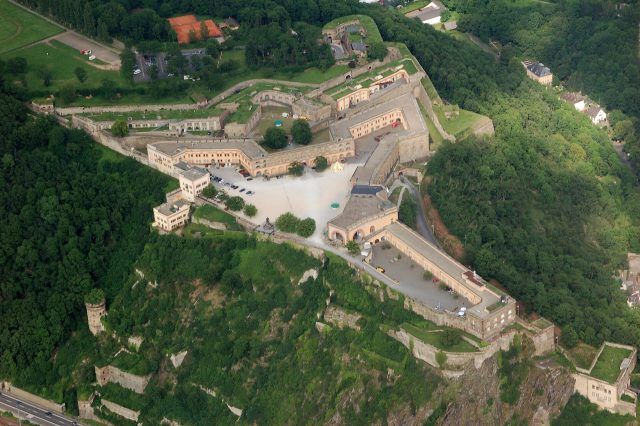
The exterior is just as striking. The late Gothic facade is adorned with intricate stonework and statues, including a prominent depiction of the Virgin Mary with the Christ Child. The tower, rising above the city, has long served as more than just a bell tower—it was once a lookout point, offering sweeping views of the Moselle and Rhine rivers converging below. On clear days, the silhouette of Ehrenbreitstein Fortress looms across the water, a reminder of the turbulent medieval conflicts that once defined this region.
St. Florin’s has weathered its share of trials. It was looted during the Thirty Years’ War and narrowly escaped destruction in an 18th-century fire that ravaged Koblenz. When the city became part of Prussia in the 19th century, the church underwent restoration, with lost elements carefully reconstructed. This period also saw the installation of the organ that still fills the space with music during services and concerts. Remarkably, the church emerged from World War II almost unscathed, despite the fierce battles that raged around it—a stroke of luck that locals sometimes call a miracle.
Today, the church remains a living part of Koblenz. Sunday services draw worshippers from across the city, while on weekdays, visitors wander through its cool, dim interior, where the scent of aged wood and candle wax lingers in the air. The sound of footsteps on stone floors is occasionally interrupted by the deep, resonant notes of the organ, a reminder of the centuries of music and prayer that have filled this space.
For Koblenz, St. Florin’s is more than just a historic landmark—it’s a cornerstone of the city’s identity. Its silhouette dominates the skyline of the old town, a familiar sight on postcards and photographs. The church hosts festivals, concerts, and exhibitions, proving that history isn’t confined to the past but continues to shape the present. Even those who aren’t drawn to religion or architecture often find themselves stepping inside, drawn by something intangible—the sense of time standing still within its walls.
The square surrounding the church was once the bustling heart of a medieval market, and today it still hums with life. In summer, open-air concerts fill the air, while in winter, a towering Christmas tree lights up the space. A short walk away, the Moselle promenade comes alive in warmer months, with locals and visitors gathering to enjoy coffee or wine as boats drift by. St. Florin’s bridges these worlds—the lively pulse of modern Koblenz and the quiet weight of history it carries.
Visiting the church isn’t just about ticking a box on a travel itinerary. It’s a place where history isn’t just observed but felt. You don’t need a guide or a plaque to understand its significance—just sit on one of the wooden benches inside, listen to the silence, and imagine the generations of people who have passed through these doors, each with their own hopes and stories. That, perhaps, is the real magic of old churches: they don’t just tell history—they let you experience it.