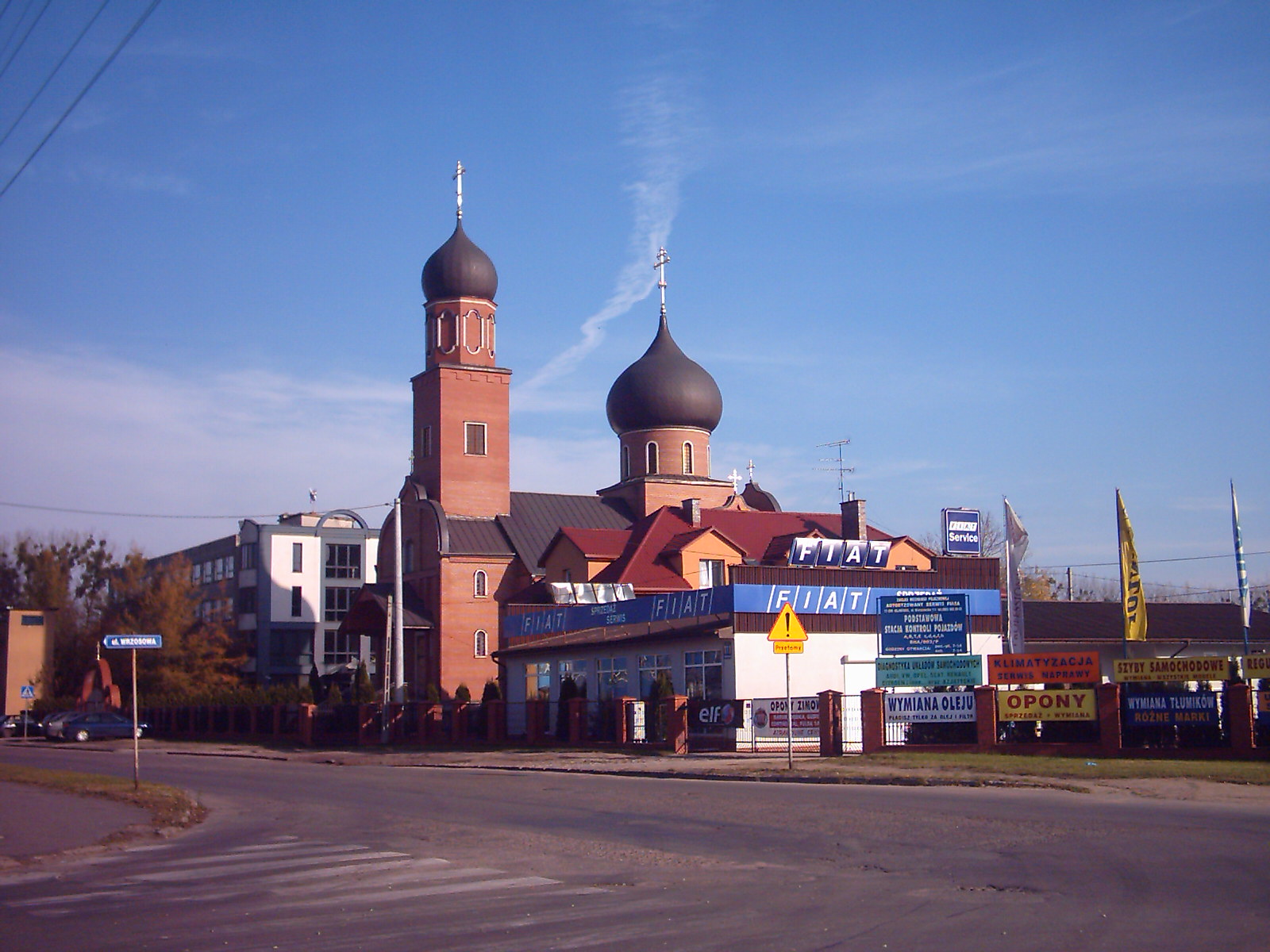
Hajnówka is a quiet town in eastern Poland, so close to the Belarusian border that you can almost feel the shift in the air. There are no crowds here, no tourist traps, just the slow rhythm of a place where time moves differently. The forests stretch endlessly, and the streets feel like they’ve been borrowed from an older, simpler era. In the middle of this stillness stands the Church of St. Dmitry, a building that has witnessed more than a century of history, faith, and the quiet resilience of a community.
Perched on a gentle hill, the church is visible from a distance, its wooden silhouette softened by the surrounding trees. It was built in the early 1900s, when Hajnówka was still finding its footing as a town. Back then, it was a place for railway workers, loggers, and craftsmen who came seeking work in the forests. The church wasn’t the work of a single wealthy patron but of the people themselves—funds were collected through subscriptions, and materials were brought from nearby villages. Some of the timber even arrived by river, floated downstream like so many other things in this part of Poland.
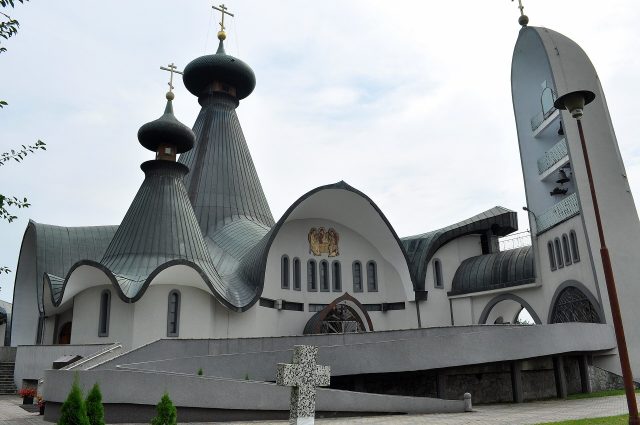
The architecture is unusual for the region. Unlike the towering Gothic spires of typical Polish churches, this one feels more like a small Orthodox temple, though with subtle Catholic influences. The building is entirely wooden, with a steep, shingled roof and a tall bell tower that seems to reach toward the sky. Inside, the space is bright and airy, with high windows letting in streams of sunlight. The walls are adorned with simple paintings, and the iconostasis, though not as ornate as those in grand cathedrals, is crafted with care—every detail matters here.
What makes the Church of St. Dmitry special is how it reflects the layered history of the area. Hajnówka sits in Podlasie, a region where Poles, Belarusians, Lithuanians, Jews, and Russians have lived side by side for centuries. Catholic, Orthodox, and Uniate traditions intertwined here, and the church became a place where different faiths and languages coexisted under one roof. Even during the Soviet era, when religious life in Poland was tightly controlled, the church remained a sanctuary—a quiet corner where people could gather without fear.
Today, the church is still active, though it doesn’t draw crowds. Visitors come for different reasons: some are interested in history, others simply want a moment of peace. Inside, the scent of wax and aged wood lingers, and the creak of the floorboards underfoot is a reminder of all the people who have walked through these doors over the years. In summer, linden trees bloom around the church, their fragrance mixing with the smell of grass, while in winter, snow settles on the roof, making the building look even more serene.
The Church of St. Dmitry isn’t just a place of worship—it’s a piece of the region’s cultural heritage. Within its walls are old books, icons, and everyday objects that tell stories of the people who lived here. Occasionally, small exhibitions or concerts of sacred music are held, but most of the time, life revolves around regular services. For locals, it’s a familiar place, like a second home. For outsiders, it offers a chance to step into something real, untouched by the rush of modern life.
If you ever find yourself in Hajnówka, take a moment to visit. Sit on the bench outside, listen to the rustling leaves, or step inside when the church is empty. There’s nothing flashy about this place—no grand displays or dramatic architecture. Its charm lies in its simplicity. It doesn’t try to impress; it simply exists, much like the forests around it, the river nearby, and the town itself, living its quiet, unassuming life.