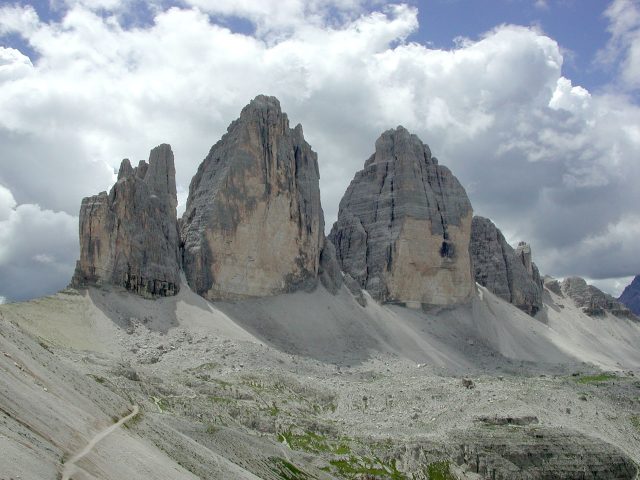
Perched on a gentle hill in the heart of Auronzo di Cadore, the Church of Santa Maria Nascente watches over the town like a quiet guardian. From its modest elevation, the view stretches across the valley, where the jagged peaks of the Dolomites rise against the sky. The church itself is unassuming—its stone facade weathered by centuries, its bell tower simple and sturdy. There are no grand flourishes here, no gilded domes or ornate carvings. Instead, it offers something rarer: a sense of stillness, as if time itself has softened around its walls.
The origins of Santa Maria Nascente are lost in the mists of the Middle Ages, though the first written records date back to the 14th century. Auronzo was already a place of passage then, a crossroads for merchants and travelers navigating the Alpine routes. The church would have been a welcome sight—a refuge from storms, bandits, or the sheer exhaustion of the journey. In a landscape as unforgiving as the Dolomites, such places were more than just houses of worship; they were havens where weary souls could find shelter and solace.
The architecture reflects the practicality of mountain life. Thick stone walls keep out the cold, while small, arched windows let in just enough light to warm the interior. The bell tower, capped with a steep shingled roof, was built to withstand the weight of winter snows. Inside, the space feels surprisingly airy, with sunlight streaming through the high windows. The main altar is adorned with wooden sculptures and frescoes from the 16th and 17th centuries, their colors still vivid despite the passage of time. The ceiling paintings are particularly striking, blending biblical scenes with the familiar shapes of the surrounding mountains—a reminder that faith and landscape have always been intertwined here.
A small cemetery surrounds the church, its graves marked by simple headstones, many of them worn smooth by time. Some are covered in moss, others half-hidden by wildflowers in summer. The quiet here is different from the silence of the mountains; it feels lived-in, as if the past is still breathing just beneath the surface. In winter, the church is often blanketed in snow, its outlines softened, its presence even more understated. Yet life in Auronzo goes on, the smoke from chimneys curling into the crisp air, a sign that this place is far from forgotten.
Auronzo di Cadore moves at the pace of the seasons. In summer, hikers and climbers fill the streets, drawn by the promise of alpine trails and clear mountain lakes. Winter brings a different kind of visitor—skiers and snowboarders, or those simply seeking the quiet beauty of a village wrapped in snow. Through it all, Santa Maria Nascente remains a constant, a place where the rhythms of life and faith have played out for centuries. It’s not just a building; it’s a thread connecting the past to the present, a place where people still come to mark the milestones of their lives.
Among the church’s treasures are a few relics that have survived the years: ancient liturgical books, faded icons, and a particularly revered image of the Madonna and Child, said to have been painted in the 15th century by an unknown artist. The locals treat this icon with deep devotion, believing it to be a protector of the town. Every August, the feast of the Assumption brings the community together, filling the church with prayers, music, and the warmth of shared tradition. For a few days, the quiet is replaced by celebration, a reminder that this place is still very much alive.
What makes Santa Maria Nascente special isn’t its size or grandeur, but the way it has woven itself into the fabric of Auronzo. It’s where children are baptized, where couples exchange vows, where families gather to say goodbye to loved ones. For many, it’s not just a church—it’s a piece of their own story, a link to the generations that came before. In a world that often feels transient, this small stone building stands as a testament to endurance, to the quiet faith that has sustained a community through centuries of change.
If you ever find yourself in Auronzo di Cadore, take a moment to visit. Climb the worn steps, step inside, and let the cool stone walls settle around you. There’s no fanfare here, no crowds jostling for the best view. Just the quiet hum of history, the scent of old wood and candle wax, and the sense that some places are meant to be felt, not just seen. That’s the real gift of Santa Maria Nascente—not the stories it tells, but the way it makes you pause and listen.