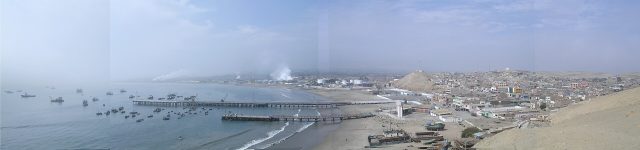
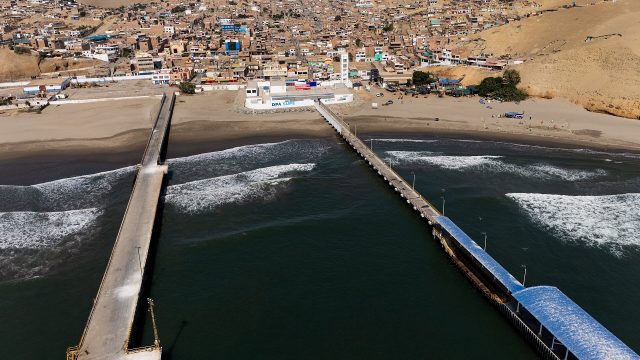
Santa María de la Parroquia stands in the quiet heart of Supe Puerto, a small coastal town where the Pacific’s gentle waves meet sun-bleached streets and life moves at the same unhurried pace it has for generations. This isn’t the Peru of glossy travel brochures—no crowds, no souvenir stalls, no tour buses idling outside. Supe Puerto exists on its own terms, a place where the past lingers in the salt air and the church, rising above the low-slung houses with their terracotta roofs, feels like a silent guardian of the town’s rhythm.
The origins of the church stretch back to the colonial era, when Spanish settlers brought not just their rule but their faith to these shores. Records suggest it was built sometime in the 16th century, though historians still debate the exact date. Some believe it replaced an indigenous shrine, others that it was part of a broader effort to convert the local population. Whatever the truth, the church became one of the first stone structures in the region, its walls bearing witness to the daily life of a colonial port that once funneled goods between Europe and the Andes. The stories it could tell—of merchants, sailors, and the families who built their lives around it—are etched into its weathered adobe.
The architecture is unmistakably early colonial: simple, sturdy, and unadorned. The thick adobe walls, a technique borrowed from pre-Hispanic builders, give the church a grounded, almost organic presence. Inside, there’s no opulence, just a quiet harmony. The high wooden ceiling, supported by rough-hewn beams, lends the space an airy feel, while narrow windows filter sunlight onto whitewashed walls. The only real flourish is the baroque altar, its gilding dulled by time, a reminder of the hands that shaped it centuries ago. It’s a place that doesn’t demand attention but earns it through its quiet dignity.
For Supe Puerto, the church has always been more than a building. It’s where generations have marked the milestones of life—baptisms, weddings, funerals. On feast days, the air would fill with hymns, and the square outside would buzz with vendors selling fish, fruit, and handmade goods. Even now, when the town has changed in ways its founders couldn’t have imagined, the church remains a constant. Elderly women in black shawls murmur prayers before the icons, children dart across the steps, and fishermen, returning from the sea, sometimes pause to light a candle for safe passage. There’s no ceremony to it, just the quiet continuity of life.
Supe Puerto rarely appears on tourist maps, and Santa María de la Parroquia isn’t the kind of place people cross continents to see. That’s part of its charm. There are no lines, no signs dictating where to stand, no guides reciting rehearsed anecdotes. You can walk in, sit on a wooden pew, and listen to the creak of the floorboards beneath you. The church doesn’t feel like a relic; it feels like a living piece of the past, one that hasn’t yet been turned into history. Maybe that’s why the locals treat it with such care—not as a monument, but as a witness to their own stories.
The streets around the church are narrow and winding, lined with houses built from the same adobe as the church itself. Many are worn by time, their facades cracked and faded, but there’s a beauty in that too—like the lines on an old face. On weekends, the square in front of the church comes alive with vendors selling fresh catch, avocados, and corn. Sometimes, music drifts through the air, a guitar strummed by someone sitting on a doorstep, the notes mingling with the sound of the ocean. Supe Puerto doesn’t try to be modern, and that’s its quiet allure.
If you ever find yourself here, take your time. Walk along the waterfront, where fishing boats bob in the harbor, and stop at a small café for ceviche made with fish caught that morning. Then make your way up to the church. With luck, it’ll be open. Inside, the scent of wax and aged wood lingers, and the silence is so complete you can hear gulls crying outside. This isn’t a place for those seeking grand spectacles. It’s for those who appreciate the quiet beauty of a town that has chosen to remain itself, where history isn’t something to be preserved behind glass but something that breathes in the everyday.