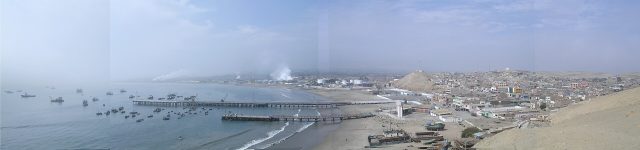
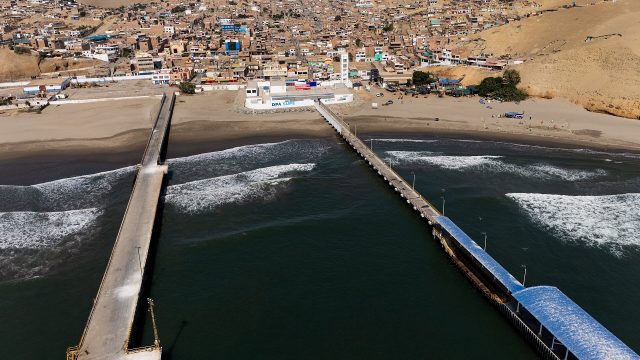
Aspero is one of those rare places that quietly challenges everything we think we know about ancient civilizations. Tucked along the Peruvian coast near the modern town of Supe Puerto, this archaeological site holds the remnants of a society that thrived long before the Inca Empire rose to power. The ruins here are subtle—no towering pyramids or grand temples, just the quiet persistence of human ingenuity etched into the landscape. The wind sweeps across the dunes, carrying with it the echoes of a culture that once flourished in this harsh yet bountiful environment.
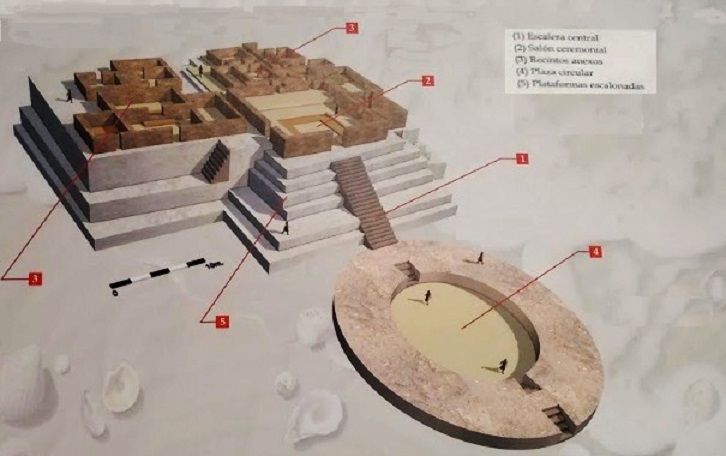
What makes Aspero remarkable is its connection to the Norte Chico civilization, also known as Caral-Supe, which dates back to between 3000 and 1800 BCE. This makes it one of the oldest known complex societies in the Americas, predating even the Olmec culture in Mesoamerica. Aspero was one of its key settlements, a place where people built not just for survival, but for community and ritual. The most striking features here are the artificial mounds, which at first glance appear to be natural hills. Closer inspection reveals they were carefully constructed from stone and clay, serving as foundations for homes and ceremonial spaces. The largest of these, known simply as Aspero Hill, rises about ten meters high, its slopes dotted with the remains of circular buildings that may have been used for gatherings or religious ceremonies.
The location of Aspero was no accident. The settlement sits near the Pacific, where the ocean provided an abundant source of food. Archaeological finds confirm that fishing was central to the local economy—bones of fish and shellfish, along with tools used for processing them, are scattered across the site. The sea likely played a dual role, sustaining the people while also connecting them to other coastal communities. Trade networks may have extended far beyond the immediate area, allowing for the exchange of goods and ideas. In this way, Aspero was more than just a village; it was part of a broader cultural web that stretched across much of what is now Peru.
Unlike many archaeological sites in Peru, Aspero has not been overrun by tourism. There are no crowds, no souvenir stands, and no guided tours rushing visitors from one point of interest to the next. Instead, the site retains a sense of quiet dignity, as if the past is still lingering just beneath the surface. The only sounds are the crash of waves in the distance and the whisper of the wind through the dunes. Walking among the mounds, it’s easy to imagine the daily lives of the people who once called this place home—how they built their homes, prepared their food, and gathered for rituals under the same sun that still shines today.
Aspero’s relative obscurity is part of its charm. While places like Machu Picchu and Nazca draw thousands of visitors each year, this site remains largely unknown, even to many Peruvians. It wasn’t until the mid-20th century that archaeologists began to uncover its significance, and excavations continue to this day. Each new discovery adds another layer to our understanding of the Norte Chico civilization. Fragments of woven textiles and intricately crafted baskets suggest a society with advanced craftsmanship, while remnants of cultivated plants hint at early agricultural practices. These findings challenge the assumption that coastal communities relied solely on fishing, revealing a more complex and adaptable way of life.
Visiting Aspero is not about ticking off a tourist checklist. There are no grand museums or interactive exhibits here, just the raw, unfiltered remnants of history. The site’s simplicity is its strength—it invites contemplation rather than mere observation. The crumbling walls and weathered mounds stand as silent witnesses to a civilization that thrived thousands of years ago, long before the rise of empires we more readily recognize. It’s a place where the past feels tangible, where the weight of human history is almost palpable in the air.
Getting to Aspero requires some effort. The journey begins in Supe Puerto, a small coastal town that serves as the gateway to the site. From there, signs point the way to the archaeological zone, though the road is rough and not always well-marked. The lack of infrastructure is part of the experience—there are no cafes or rest stops, just the open landscape and the ruins waiting to be explored. For those willing to make the trip, the reward is a rare sense of connection to the distant past, unfiltered by modern distractions.
Aspero reminds us that history is not just a series of grand monuments and famous names. It’s also found in the quiet, unassuming places where ordinary people lived, worked, and built communities that endured for centuries. The site may not have the dramatic appeal of Machu Picchu, but it offers something just as valuable: a chance to step back in time and see the world through the eyes of those who came before us. In a way, Aspero is a humbling place, a reminder of how much we still have to learn about the ancient world—and how much of it remains hidden in plain sight.