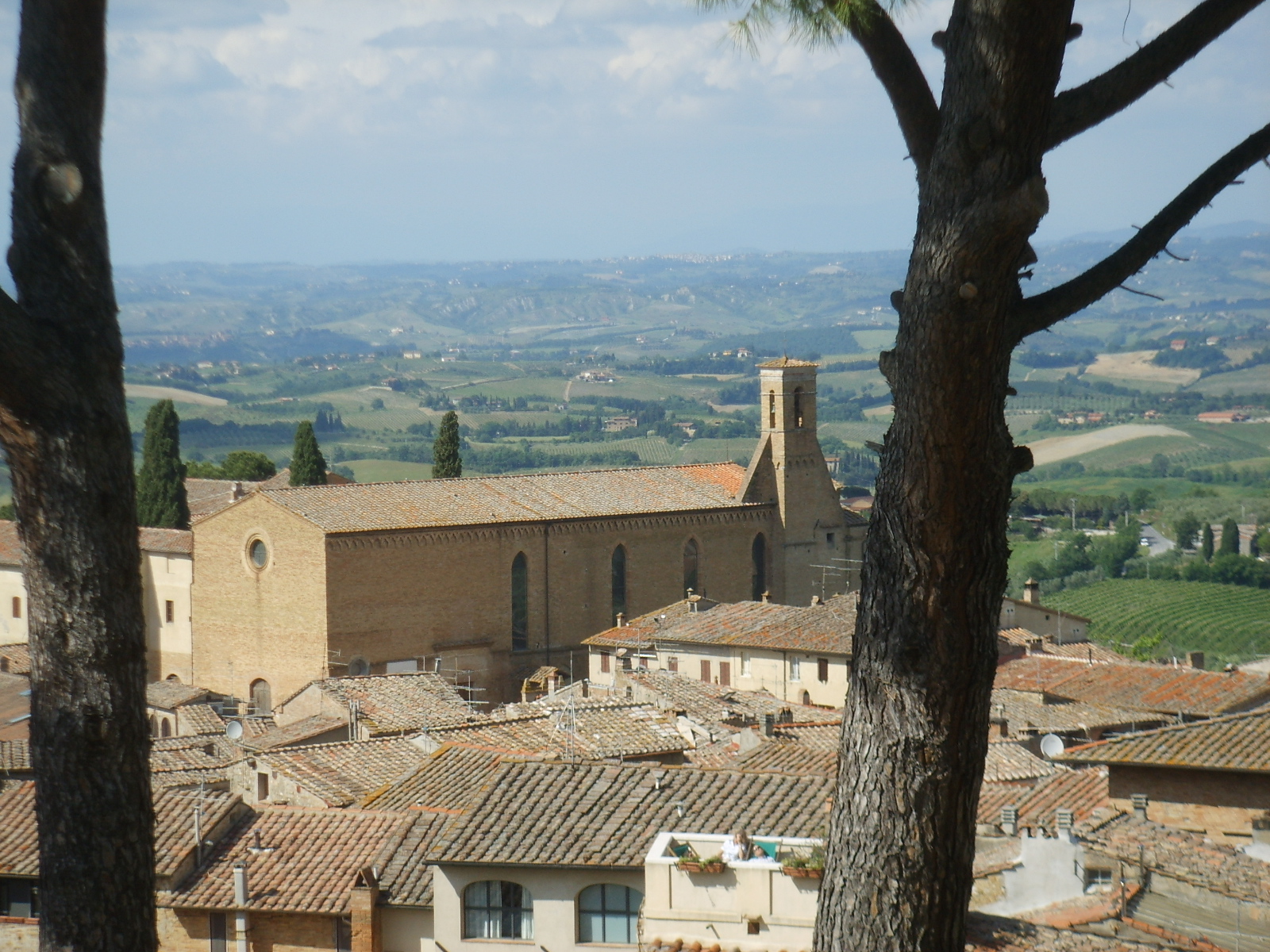
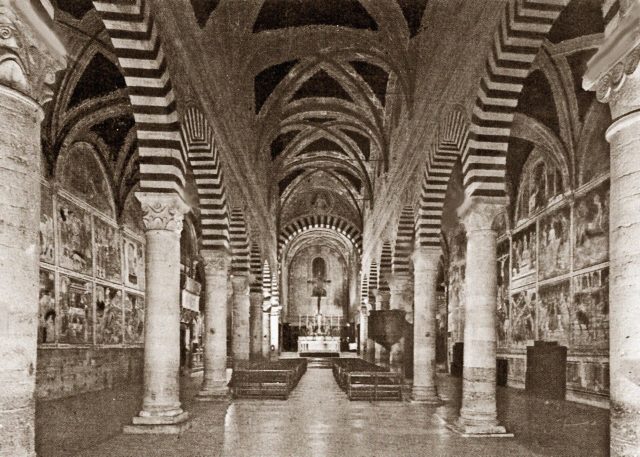
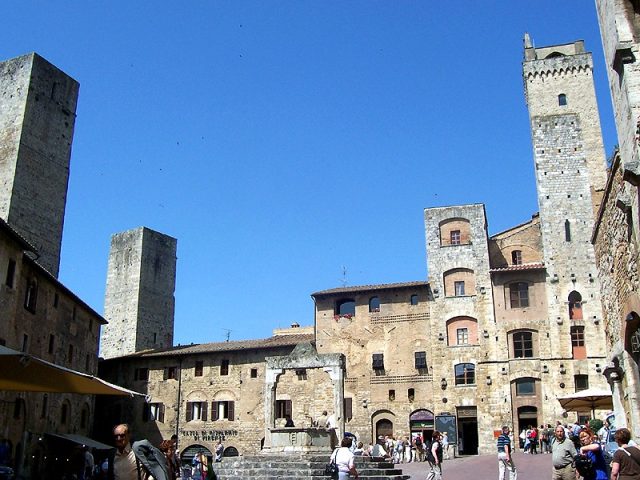
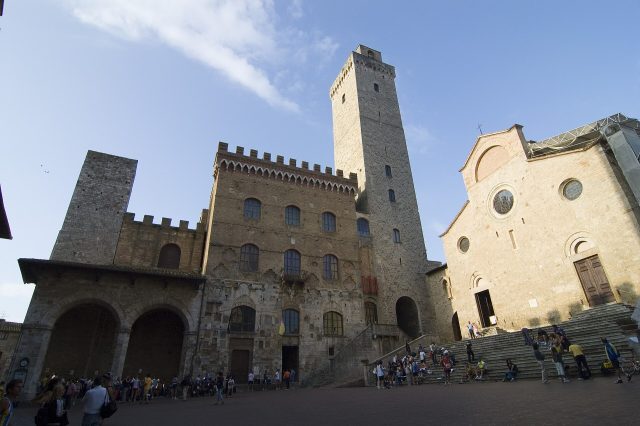
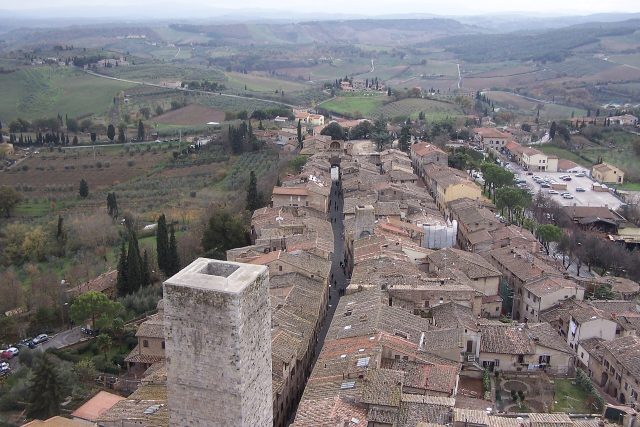
Sant’Agostino in San Gimignano feels like a place where time moves differently. Tucked away on a quiet square in the northern part of the town, it stands apart from the well-trodden paths leading to the famous towers. The church’s unassuming facade of pale stone doesn’t immediately draw the eye, but stepping inside reveals a space that breathes history. The interior is airy and bright, with high vaults supported by columns, while the walls are covered in frescoes that tell stories of faith and daily life from six centuries ago.
Built in the late 13th century by Augustinian monks, the church arose during San Gimignano’s golden age. At the time, the town was a thriving commercial hub on the route between Florence and Siena, its towers symbols of both wealth and defense. The Augustinians chose this spot deliberately, seeking a place to preach and live by their order’s strict rules, removed from the bustle of the world. Construction unfolded gradually, and the church evolved alongside the town. Today, it bears traces of different eras—Gothic arches sit beside Renaissance details, while plain stone walls contrast with vivid paintings.
The church’s greatest treasure is the fresco cycle by Benozzo Gozzoli, painted in the mid-15th century. Known for his work in Florence and Pisa, Gozzoli decorated the Chapel of Saint Sebastian with scenes from the lives of Christ and the saints. The frescoes are striking not just for their craftsmanship but for their warmth—the faces, gestures, and even the folds of clothing feel remarkably lifelike. Gozzoli worked here at a time when art was beginning to move away from strict medieval conventions, and his paintings bridge the gap between Gothic tradition and the Renaissance. The *Adoration of the Magi* stands out, blending Florentine influence with the softer, more fluid lines of the Sienese style.
Beyond Gozzoli’s work, the church holds other artworks worth lingering over. The altar features pieces by local masters, and the side chapels contain 14th-century frescoes depicting the life of Saint Augustine. These paintings are simpler than Gozzoli’s, but they have their own charm—naive figures, bright colors that haven’t faded over time, and a sense of quiet devotion. One chapel houses a Gothic-style tomb of a local nobleman, its carved stone bearing a coat of arms and Latin inscription, a reminder of the aristocratic families who once shaped the town’s history.
Sant’Agostino isn’t like the grand cathedrals of Florence or Siena. There are no gilded decorations, marble columns, or ornate altars. Instead, there’s a sense of stillness, light filtering through high windows, and the feeling that the walls hold the memories of those who have prayed here over the centuries. In summer, the cool interior offers respite from the heat outside. In winter, the space takes on a different kind of peace, the soft glow of candles and the scent of aged wood adding to the atmosphere.
The church played a role in the town’s life beyond worship. In the Middle Ages, it was an educational center, with monks running a school for the children of noble families. Later, when San Gimignano declined after the plague and lost its prominence, the church remained one of the few places where cultural life endured. Today, it’s still an active parish, and if you’re lucky, you might hear the organ during a service—the instrument, installed in the 18th century, fills the space with sound, making the centuries-old walls feel alive.
Visiting Sant’Agostino offers a glimpse of what the town might have been like in its prime. The monastery that once surrounded the church has mostly disappeared, leaving only fragments of walls and a quiet inner courtyard with a well. Now, the space is tranquil, occasionally broken by the footsteps of visitors or locals stopping to pray. Unlike the crowded squares near the towers, this is where you can sense the true spirit of San Gimignano—a town that has preserved its character despite centuries of change.
If you find yourself here, take a moment before leaving. Sit on one of the wooden benches, study the frescoes, and look for details that aren’t immediately obvious. You might notice signs of restoration on the walls or cracks in the ceiling—each mark part of the church’s long history. Or perhaps you’ll simply sit in silence, listening to the wind outside, and think about all the people who have come through these doors over the years, carrying their hopes, prayers, and dreams.