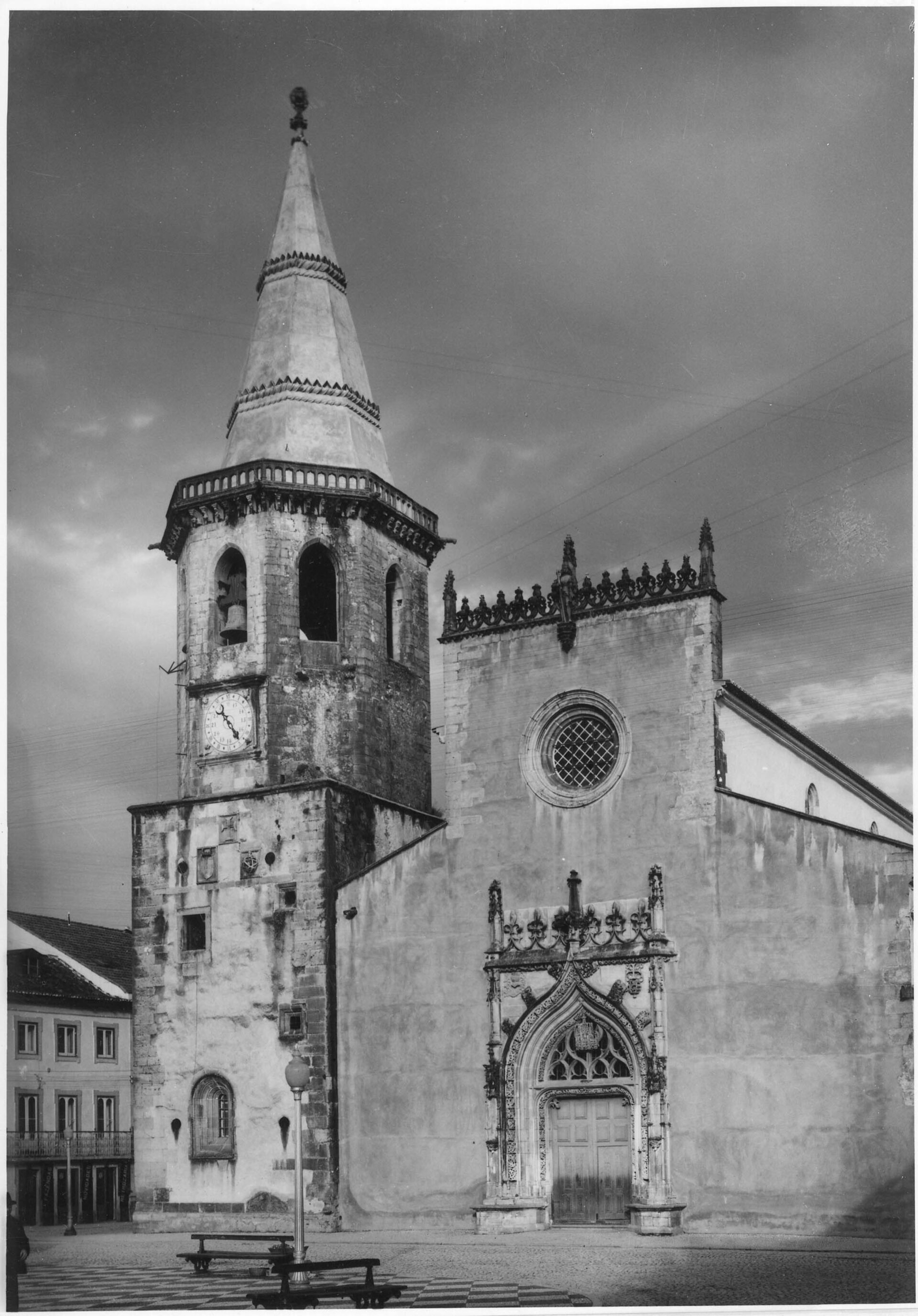
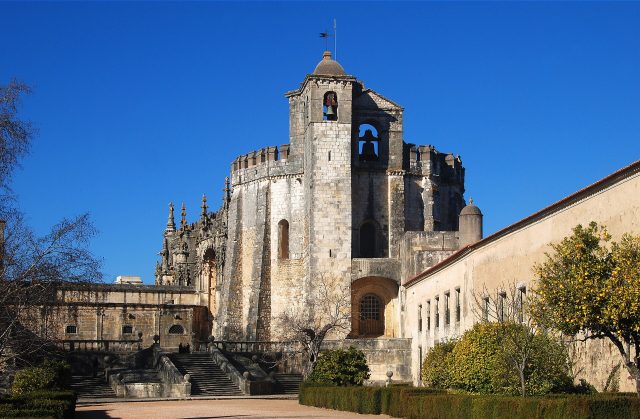
Standing at the heart of Tomar, the Church of São João Baptista occupies a quiet corner of Praça da República, a square that once pulsed with the life of a medieval town. Its whitewashed façade, crowned by a slender bell tower, rises above the surrounding buildings, but the true magic lies in the details—the stones worn smooth by centuries of hands, the intricate carvings that tell stories older than the city itself. Dedicated to Saint John the Baptist, the church carries the weight of history, particularly that of the Knights Templar, whose influence shaped this region long after their dissolution. Though it may not rival the grandeur of Portugal’s great monasteries, its significance is woven into the very fabric of Tomar.
Construction began in 1520 under the patronage of King Manuel I, the monarch whose reign marked the height of Portugal’s Age of Discoveries. The church is a fine example of Manueline architecture, a uniquely Portuguese style that blends late Gothic forms with maritime motifs and exotic flourishes. The façade bears the king’s coat of arms, while above the entrance, a statue of Saint John the Baptist welcomes visitors. Inside, the space feels airy and uncluttered, with soaring vaults and slender columns that draw the eye upward. Light filters through stained-glass windows, casting shifting patterns across the stone floors, creating an atmosphere of quiet reverence.
One of the church’s most striking features is its azulejos, the traditional Portuguese tiles that line the walls. These blue-and-white panels, added in the 17th century, depict scenes from the lives of Christ and Saint John the Baptist. More than mere decoration, they serve as a visual chronicle of faith and craftsmanship, each tile a piece of a larger narrative. The artistry reflects the skill of generations of artisans, blending religious devotion with the everyday beauty of Portuguese culture.
Over the centuries, the church has undergone several transformations. The most significant came after the devastating Lisbon earthquake of 1755, which left its mark on buildings across the country. The Baroque altarpiece, added during subsequent renovations, contrasts with the earlier Manueline elements, a reminder of how time reshapes even the most enduring structures. Some details have faded or been lost, yet the essence of the place remains. Walking through its doors, one can still sense the continuity of history—the generations of worshippers who have knelt beneath these same arches.
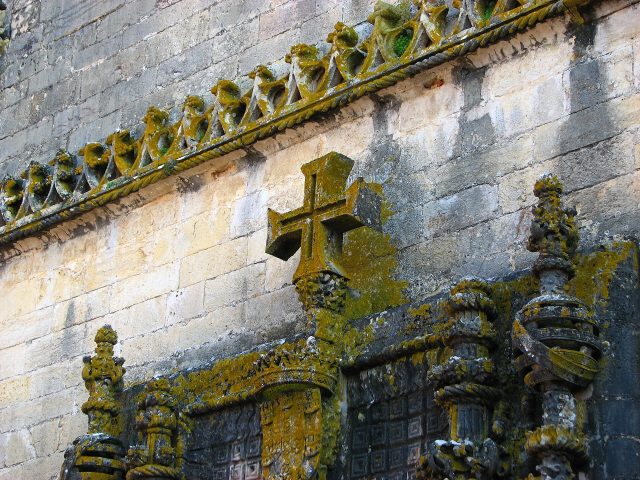
For many visitors, the Church of São João Baptista is more than a place of worship; it is a tangible link to the Knights Templar, whose legacy looms large in Tomar. Though the order was disbanded in the early 14th century, its spirit lived on through the Knights of Christ, who inherited the Templars’ lands and fortresses. The church stands as a symbol of that transition, bridging the medieval era and the dawn of Portugal’s golden age of exploration. Even today, it feels like a place where history is not just remembered but still alive.
Beyond its walls, Praça da República stretches out, a space that has witnessed centuries of public life. In the Middle Ages, it was the site of markets, gatherings, and civic events. Now, the square is quieter, though traces of its past linger—the cobblestones worn smooth by countless footsteps, the echoes of voices long gone. In the summer months, the square comes alive with festivals and open-air concerts, drawing locals and travelers alike. Cafés spill onto the pavement, and people gather to talk, eat, and simply watch the world go by. The church, with its timeless presence, anchors the scene, a silent witness to the passage of time.
To truly appreciate the church, one must pay attention to the small things—the worn wooden pews, the flickering candlelight, the delicate patterns in the stonework. Every detail, from the heraldic shields on the walls to the Latin inscriptions, carries meaning. This is what makes Portuguese churches so compelling: they do not overwhelm with grandeur but invite contemplation. They are places where history feels personal, where the past is not distant but immediate.
Tomar is often overlooked in favor of more famous destinations, yet it is in places like the Church of São João Baptista that the city’s character reveals itself. There is no need to rush. Sit on the steps for a while, watch how the light shifts across the façade—golden in the morning, soft and pink at dusk. In those moments, it becomes clear why this church, and this town, hold such a special place in the hearts of the Portuguese. They are not just relics of the past but living pieces of a culture that endures.