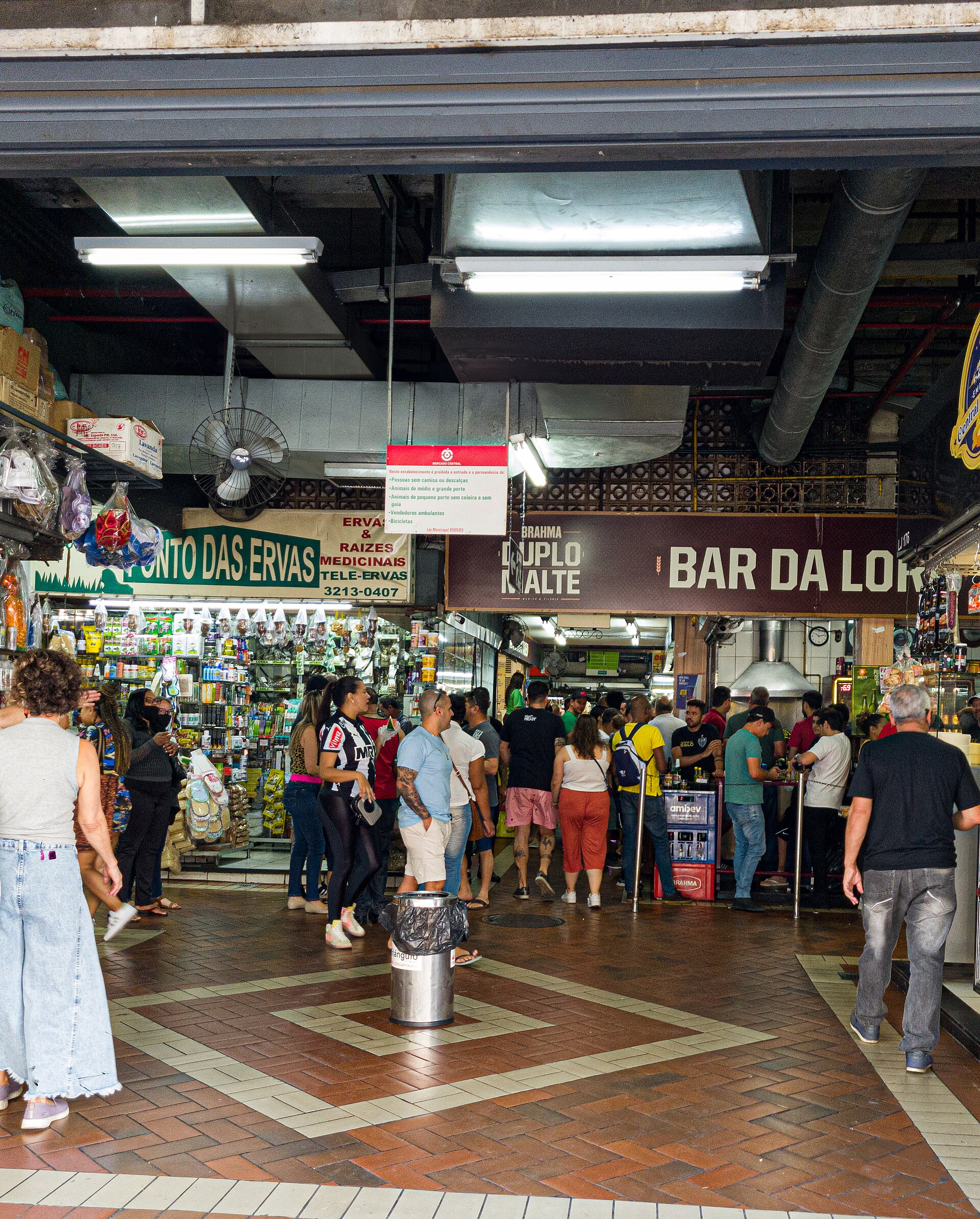
Belo Horizonte’s Central Market isn’t just a place to buy groceries or souvenirs—it’s a living piece of the city, a rhythm that pulses with the daily life of Minas Gerais. Since opening in 1929, its stalls have drawn farmers, artisans, and vendors from across the state, offering everything the land has to give. The market has grown alongside the city, evolving without losing its soul.
The building itself carries the marks of time. Originally designed in the early 20th century, its high ceilings and wide halls were meant to welcome crowds. Over the decades, additions were made, but the older sections still hold traces of the past—wooden counters worn smooth by generations of hands, faded signs, and the occasional creak of floorboards underfoot. Modern stalls stand beside those that have been here since the beginning, creating a patchwork of old and new.
What you’ll find here is a direct reflection of Minas Gerais. The produce is impossibly fresh—mangoes so ripe they nearly burst, leafy greens still damp with morning dew, and the region’s famous cheeses, rich and tangy, stacked in neat pyramids. There’s meat from local ranches, river fish, spices that perfume the air, and coffee so strong it lingers on your tongue. Then there are the sweets: goiabada, a guava paste so dense it’s almost fudgy, and doce de leite, caramelized milk that’s a staple in every home. The market isn’t just about buying; it’s about tasting, smelling, and seeing the essence of the state in one place.
The food stalls are where the market’s heart beats loudest. Some have been serving the same dishes for decades, their recipes passed down like heirlooms. You’ll find feijoada, the slow-cooked black bean stew with pork, served with rice and farofa, a toasted cassava flour that adds a nutty crunch. Or pastéis, crispy fried pastries stuffed with cheese, meat, or hearts of palm. The cafés are where people linger—over tiny cups of thick, sweet coffee, over plates of pão de queijo, the chewy cheese bread that’s a Minas specialty. Conversations flow easily here, between bites and sips, as if everyone is part of the same extended family.
Mornings at the market belong to the locals. Some come to stock up for the week, filling baskets with produce and carrying bags of freshly ground coffee. Others stop by for a quick breakfast, leaning against a counter while they eat. Weekends bring a different energy—families with children, tourists snapping photos, groups of friends meeting up. The air is thick with the scent of baking bread, ripe fruit, and the occasional whiff of something spicy. Voices rise and fall in Portuguese, laughter rings out, and the clatter of dishes blends into a kind of music.
For many in Belo Horizonte, the market is more than a place to shop—it’s a chapter in their own story. Some remember coming here as children, holding their parents’ hands as they weaved through the crowds. Others recall their first taste of something new, like the sharp bite of queijo minas or the sweetness of a fresh mango. A few might even have worked here once, behind a counter or sweeping the floors. The market is where lives intersect, where strangers become familiar faces, and where stories are shared over a shared meal.
It hasn’t always been easy. The market has weathered economic downturns, fires, and the slow drift of time. But each time, it has found a way to adapt, to stay relevant. Today, it’s not just a marketplace but a cultural hub, hosting everything from live music to art exhibitions. Yet it hasn’t lost what makes it special—the sense of continuity, the way it holds onto the past while embracing the present.
There’s no touristy veneer here, no staged performances or overpriced trinkets. What you see is what you get: real people, real food, real life. It’s a place where you can step into the rhythm of Minas Gerais, where the hospitality is warm and unforced, and where every visit feels like coming home. If you want to understand Belo Horizonte, this is where you start.