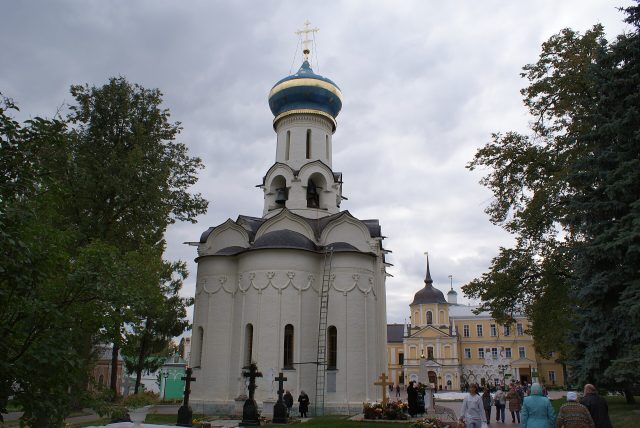
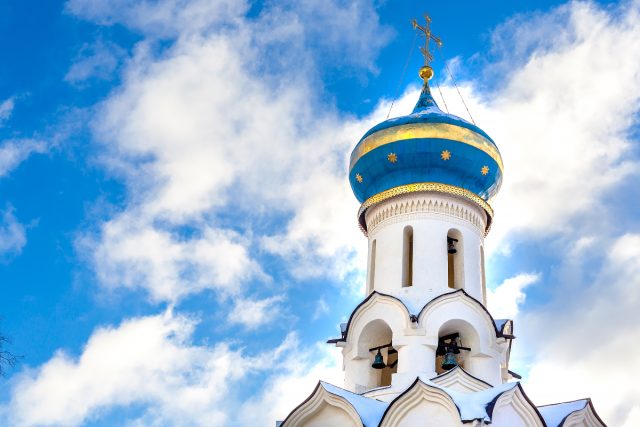
Perched on a gentle hill just beyond the ancient walls of the Trinity Lavra of St. Sergius, the Chapel of St. Sergius of Radonezh feels like a place where time has quietly settled. It stands where, according to tradition, the saint once met Prince Dmitry Donskoy before the Battle of Kulikovo, offering his blessing and a prophecy of victory. The chapel itself is small, almost unassuming, yet its presence is deeply felt—its slender spire rising above the trees like a silent witness to centuries of faith and history.
The story of this place is inseparable from the life of St. Sergius, one of Russia’s most revered spiritual figures. In the late 14th century, when the land was still under the shadow of Mongol rule, the prince came here seeking counsel before facing the enemy. Sergius, though he did not take up arms, sent two of his disciples to join the battle, their names—Peresvet and Oslyabya—later becoming legends. The chapel, built much later, marks the spot of that fateful meeting, a reminder of how faith and resolve once shaped the destiny of a nation.
The architecture is simple, almost austere, in keeping with the traditions of old Russian Orthodox design. A white-stone base supports a steep, shingled spire, its lines clean and uncluttered. There are no grand frescoes inside, no gilded iconostases—just a few icons, flickering candlelight, and the kind of quiet that makes even the busiest days feel distant. The chapel’s modest size and lack of ornamentation only emphasize its purpose: not to impress, but to offer a moment of reflection.
The hill where the chapel stands was chosen with care. From here, the view stretches over the valley of the Konchura River, toward the golden domes of the Lavra. In centuries past, this was part of the road to Moscow, and pilgrims traveling to Sergius’s relics would pause here to pray before continuing their journey. Today, the chapel remains a place of pause—not just for the devout, but for anyone drawn to the weight of history. A small park surrounds it, with benches where visitors can sit, listen to the rustling leaves, and imagine the scene that unfolded here so long ago.
This chapel is more than a monument; it is a living thread connecting the present to Russia’s spiritual roots. The Trinity Lavra, founded by Sergius in the 14th century, has long been the heart of Orthodox life in the country, and the chapel feels like an extension of that legacy. Unlike the bustling cathedral within the monastery walls, this place offers solitude. There are no crowds, no hurried footsteps—just the sense that here, the past is still very much alive.
The chapel changes with the seasons. In winter, its white stone blends into the snow, the spire seeming to hover above the earth. Spring brings a burst of green, the trees framing the chapel as if it has always been part of the landscape. Summer is the busiest time, with pilgrims and travelers stopping to light a candle or stand in quiet contemplation. Autumn, with its golden hues, lends the scene a particular poignancy, as if the very air carries the weight of memory.
Though not an active church, the chapel hosts services on feast days, particularly those honoring St. Sergius. People come to pray for strength, for loved ones, or simply to give thanks. Many believe that prayers offered here carry special meaning, as if the ground itself holds the saint’s blessing. There are no rigid rules—visitors can come and go as they please, staying as long as they need. What matters is not formality, but sincerity.
Sergiev Posad itself is a town where history lingers in the cobblestone streets and the echo of church bells. The chapel, with its unassuming presence, fits perfectly into this atmosphere. It doesn’t demand attention; it simply exists, a quiet reminder of what endures. Standing here, looking out over the valley, it’s easy to feel the connection between past and present. The message is clear: some things—faith, courage, the land itself—transcend time. The chapel stands as proof.