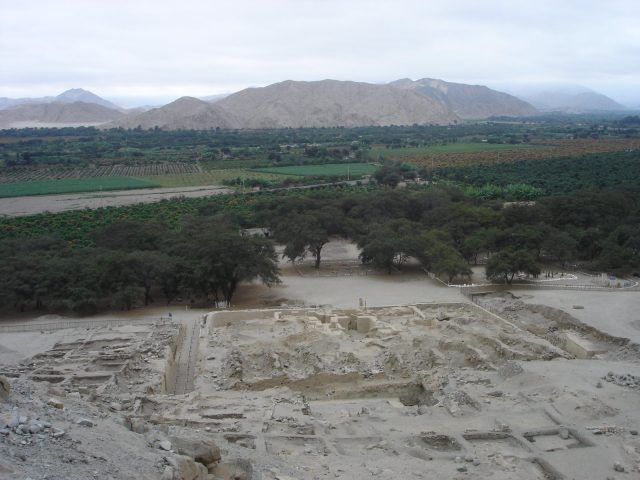
Perched in the arid valley near the Peruvian town of Casma, Chanquillo feels like a whisper from a time when the sky governed life. This ancient site, often called the oldest astronomical observatory in the Americas, dates back roughly 2,300 years. Its design reveals a civilization that tracked the sun’s movements with deliberate precision.
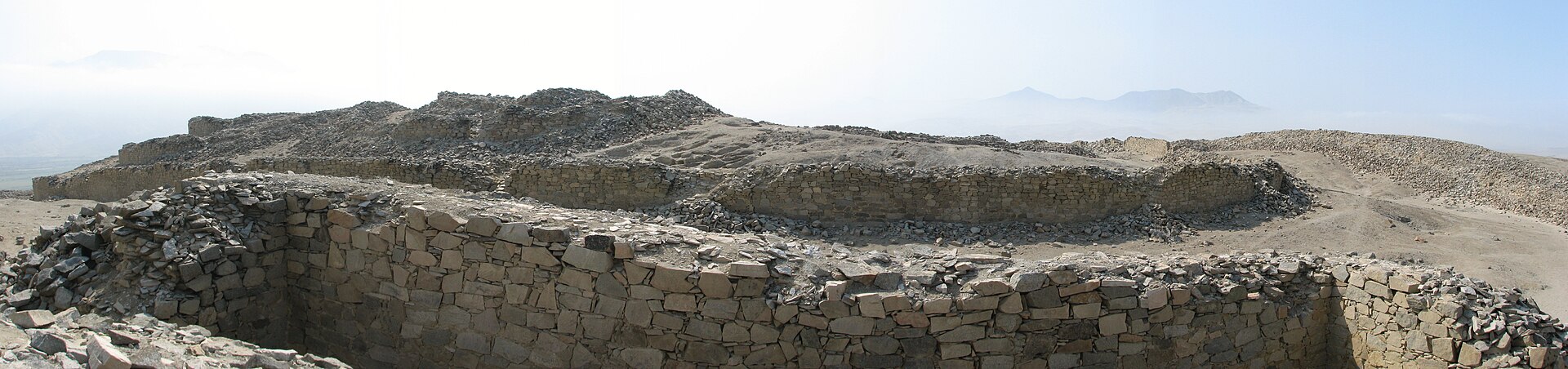
The heart of Chanquillo is a line of thirteen stone towers stretching across a low ridge, arranged from north to south. Each tower varies in height, their rough surfaces weathered by desert winds. At first glance, they might seem like random piles of rock, but their alignment follows the sun’s path. During solstices and equinoxes, the sun rises or sets between them, casting shadows that mark time.
Why was Chanquillo built? Some scholars argue it was an agricultural tool, helping track seasons in a region where farming meant survival. The Casma culture, which thrived here long before the Inca, relied on precise timing for planting and harvesting. Others believe it was a ritual site, where communities gathered to observe celestial events. The answer may lie in both.
The towers were built from uncut stones held together with clay. Nearby, two platforms flank the ridge—one to the east, one to the west. These may have served as observation points, offering clear views of the horizon. From here, the sun’s movements dictated daily life.
Chanquillo is not the only ancient observatory in the Andes, but it feels different. Unlike the Nazca Lines or Machu Picchu, it lacks grandeur. No elaborate carvings or monuments—just function. This was a place where the sky was read like a book, its cycles guiding harvests and ceremonies.
Today, the site remains quiet. The desert amplifies the sense of stepping into another era.
Walking among the towers at dawn or dusk, you can almost see it: people gathered in the half-light, eyes fixed on the horizon, waiting for the sun to slip between the stones. The moment would have been both ordinary and sacred—a daily ritual connecting them to something larger.
The desert air, the shifting light, the silence—all of it feels like a continuation of that rhythm.
Chanquillo’s significance lies in what it leaves unsaid. It reminds us that astronomy was never just a science for these people; it was a way of understanding the world. The towers are a bridge between past and present, a link to a time when the sky was lived, not just studied. Questions remain, but the stones endure.