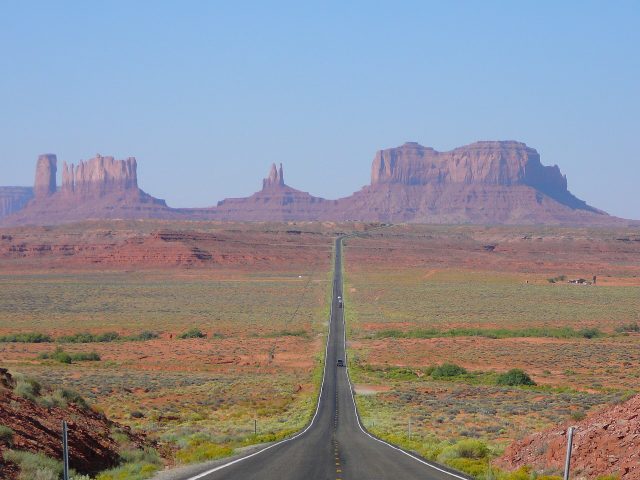
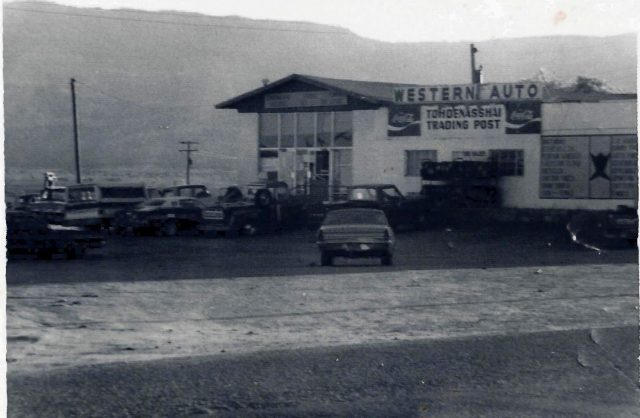
Kayenta sits in northern Arizona, a quiet town on the edge of Monument Valley. Beyond the red mesas and endless skies, a low-slung building stands—a former hospital that doesn’t look like one. Its design rejects the sterile, utilitarian style of most medical centers. Instead, it feels like a bridge between progress and the rugged West.
The hospital was built in the 1950s as part of a federal effort to bring healthcare to Native American reservations. The Navajo people, who made up most of the local population, often traveled long distances for basic care. The Bureau of Indian Affairs oversaw its construction, using local sandstone and concrete to withstand the desert’s extremes. It was meant to last.
Its design reflects both the needs of the time and the land. The architects avoided a standard blueprint. They added geometric patterns on the facade, echoing Navajo motifs. Large windows let in natural light. The layout avoided the cold, institutional feel of mid-century hospitals. It was an unusual approach for a government-funded project, where efficiency usually came first.
For decades, the hospital was more than a medical facility. It served as a hub for the region, drawing patients from remote areas and doctors from across the country. For Navajo families, it was a place of hope. Children were born here. Injuries were treated. Outbreaks were contained. The conditions weren’t perfect, but it was a lifeline.
By the late 1990s, medical standards had changed. The old hospital couldn’t keep up. A newer facility replaced it, and the original was left empty. Today, it stands abandoned on the edge of town. The sandstone walls fade under the sun. Paint peels. Dust drifts through its halls. Yet it remains a monument to an era when the federal government tried to bring modern medicine to one of the country’s most isolated places.
Travelers passing through Kayenta on their way to Monument Valley might miss it. It lacks the grandeur of the rock formations or the dramatic history of the Old West. But those who notice it see something else: a story about the Navajo Nation’s place in 20th-century America. A story of struggle, adaptation, and uneven progress.
The building is a relic. The memories it holds are still vivid for those who remember its role.
Kayenta exists where two worlds meet: Navajo traditions and modern America. The hospital embodies that tension. It was built for a community caught between past and future. Today, it stands as a reminder of how those forces shaped the region.
There’s been talk of restoring it—maybe as a museum or cultural center. For now, it remains untouched. A silent witness to the people who walked its halls and the land that will reclaim it.
The desert preserves things, even as it wears them down. The hospital’s walls may crumble, but the stories remain. They’re in the light through the windows, in the echoes of footsteps, in the quiet resilience of a place that once mattered. It’s not grand. It’s just honest—a piece of history that won’t disappear.